Reserve direct
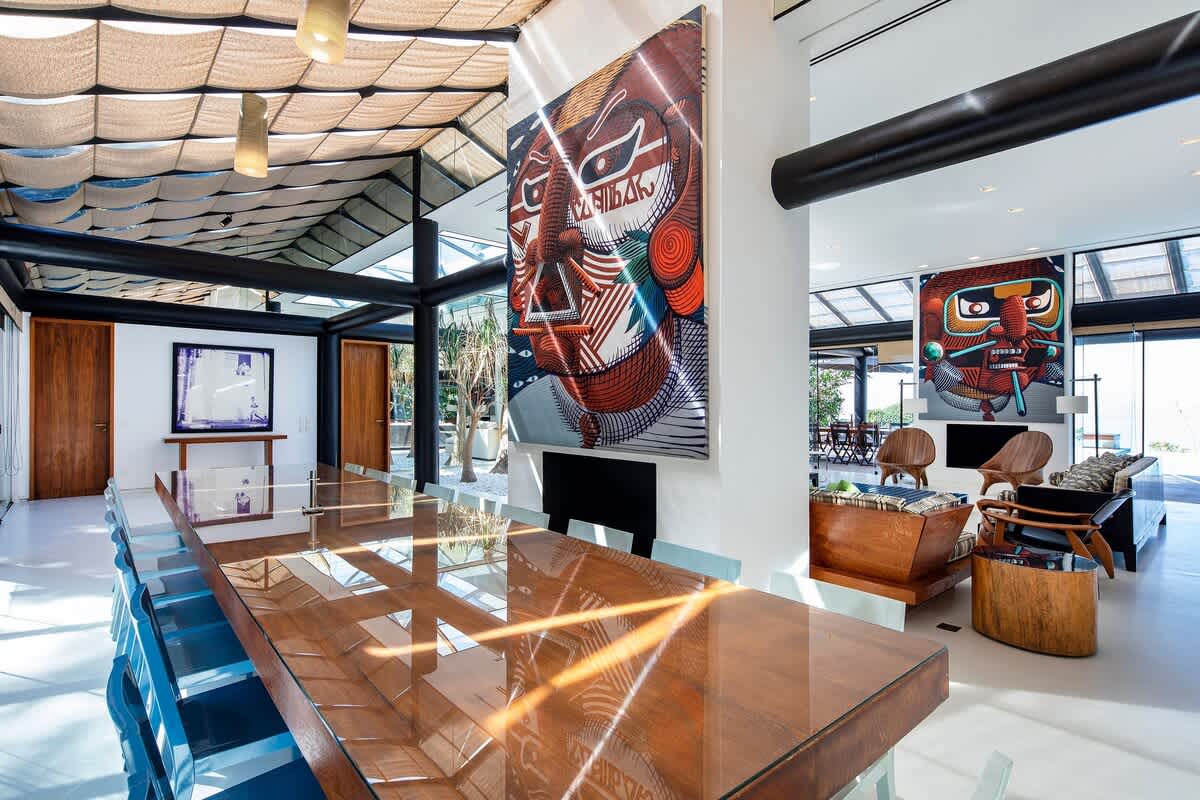
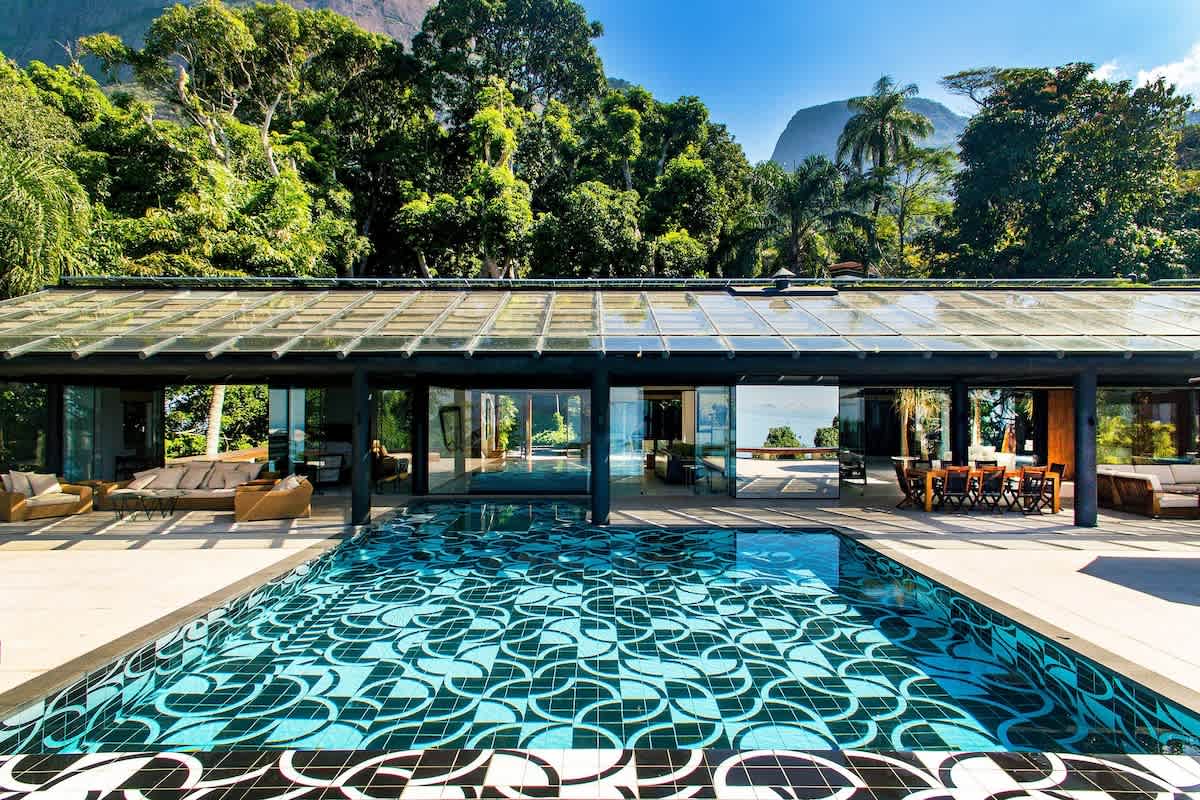
We run a five-suite villa with an infinity pool above São Conrado beach, and its rates and live availability are on the Art de Vivre booking page.
Book directTwo lookouts on one road
Above the Jardim Botânico, a forest road leaves the Horto at the top of Rua Pacheco Leão and climbs through the Parque Nacional da Tijuca toward Alto da Boa Vista. Two well-known lookouts sit beside it, about a kilometre apart: the Vista Chinesa, with its Chinese-style pavilion, and the Mesa do Imperador, higher up the ridge. The park counts the Vista Chinesa among its famous postcard views.
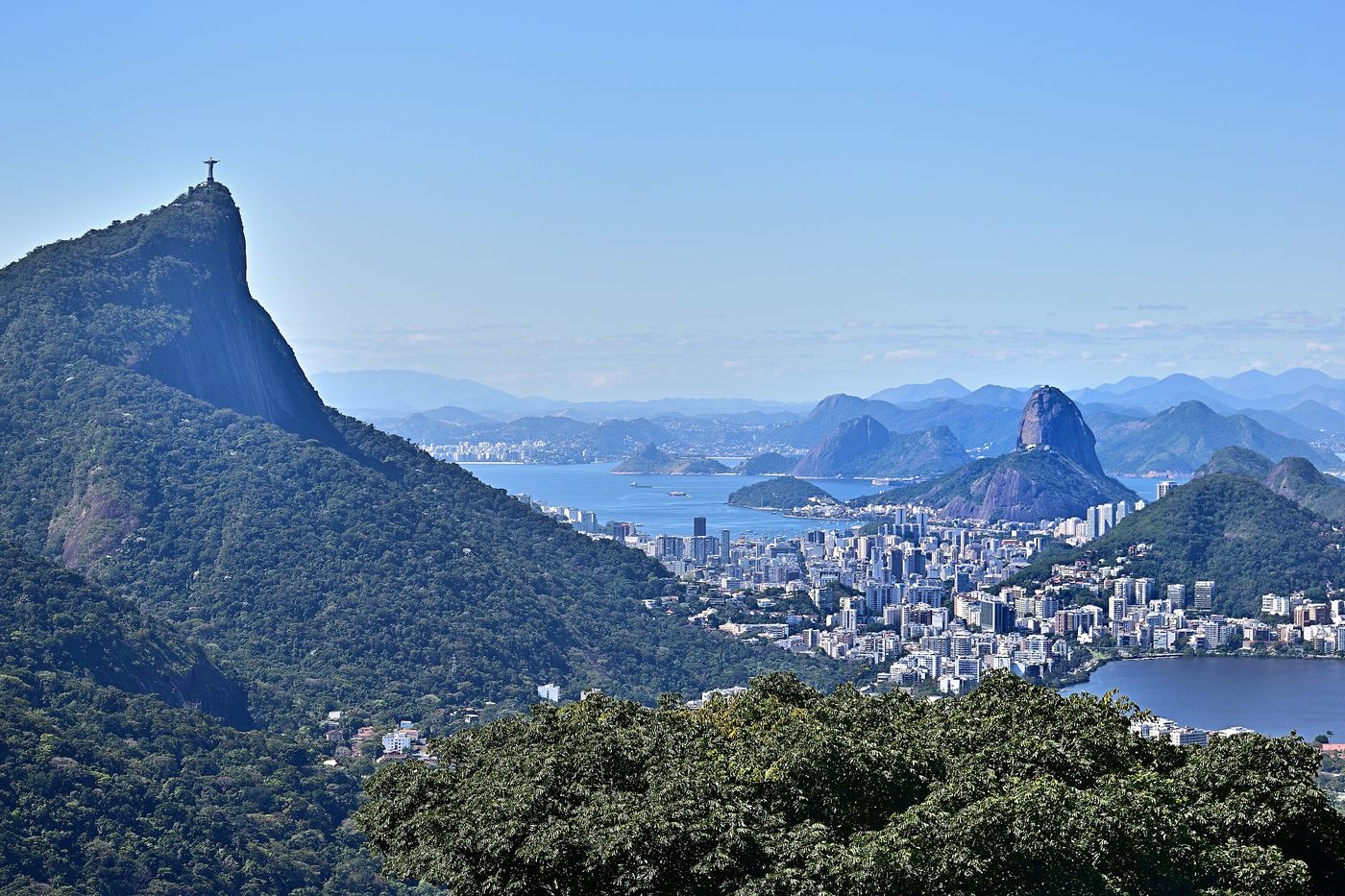
Both look down on the south side of the city, over the Lagoa Rodrigo de Freitas, Ipanema and Leblon, with Christ the Redeemer and Sugarloaf in the same frame. Neither charges for entry, and you can park beside each one, so the view is a few steps from the car. That makes them an easy outing for grandparents and small children as well as for the walkers in the group.
From the villa it is around half an hour by car, through Gávea and past the Jardim Botânico to the Horto, depending on traffic. It is one of the simplest big views in Rio to fit into a morning or an afternoon, with no ticket to buy and no train to catch.
Vista Chinesa
The Vista Chinesa stands about 380 metres above sea level, at the junction of the Estrada Dona Castorina, coming up from the Horto, and the Estrada da Vista Chinesa. The pavilion is a pagoda in Chinese style, and the view opens to the east beneath it.
The Lagoa fills the middle of the picture, with the trees of the Jardim Botânico below you. Corcovado and the Christ rise on the left, Sugarloaf stands at the back, and the two peaks of Dois Irmãos close the scene on the right, above Leblon. On a clear day you can follow the coast across the bay to Niterói.
Choose a clear day: the distance is the point of coming, and haze or low cloud flattens it. Because the view faces east, the afternoon sun sits behind you and lights the city from the front, which is the easier light for photographs. Most visits last twenty minutes or so, long enough to find the landmarks, point out the beach you swam at that morning and take the group photograph under the pagoda roof.
Why it is called the Vista Chinesa
The name goes back to tea. In the 1810s, the court of the prince regent Dom João brought Chinese workers from Macau to grow tea at the new botanical garden below, and the plantations later spread up the slopes of the Tijuca hills. The road is older than the pavilion: a carriage road linked the Jardim Botânico and Alto da Boa Vista by 1856.
The tea never became the export crop Dom João had hoped for, and by the late 1820s the plantations were in decline. Many of the workers stayed on in the hills, and a map from 1844 already marks a building called the Casa dos Chinas on this spot.
The pavilion you see today went up under Mayor Francisco Pereira Passos as a tribute to them. The park dates the work to between 1902 and 1906, and its opening is usually given as October 1903. It looks like bamboo, but it is cement mortar shaped into bamboo forms. In 2013 the city restored it, stripping the old paint, repairing the damaged sections and repainting it with lime-based paint.
Mesa do Imperador
About a kilometre further along the road, a few minutes by car, the Mesa do Imperador sits close to 500 metres up, with parking right beside it. The name means the emperor's table, and a long table at the lookout gives the place its name.
Tradition says Emperor Pedro II picnicked at this table with his family. The park's own account is that nobles and wealthy families used the spot for country lunches, and that the emperor visited it on his walks in the forest. It was Pedro II's government that ordered the forest around it replanted from 1861.
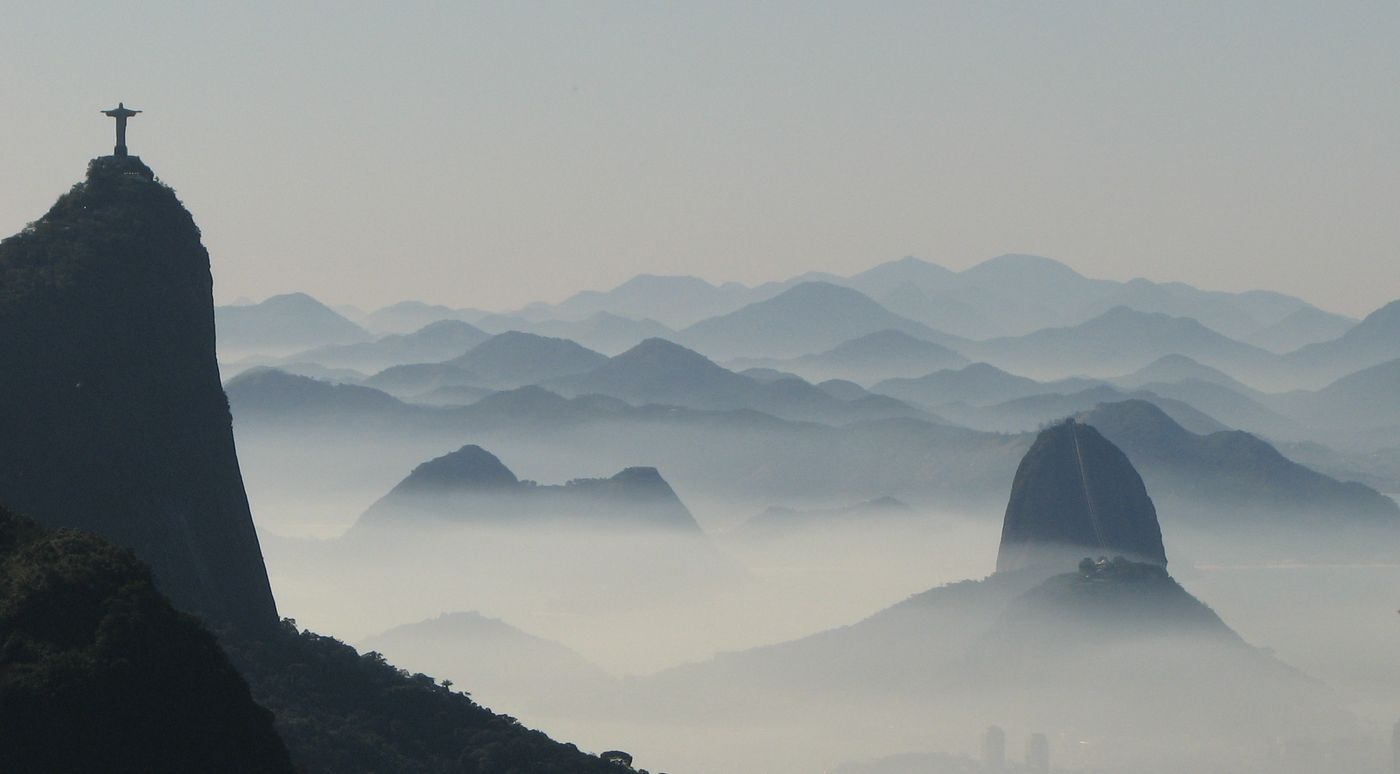
The view from up here reaches further across the water. Christ the Redeemer and Sugarloaf are both in sight, with Guanabara Bay spread out beyond them.
If some of the group want to stretch their legs, a 1.6 km section of the Transcarioca, which the park calls the largest urban trail in Brazil, links the two lookouts through the forest. It takes about 40 minutes and is rated moderate, and the driver can wait at the other end. If you only have time for one stop, the Vista Chinesa is the classic photograph, though most people do both.
When you can drive up
Both lookouts are inside the national park, and the park limits traffic on the road that serves them, the Estrada Dona Castorina. On weekends and public holidays, cars and motorbikes are kept off it from 7 am to 7 pm. On weekdays the closure runs only from 7 to 9 am.
So a visit by car works best on a weekday, any time after nine. The park lists both lookouts as open daily from 8 am to 5 pm.
These rules were set out by the park in 2024 and can change for weather, works or events, so check the park's notices before you go. During the day at weekends, the road belongs to walkers and cyclists.
Cyclists on the climb
The park lists cycling and running among the things people come to the Vista Chinesa to do, and the climb from the Horto is a regular ride for Rio's cyclists. With cars kept off at weekends, those are the busiest days for bikes on the road.
It has racing history too. At the Rio 2016 Olympics, the road races used a 25.7 km circuit over the Vista Chinesa: the men rode it three times and the women once.
When the city resurfaced the road in 2013, it added signs for sharing it with bikes. On a weekday drive up, expect riders on the bends and give them room.
On into the Floresta da Tijuca
Past the Mesa do Imperador, the Estrada da Vista Chinesa runs on through the forest to Alto da Boa Vista, and it is about a quarter of an hour by car from the Mesa to the main gate of the park's Floresta sector, at Praça Afonso Viseu. A few metres past that gate is the Cascatinha Taunay, the tallest waterfall in the park. It takes its name from the painter Nicolas-Antoine Taunay, who built a small house beside it in 1817 and painted the falls.
Further in, the pink Capela Mayrink dates from 1855. The four Cândido Portinari paintings on its altar are replicas, and the originals are in the Museu Nacional de Belas Artes. Deeper still, about 3.5 km from the gate, the Açude da Solidão is the best-known lake in the Floresta sector, reshaped by Roberto Burle Marx during the Castro Maya administration.
Much of this forest was planted by hand. Between 1861 and 1874, on the imperial government's orders, eleven enslaved people planted more than 100,000 native trees on slopes that logging and sugar and coffee farming had cleared, and since 2025 a plaque near the visitor centre records their names.
Cars can enter the Floresta sector from 8 am to 5 pm, up to 300 in the morning and 300 in the afternoon, and people on foot or by bike from 6 am. At weekends, when the road from the Horto is closed to cars, the driver can reach Alto da Boa Vista from the Barra side along the Estrada das Furnas. For waterfalls and trails, see the forest section of things to do in Rio.
Going from the villa
The easy way to do this is with an English-speaking driver arranged through Art de Vivre's concierge, in daylight, on a weekday. Allow about an hour for the two lookouts, or most of a day if you add the forest and a long lunch.
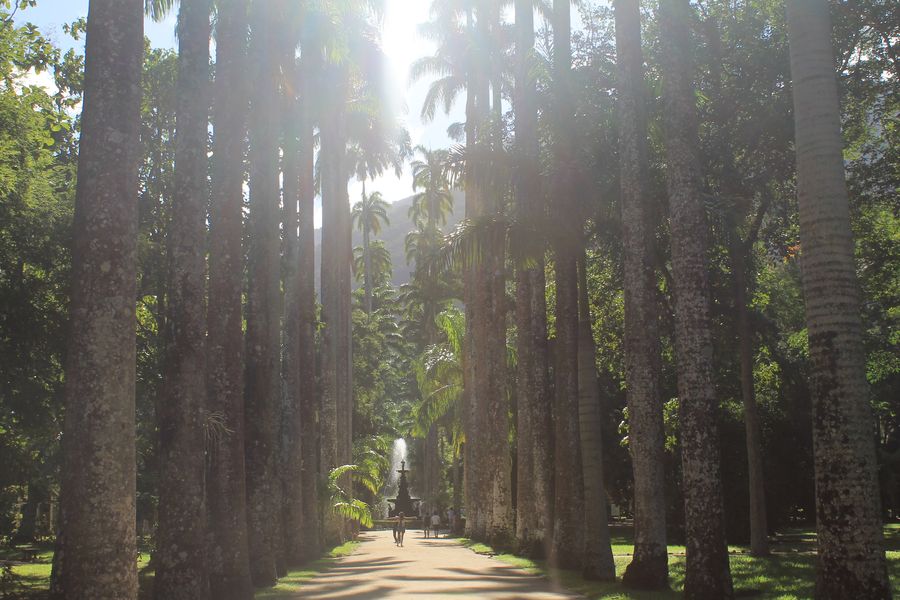
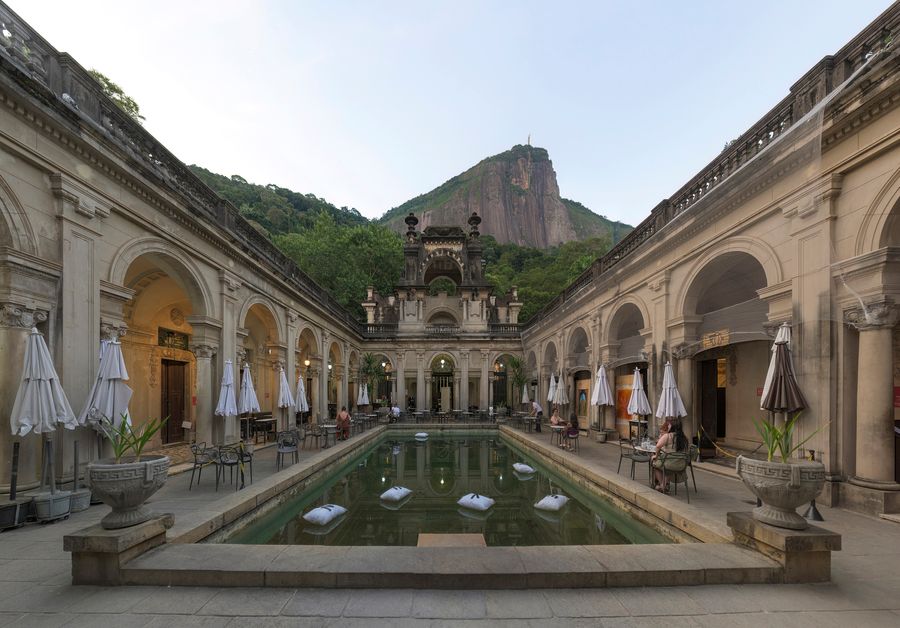
It pairs well with the gardens at the foot of the road. Start at the Jardim Botânico or Parque Lage in the morning, then drive up for the view once the afternoon light is on the city.
For lunch inside the forest, Os Esquilos has served meals since 1945 in an old colonial house that once belonged to the Barão de Escragnolle. Check its opening days before you set off.
Take water and sunscreen, and charge your phones before you leave: mobile signal in the park can be weak. If the group also wants to stand under the statue, Christ the Redeemer is a separate outing with its own tickets.
Questions
Can you drive to Vista Chinesa at the weekend?
Not during the day. The park keeps cars and motorbikes off the Estrada Dona Castorina, the road to the Vista Chinesa and the Mesa do Imperador, from 7 am to 7 pm on weekends and public holidays, and from 7 to 9 am on weekdays. Check the park's notices before you go.
Is Vista Chinesa free?
Yes. There is no charge to visit the Vista Chinesa or the Mesa do Imperador. In the Parque Nacional da Tijuca, tickets are mainly needed for Christ the Redeemer and some activities.
Why is it called Vista Chinesa?
It honours the Chinese workers brought from Macau in the 1810s to grow tea at the Jardim Botânico and on the slopes above it. The Chinese-style pavilion went up under Mayor Pereira Passos and opened in 1903.
How far is Mesa do Imperador from Vista Chinesa?
About a kilometre further along the same road, a few minutes by car, with parking beside both. On foot, a 1.6 km section of the Transcarioca trail links them in about 40 minutes.
What can you see from Vista Chinesa?
The Lagoa Rodrigo de Freitas, the Jardim Botânico, Ipanema and Leblon, Christ the Redeemer on Corcovado, Sugarloaf and Dois Irmãos. On a clear day you can see across the bay to Niterói.
The forest road to the Vista Chinesa is about half an hour from the villa in São Conrado, with the driver arranged through Art de Vivre; book direct with Art de Vivre for your dates.
Sources
Facts on this page were checked against these sources in October 2026. Opening hours and prices change: confirm before you go.
- Parque Nacional da Tijuca (home page)
- Vista Chinesa | Parque Nacional da Tijuca
- Mesa do Imperador | Parque Nacional da Tijuca
- Novas regras de visitação no Parque Nacional da Tijuca
- Cascatinha Taunay | Parque Nacional da Tijuca
- Capela Mayrink | Parque Nacional da Tijuca
- Açude da Solidão | Parque Nacional da Tijuca
- Vista Chinesa (Wikipédia)
- Vista Chinesa (Wikipedia)
- Prefeitura do Rio conclui obras da Vista Chinesa (Panrotas, 2013)
- 15. Mesa do Imperador x Vista Chinesa | Trilha Transcarioca
- Placa homenageia 11 escravizados que reflorestaram Floresta da Tijuca (Agência Brasil, 2025)
- Parque Nacional da Tijuca oferece trilhas, cachoeiras e alguns dos mirantes mais famosos do Rio (Itatiaia, 2026)
- 7 melhores mirantes para preguiçosos no Rio de Janeiro (Catraca Livre)
- Os Esquilos, 80 anos (Estado de Minas, 2025)