Rio's weather in short
Rio sits in the Southern Hemisphere, so the seasons run opposite to Europe and North America. The short version: it is warm most of the year, the sea is swimmable in all four seasons, and there is no cold winter to plan around. What changes is the heat, the rain, and how many people are in town.
The hottest, busiest months are December through March. The mildest, clearest ones are June, July and August. Spring and autumn sit in between — warm days, calmer streets, dependable beach weather without the peak-summer crush. Rain here tends to come in short, heavy bursts and pass within the hour rather than settle in for days.
For the villa, that seasonal shape matters more than the exact date. The pool and open pavilion are built for heat, and the covered terrace and cross-breeze keep the house comfortable at the height of summer. The hard climbs behind the house are better in the cool, dry window. Here is how each season feels.
Summer (December–March)
Summer is Rio at full volume. Days are hot and humid, often in the low-to-mid thirties Celsius, with strong sun and a warm sea. This is high season — Ipanema, Leblon and Copacabana fill up, the city stays out late, and demand for the villa is at its highest. For these months, and especially the holidays, plan well ahead.
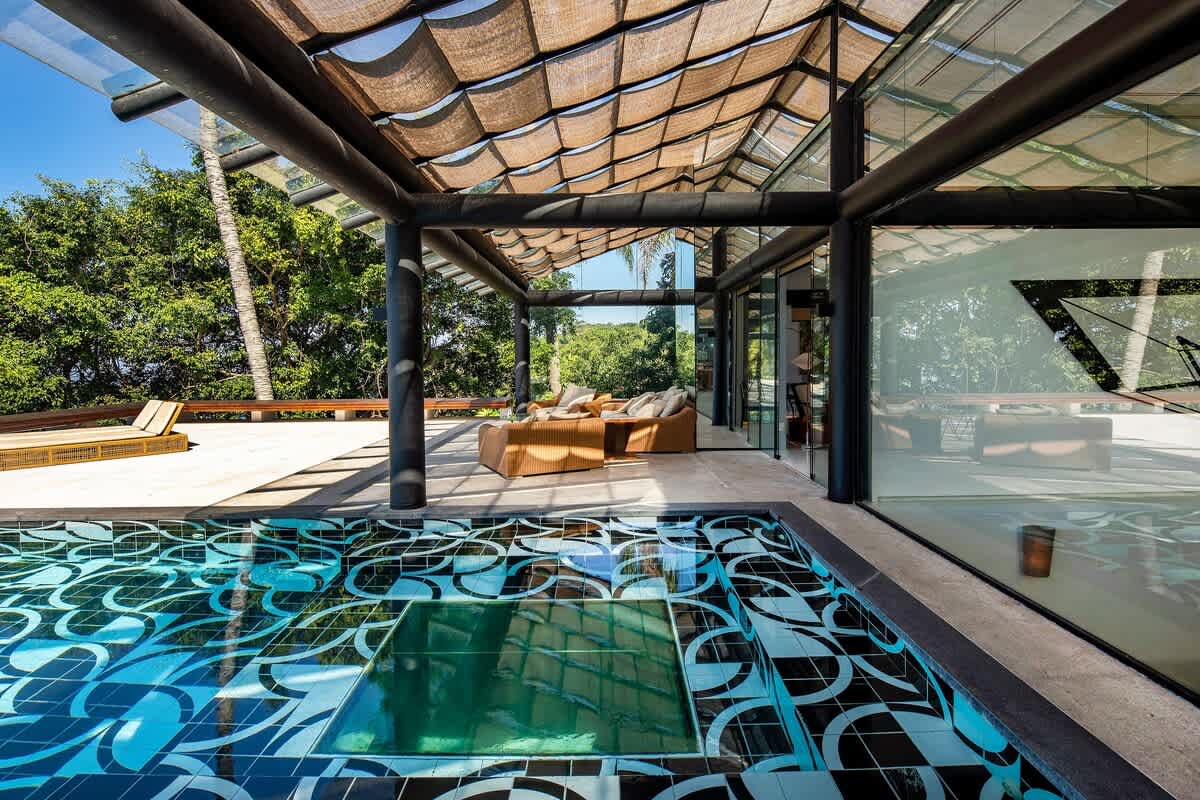
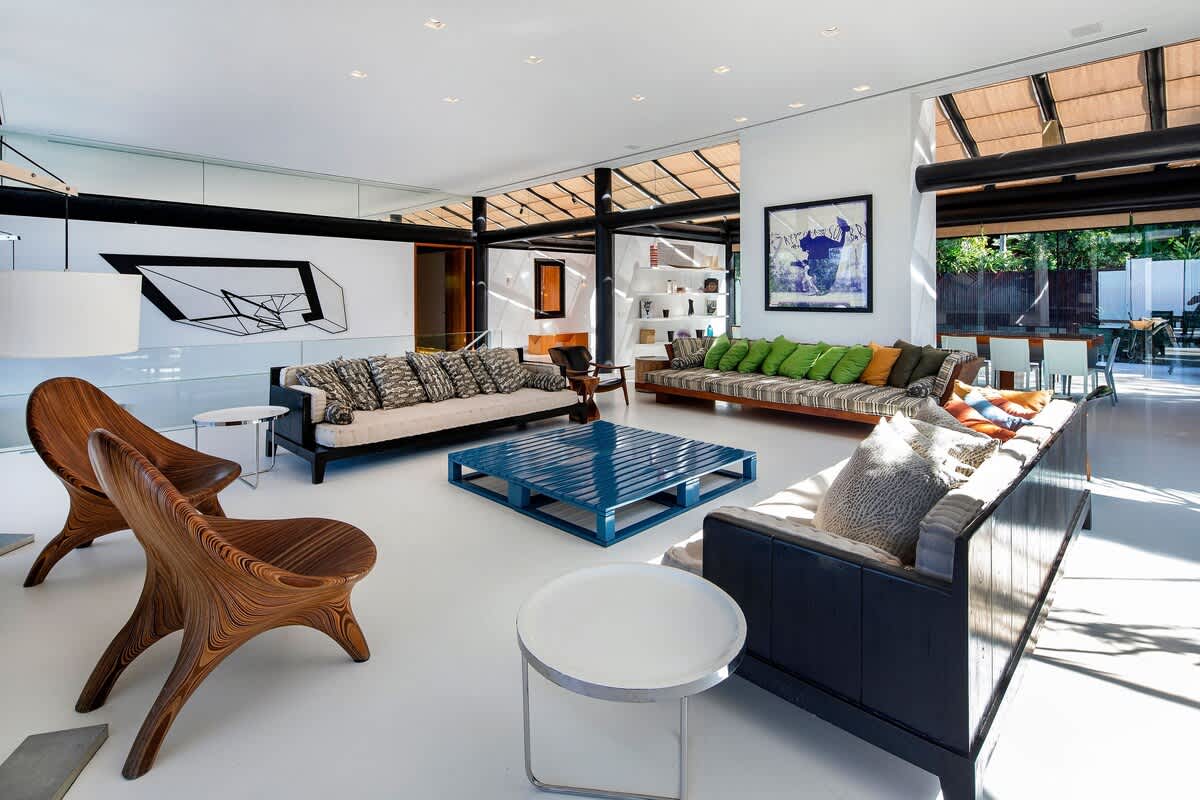
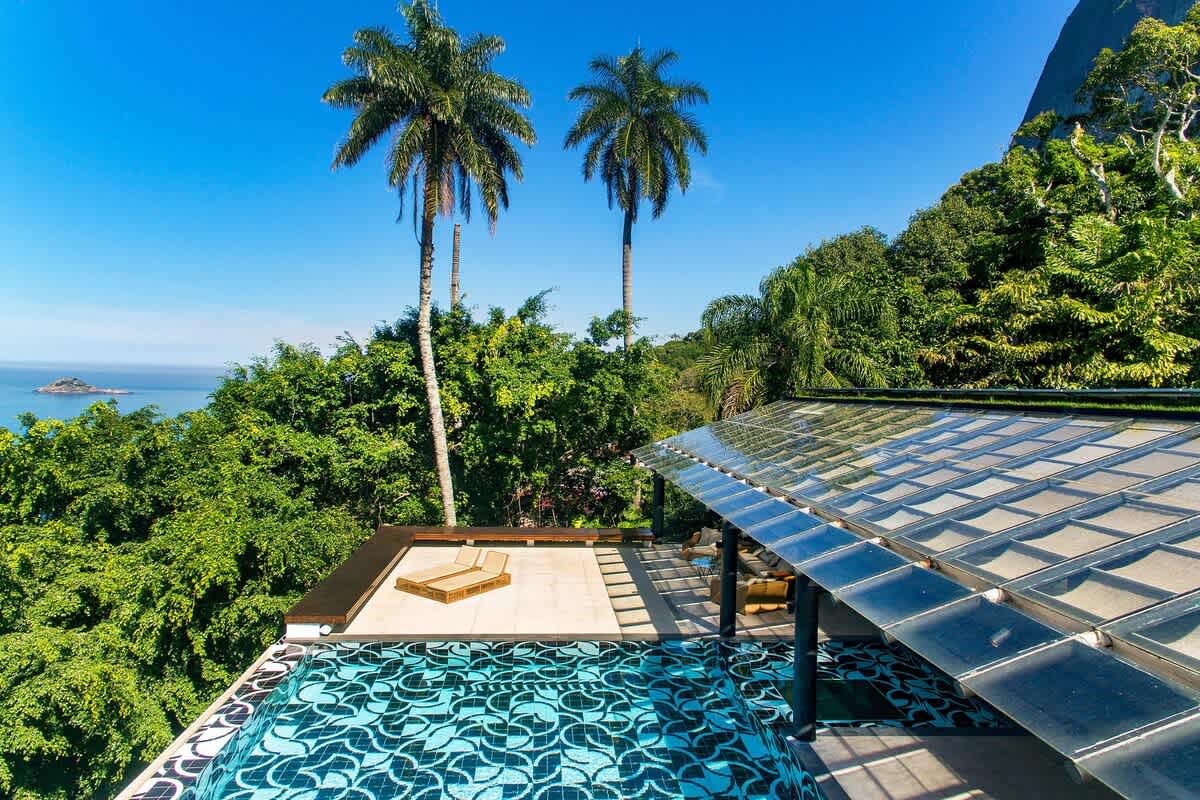
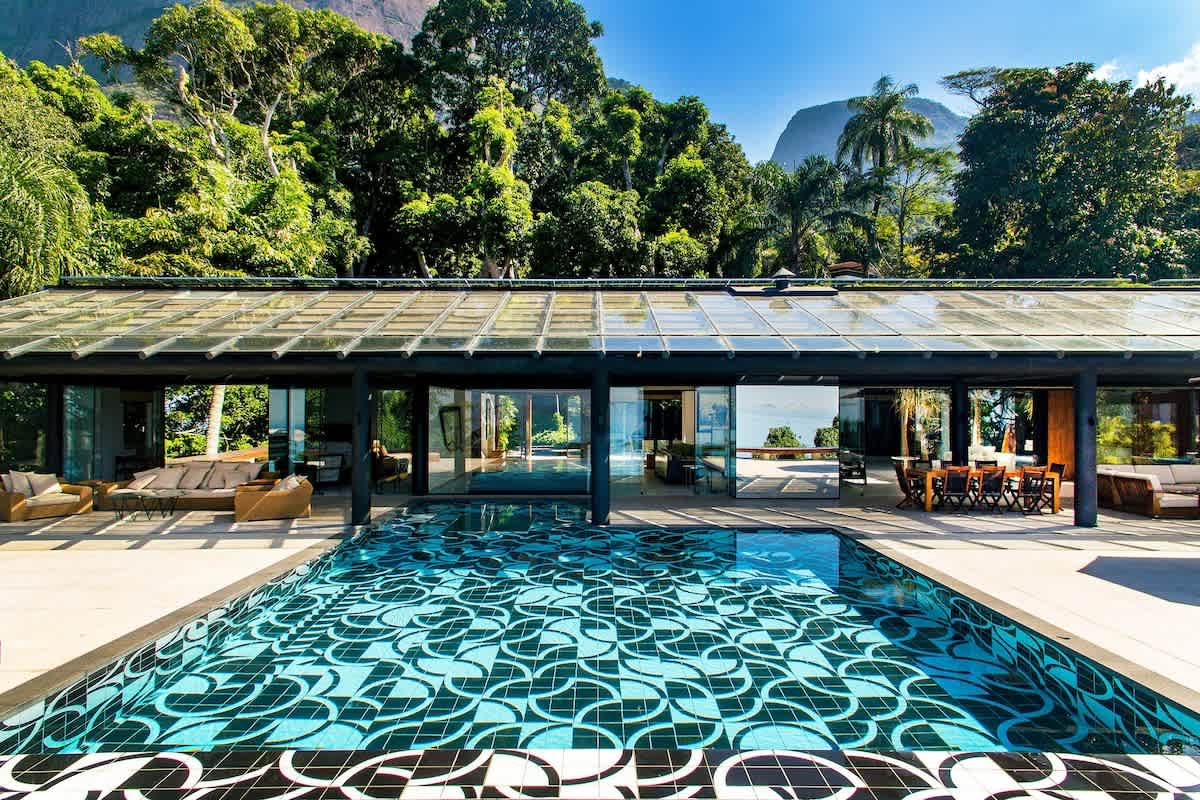
This is also the season the villa was designed around. The mosaic pool runs the full width of the deck, the pavilion walls slide back to open the house on three sides, and the covered terrace gives shade with the Atlantic in front. The ocean breeze does most of the cooling; by mid-afternoon most groups have settled at the poolside pergola.
Summer is the wet season too, but not the way that word suggests. Rain usually comes as a heavy late-afternoon downpour, clears within the hour, and leaves the air fresher. Keep the plan loose, hike early, and let the pool carry the hot part of the day.
Autumn (April–June)
Autumn is, for many travellers, the quiet sweet spot. The heat comes off its summer peak but the days stay warm and the sea stays swimmable. The holiday crowds have gone home, the beaches feel roomier, and the whole city runs at a calmer pace.
These are dependable beach days without the peak-summer intensity, and the villa is still firmly in pool weather. It tends to be better value and easier to book than the December-to-March window, since you are outside the busiest stretch of the year. Rain grows less frequent toward winter, and by season's end the long, stable dry spells that make the big climbs possible are setting in.
Winter (June–August)
Rio's winter is mild, not cold. Expect warm, clear days, cooler nights, low humidity, and the cleanest air and longest views of the year. Locals add a light jacket after dark; visitors from colder places stay in shirtsleeves. The sea is cooler, and crowds are thinnest outside the school holidays.
This is the window for the hard hikes. The push up Pedra da Gávea — the cliff directly behind the villa — is a long, steep, scrambling climb, far safer in cool, dry, stable weather than in summer heat. The gentler Pedra Bonita trail nearby, with its city view, is also at its best. Art de Vivre arranges both with a mountain guide.
Poolside, winter is quieter — the water is bracing rather than warm, and some afternoons you will want sun over shade. But the clear skies, the sharp mountain views behind the house, and an easier, less crowded city are the trade, and for many guests a good one.
Spring (September–November)
Spring is the warm-up. Temperatures climb back through the season, the sea loses its winter chill, and the city starts to fill again ahead of the summer rush — without yet reaching it. Early spring still carries some of winter's clear, dry weather; late spring starts to feel like summer.
It is a good middle path: warm enough for real pool and beach days, quiet enough to move easily, and often good value before high-season demand takes hold. The mountain trails are still very walkable early in the season, while there is enough warmth by November to make the pool the center of the day again.
The best time for you
For families, autumn and spring are usually easiest: warm water, real pool weather, roomier beaches, and a calmer city to move a group around. Summer works too, and the house is at its best in the heat — just expect crowds and book early.
For hikers, winter is the clear pick. The cool, dry, stable stretch across June, July and August is the safest and most comfortable window for Pedra da Gávea and the longer trails, with the sharpest views as a bonus. Spring and autumn hike well too; deep summer is the hardest going.
If you want the city at full tilt — the crowds, the late nights, the two big events — summer, and Carnaval or Réveillon in particular, is your season. If you want warm weather, a quiet house, open beaches and better value, aim for autumn or late spring instead. Whichever you choose, the villa is booked direct with Art de Vivre, and the concierge, transfers and guided hikes are arranged before you land.
Reserve the villa direct with Art de Vivre — message Charlie for the dates that suit your season, and the chef, transfers and guided hikes are set before you arrive.