Reserve direct
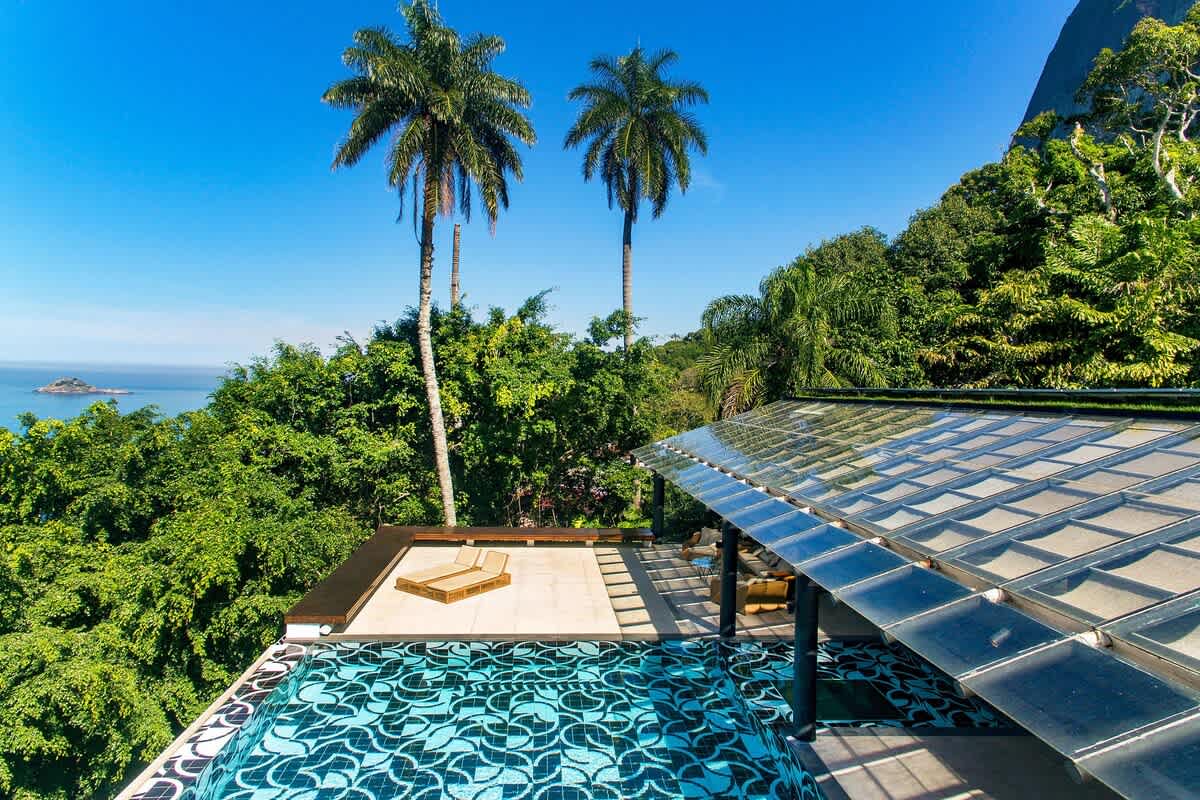
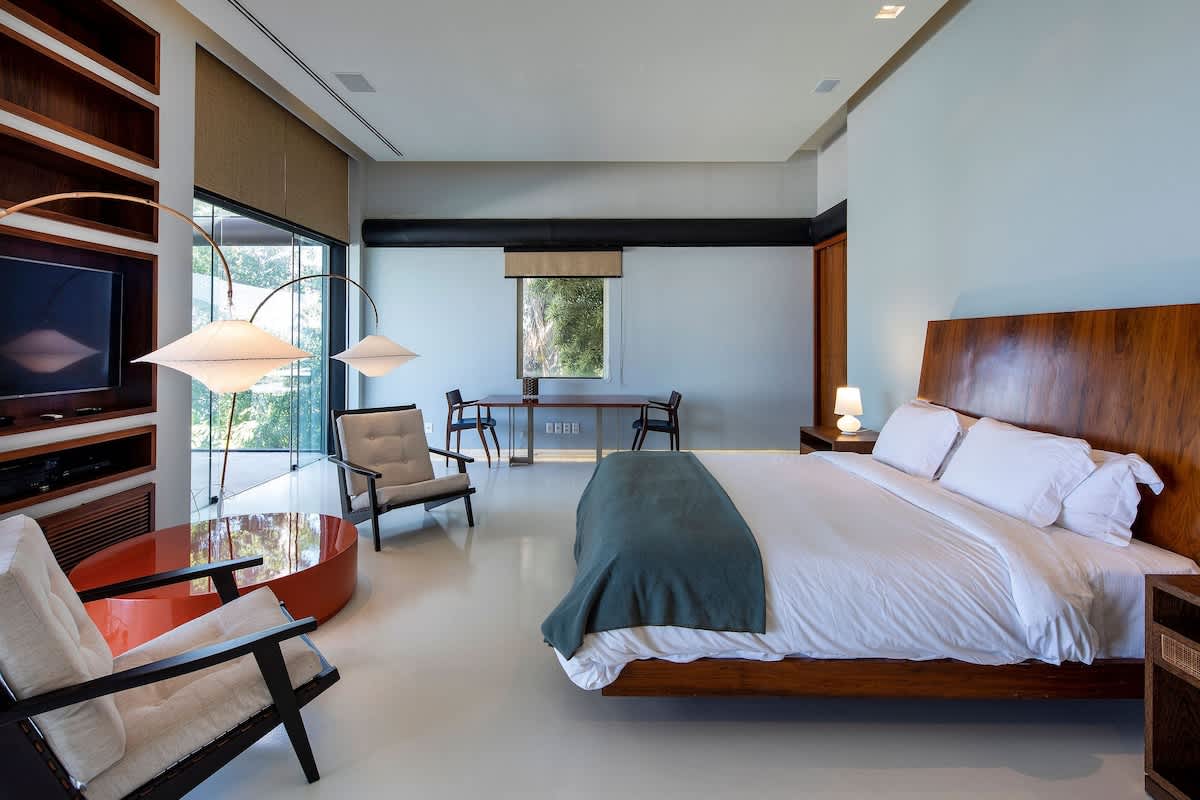
We run a five-suite villa with an infinity pool above São Conrado beach, and its rates and live availability are on the Art de Vivre booking page.
Book directThe rock
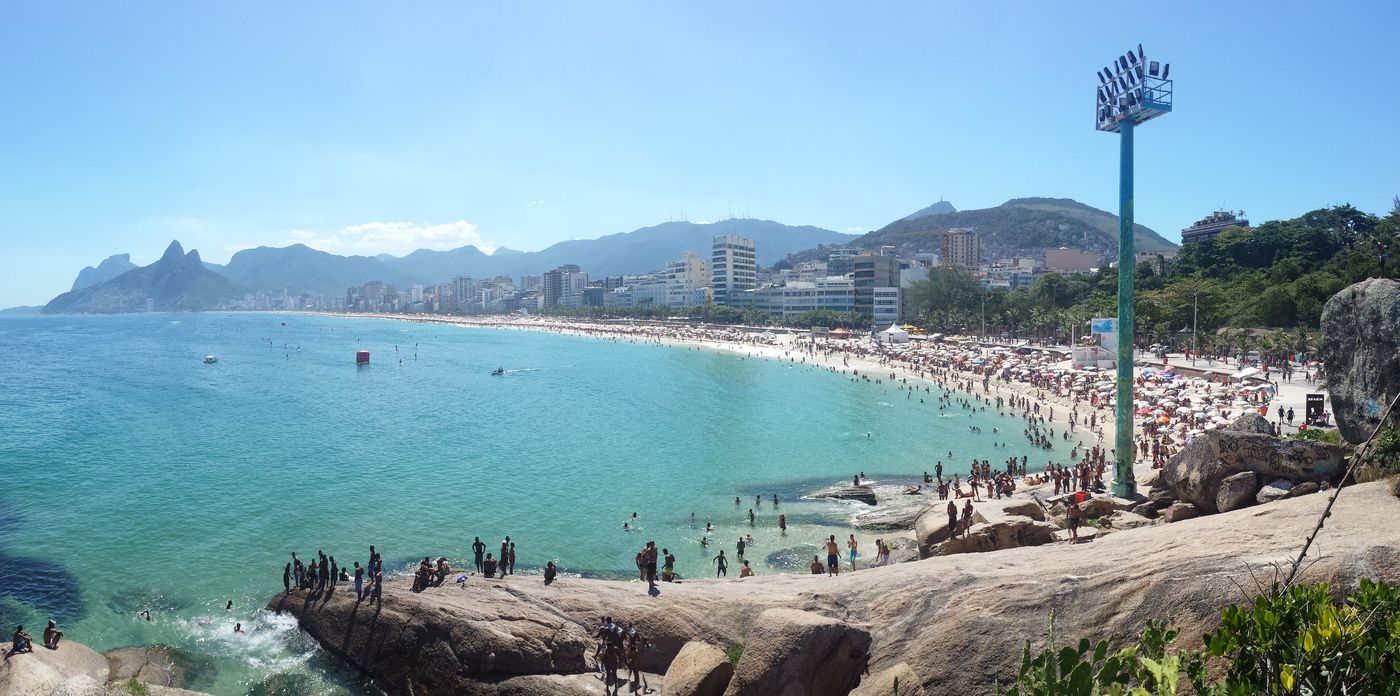
Arpoador is the small peninsula of rock and sand at the eastern end of Ipanema, where the coast turns the corner toward Copacabana, and part of it belongs to each neighbourhood. The rock itself, the Pedra do Arpoador, rises at the tip, with walkways that make it easy to climb, and it is one of the best-known places in the city to watch the sun go down. From the top you can look both ways, west along Ipanema and Leblon and east over Praia do Diabo toward Copacabana. The beach on the Ipanema side, Praia do Arpoador, is only about 500 metres long before it runs into the 2.6 km of Ipanema proper.
The name means the harpooner. By tradition it goes back to colonial times, when fishermen watched from here for the whales that came close to the coast and hunted them with harpoons. The rock and the beaches around it are included in the landscape UNESCO listed as World Heritage in 2012, Rio's Carioca Landscapes between the Mountain and the Sea. Ipanema itself grew from Villa Ipanema, laid out in the 1890s by José Antônio Moreira Filho, the Baron of Ipanema.
Sunset and applause
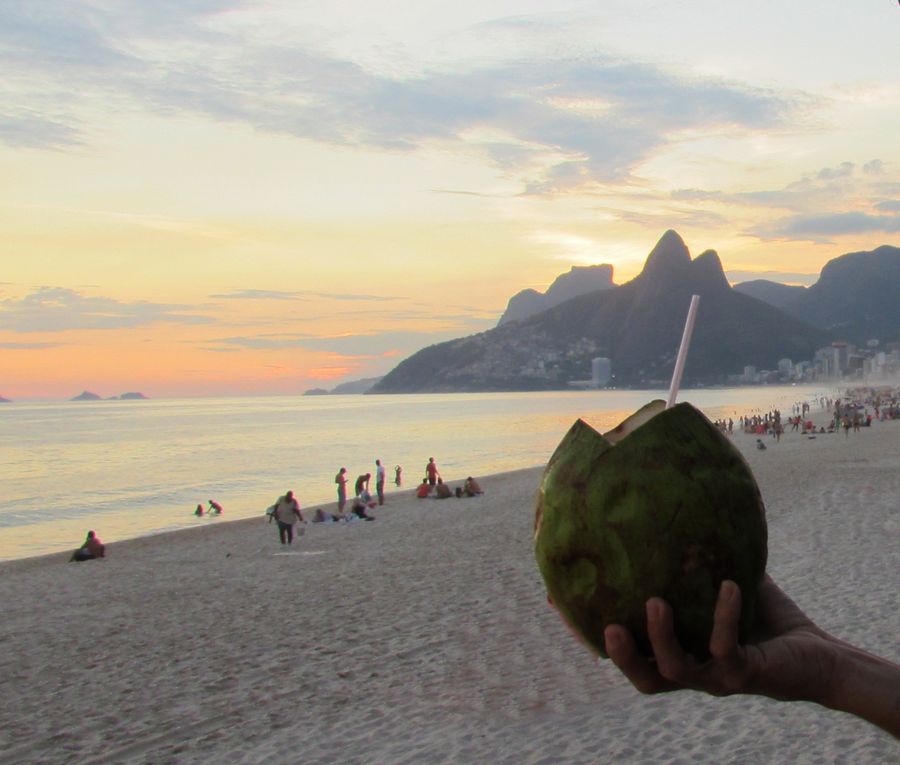
In the last hour of daylight people fill the rock and the sand below it, sitting on the warm stone and watching the light change over the water. As the sun slips out of sight the crowd often applauds, above all in summer.
Arrive 45 minutes to an hour before sunset for a good spot on the rock, and stay for the 20 minutes after. The sky over Leblon keeps changing colour once the sun has gone. Bring a towel or a light layer to sit on, since the stone is rough, and a bottle of water in summer.
Out to sea, about 5 km off Ipanema, the Cagarras Islands are in view, protected as a natural monument since 2010, their rocks streaked white enough to pick out from the beach. Our guide to Rio's islands by boat covers a day out to them.
Sunset times through the year
Rio keeps Brasília time, UTC-3, all year. Brazil dropped daylight saving time in 2019, so sunset moves only with the seasons, by about an hour and a half between midsummer and midwinter.
Approximate sunset times in the middle of each month: January 6.45 pm, February 6.30 pm, March 6.10 pm, April 5.40 pm, May 5.20 pm, June 5.15 pm, July 5.25 pm, August 5.35 pm, September 5.45 pm, October 6 pm, November 6.15 pm and December 6.35 pm. The latest sunsets of the year fall in the first half of January and the earliest in early June.
Check the exact time for your date in the morning and add the drive. A bank of cloud low over the sea can hide the last minutes, so look at the sky to the west before you leave the villa.
Where the sun goes down
From the rock you look west along the whole curve of Ipanema and Leblon to the twin peaks of Dois Irmãos at the far end, with Pedra da Gávea, the mountain behind the villa, rising beyond them. Through the cooler months the sun sets behind that skyline of hills and peaks.
For a stretch around midsummer, near the December solstice, the sun sets into the sea instead, to the left of the peaks, a rare sight on Brazil's mostly east-facing coast. Summer is also when the rock is busiest, so on December and January evenings arrive earlier than usual.
For photos, frame the peaks with the people on the rock in the foreground, and take your pictures in the few minutes before the sun reaches the skyline or the sea. Once it has gone, turn the phone's exposure down a little to keep the colour in the sky.
Parque Garota de Ipanema
Facing the beach at Arpoador, Parque Garota de Ipanema takes its name from the song by Tom Jobim and Vinicius de Moraes. The city park covers about 25,000 square metres and reopened in October 2023 after a renovation, with a children's playground, a skate area, a small music arena and its own lookout. Its hours change with the season (in January 2026 it closed daily at 8 pm), so check before you go.
The song was written in 1962, inspired by a 17-year-old from the neighbourhood, Helô Pinheiro, whom Jobim and Vinicius watched walk past the Veloso bar-café on her way to the beach. Its English version, on the album Getz/Gilberto released in 1964, won the Grammy for Record of the Year in 1965.
It is a good place to wait for the light with children, who can use the playground while the adults keep an eye on the sky. It also makes an easy meeting point for a group that has spent the afternoon on different stretches of sand.
Praia do Diabo and the Copacabana Fort
On the Copacabana side of the rock, between Arpoador and the Copacabana Fort, lies the little Praia do Diabo, the Devil's Beach. It faces the open sea, and its name comes from the strength of the waves there. It is a fine beach to look down on from the rock, and most visitors enjoy it from the sand.
Past the little beach stands the Copacabana Fort, built between 1908 and 1914 at the southern tip of Copacabana and now home to the Army History Museum. It was the scene of the revolt of 5 July 1922, the first of the tenentista uprisings, and it is open to visitors, so an afternoon there can end with a short walk round to the rock for sunset; check its opening hours before you go.
Surfing at Arpoador
Arpoador is one of the best surf spots in the city. The rock shapes steady left-hand waves that reach two to three metres on a big swell, the take-off area is small and the line-up is busy, so it is a place to watch the local surfers from the rock. A strong current beside the rock carries surfers quickly back out after each ride, so for a swim choose the open sand, away from the rocks.
Rio's surfing story started close by. In 1952 a group of cariocas began riding waves at Copacabana on plywood boards, and in July 1965 Rio founded Brazil's first surfing association, which held its first championship that October. Arpoador claims another first too: a bikini is said to have been worn on a Brazilian beach for the first time here, in 1948.
Getting there and back
From the villa, Arpoador is about 20 to 25 minutes east along the coast through Leblon and Ipanema, longer in late-afternoon traffic, so leave a good hour before sunset. The driver can drop you near Parque Garota de Ipanema, which saves a hunt for parking at the busiest moment of the day. After sunset, agree a corner for the pick-up, since most of the crowd leaves the rock at once.
If you would rather walk, ask the driver to drop you in Leblon: it is about 4 km along the beach to the rock, with cafés on the way, and the walk makes a good start to the evening. Afterwards Ipanema and Leblon are minutes away for dinner: our guide to restaurants and dining has ideas, and beach food in Rio covers what the vendors sell on the sand.
In winter, from June to August, the sun goes down early enough to fit before a normal dinner hour, while in December and January it sets late, after a full beach day. Either way, book dinner for about an hour after sunset to allow for the drive.
Tips for the rock
Summer weekends and holidays bring the biggest crowds to the rock, and a weekday in the cooler months is much quieter. Travel light: a phone, a little cash for drinks and something to sit on are all you need.
Wear shoes with some grip, since the stone is uneven and can be slippery near the water, and keep an eye on children on the upper rocks. Our guide to the beaches near São Conrado covers the rest of the coast, including the sand below the villa.
Questions
What time is sunset at Arpoador?
Between about 5.15 pm in early June and about 6.45 pm in the first half of January. Rio stays on UTC-3 all year, since Brazil dropped daylight saving time in 2019.
Do people clap at sunset at Arpoador?
Yes. Beachgoers at Ipanema and on the Arpoador rock often applaud as the sun goes down, especially in summer.
Does the sun set over the sea at Arpoador?
Yes, for a stretch around midsummer, near the December solstice. Through the cooler months it sets behind the hills at the western end of the beach, near Dois Irmãos and Pedra da Gávea.
Can you swim at Praia do Diabo?
It faces the open sea and takes its name from the force of its waves, so most visitors enjoy it from the sand.
Sunset at Arpoador is an easy evening from the villa, with Art de Vivre's driver taking you there and bringing you home, so book the villa direct with Art de Vivre and keep one clear evening for the rock.
Sources
Facts on this page were checked against these sources in October 2026. Opening hours and prices change: confirm before you go.
- Arpoador (Wikipedia)
- Praia do Arpoador (Wikipédia)
- Arpoador (Wikipédia)
- Ipanema (Wikipedia)
- Ipanema (Wikipédia; Praia do Diabo redirects here)
- Parque Garota de Ipanema (Wikipédia)
- The Girl from Ipanema (Wikipedia)
- Fort Copacabana (Wikipedia)
- Cagarras Islands (Wikipedia)
- Surfe: história no Brasil (Wikipédia)
- Time in Brazil (Wikipedia)
- Praia do Arpoador (Time Out Rio de Janeiro; sunset applause)
- Parque Garota de Ipanema é reinaugurado no Rio após reforma (Agência Brasil, 12 Oct 2023)
- Rio impõe novas regras de segurança no Arpoador durante o verão (Jornal de Brasília, 3 Jan 2026; park closes 8 pm)
- Sunrise-Sunset API for Arpoador's coordinates (12 dates queried, listed in the facts ledger)