Where Joá is, and why you barely notice arriving
Leave São Conrado heading west and the road lifts onto the Elevado do Joá — also called the Elevado das Bandeiras — a viaduct carried out over the water beneath the cliffs, followed by tunnels through the rock. Ninety seconds later you are in Joá, and most visitors never register that they have changed neighbourhood at all.
Joá is the smallest neighbourhood in Rio de Janeiro: a headland of private houses on cliffs between São Conrado and Barra da Tijuca, with the Atlantic on three sides and essentially no commerce. There is no restaurant strip, no supermarket you would plan around, no beach promenade. There are houses, walls, sea, and a great deal of vegetation.
It is a common misconception — repeated in a lot of listings — that Joá is one large closed condominium with a single gated entrance. It is not: Joá is an open public bairro, and the gated condominiums, of which Joatinga is the best known, sit inside it. Worth knowing if you are comparing houses, because "in Joá" and "inside a gated condominium in Joá" are two different claims.
What the clifftop is actually like
Joá is the most private address on this coast, and the press nickname for it — Rio's Beverly Hills, "a Beverly Hills carioca" — captures the reputation if not the texture. It is quieter and more overgrown than that suggests. Roads are narrow and winding, houses are set behind walls and planting, and the dominant sound is the sea against rock below.
In market terms it stands out for houses rather than apartments: by average house price Joá ranks first in Rio, at somewhere around nine or ten million reais on 2025 figures. That is a different claim from the most expensive square metre in the city, which belongs to the apartment market in Leblon and Ipanema. Joá is where the big detached cliff houses are.
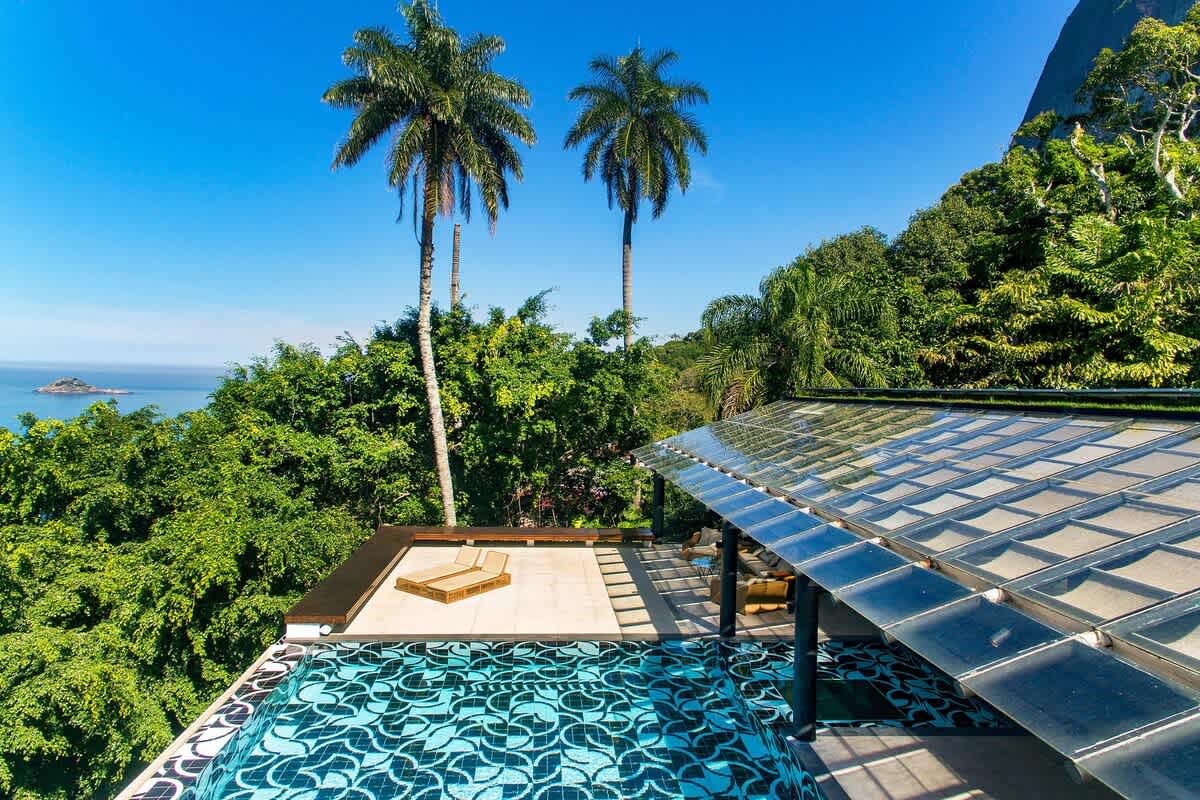
What you get for that is total seclusion above the water and a view that runs from the rocks below all the way east to Pedra da Gávea or west along Barra. What you give up is everything else: no walking to dinner, no shop at the corner, and a car for absolutely every errand. It answers a very specific brief, and answers it better than anywhere else in the city.
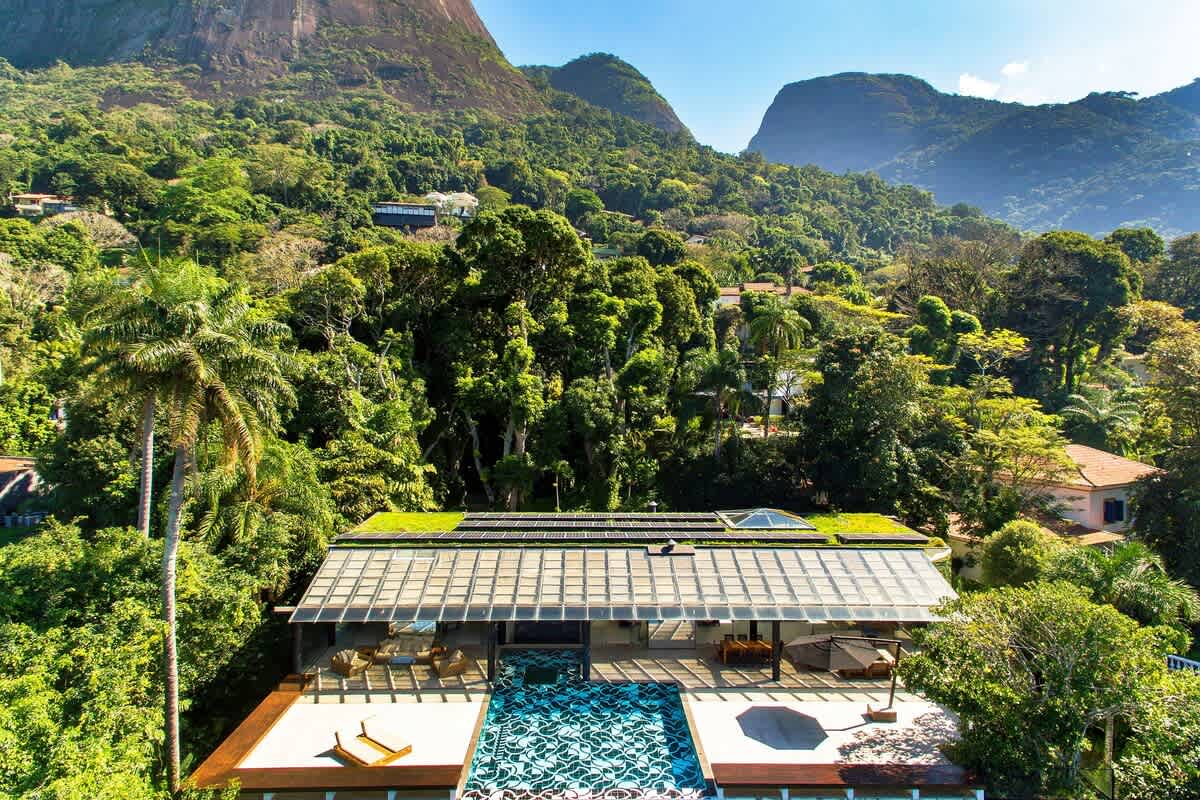
Art de Vivre also has a cliffside house in Joá, listed for sale rather than for rent, and that site has become a proper reference on the neighbourhood — a hub of researched guides on Joá's history, its residents, its architecture and its beach. If you want to go deeper than this page, joario.com's Joá section is the place.
Praia da Joatinga, and the tide
Joatinga is the reason most visitors come to Joá, and it is genuinely one of the best small beaches in Rio. Under three hundred metres long, wedged between rock walls, backed by cliff and vegetation, and you can walk from one end to the other in well under ten minutes.
The access is the part people get wrong. You reach it through a private residential area off Estrada do Joá: in at Rua Pascoal Segreto, then along to Rua Sargento José da Silva, where a stairway drops down to the sand. Access is free — you identify yourself at the entrance rather than pay — but you are walking through somewhere people live, and the tone to take is the obvious one.
Then there is the tide, which is not a detail. At high tide the sea covers the strip of sand and the beach effectively ceases to exist; there is no promenade to retreat to. Go at low tide, check the tide table for the day, and be off the sand before the water comes back in. The rocky approach also rewards shoes you can grip in rather than flip-flops.
It is small, it can get busy on a good weekend, and there is no infrastructure to speak of. Take water and take your rubbish out. What you get in exchange is a cove that looks like it belongs on a different coast entirely, fifteen minutes from the house.
Getting there from the house
By car it is about ten to fifteen minutes from the São Conrado hillside — down to the coast road, over the Elevado do Joá, through the tunnels, and off at the Joá exits. Parking near the Joatinga access is limited and on residential streets, which is the main argument for being dropped off and collected.
The drive itself is worth the trip on its own. The viaduct runs out over the sea below the cliffs, and eastbound on the way home you get São Conrado, the beach, the golf course and Pedra da Gávea arriving all at once through the windscreen. It is one of the better five minutes of road in Rio.
The other approach is by water. Boat days out of Marina da Glória or from the beaches typically run along this coast, and seeing the Joá cliffs and the Joatinga cove from the sea is the version most people remember. The concierge arranges the boat; ask for the coast toward Joá rather than only the bay.
If you would rather have the sand without the stairway and the tide table, the beaches guide covers the more straightforward options, several of them closer.
Practical notes
Time it around low tide, always. This single fact decides whether the trip works.
Go early on a weekend, or go on a weekday. It is a small beach with limited access, and a hot Sunday fills it.
Wear shoes you can walk on rock in, and take as little as possible — there is nowhere to leave anything and nobody watching it. The usual beach habits apply, more so here because it is quiet.
There is nothing to buy. No kiosk, no vendor you can rely on. Water, sun cream, a towel, and that is the trip.
Swim with respect for the swell. It is an open-Atlantic cove with rocks at both ends, and the water can move more than it looks like it should from the top of the stairs.
And keep the noise down on the way in and out. The path to the beach goes past people's front doors, and the access stays open because visitors behave.
Why this matters if you are staying in São Conrado
Joá is the clearest illustration of what this end of Rio's coast is: cliffs, private houses, small hidden beaches, and a road cut through rock to reach them. São Conrado is the more liveable version of the same idea — it has the beach, the golf course, the hotels and the fifteen-minute run into Leblon that Joá does not.
From the terrace here you are looking along the coast toward it. On a clear evening the headland to the west, with the last of the light on it, is Joá, and the cove is on the far side. Which makes it the easiest half-day trip from the house: down, over the viaduct, an hour or two on the sand at low tide, and back up before lunch.
For the neighbourhood you are actually staying in, start with the São Conrado guide and its history.
Ask the concierge for the tide table for your dates and a drop-off at the Joatinga stairs — it is the easiest good half-day from the house.