Reserve direct
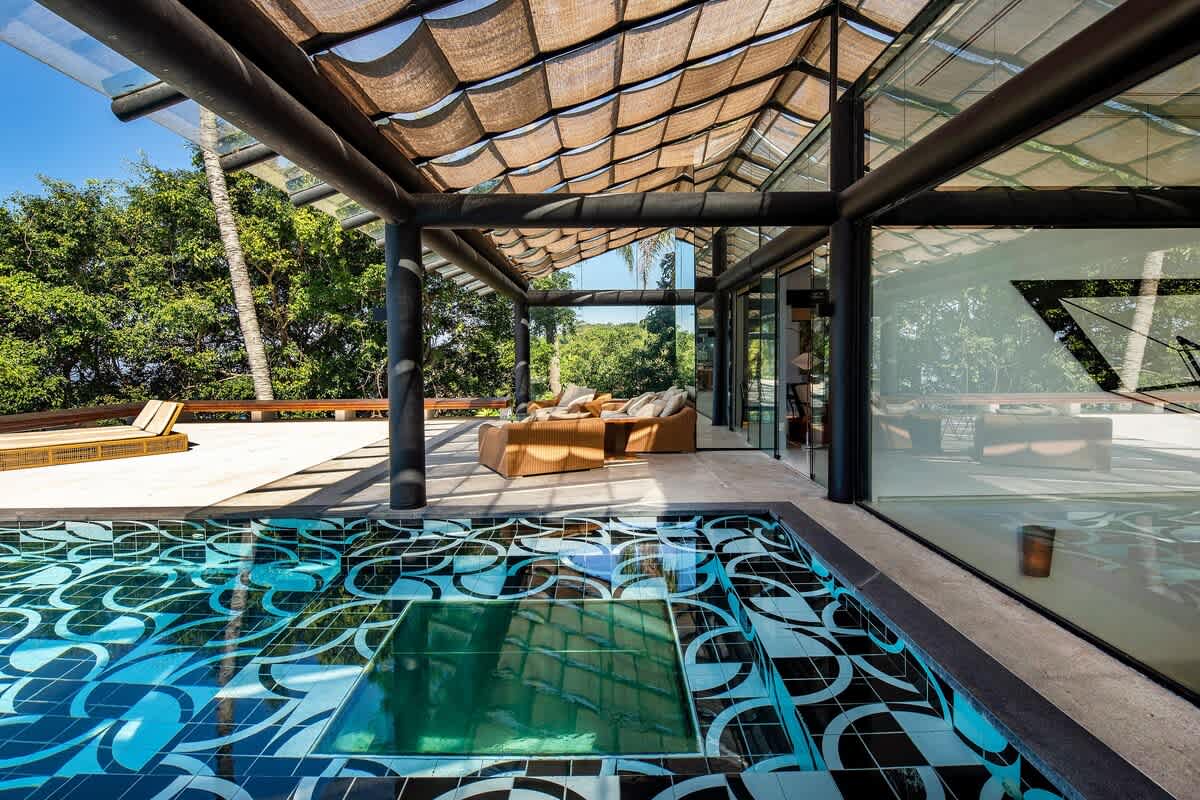
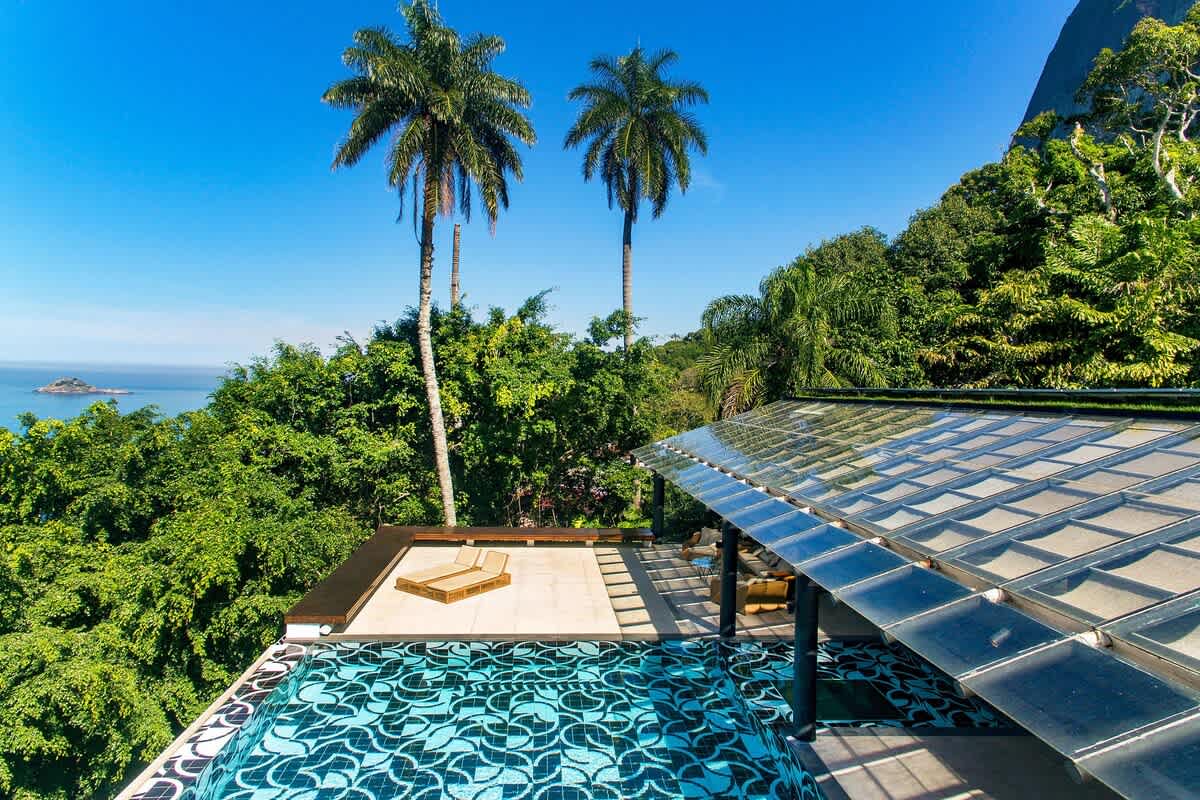
We run a five-suite villa with an infinity pool above São Conrado beach, and its rates and live availability are on the Art de Vivre booking page.
Book directBiscoito Globo
The classic beach snack in Rio is a paper bag of Biscoito Globo, light, crunchy biscuits made from polvilho, the starch of the manioc root. They come in two versions, salgado and doce: salty and sweet.
The biscuit began in São Paulo. In the early 1950s three brothers, Milton, Jaime and João, started selling polvilho biscuits in the city's Ipiranga district, then brought them to Rio, at first for what was meant to be a short stay. Sales went well enough that they stayed, and the name Globo was borrowed from the bakery in Rio where they baked their first batches.
Beach vendors are its traditional channel: in 2020 about 60 per cent of its sales were the paper packs sold along the beaches. The bag has its own story too. Its design was drawn by a Portuguese man who worked for a paper company in Olaria, in Rio's North Zone. Buy a bag of each flavour and see which you prefer.
Cold mate
Biscoito Globo goes with mate: roasted mate tea, sold ice cold and usually with lemon juice by vendors who carry it along the beach in big jugs, traditionally dressed in orange. The tea is made by steeping the roasted leaves of the erva-mate plant, and on the beach it is served chilled. Ask for mate com limão if you want the lemon.
Mate is a drink of the south of the continent, and Matte Leão is one of Brazil's best-known brands. It began in 1901 in Ponta Grossa, in Paraná, has sold its roasted tea under the Matte Leão name since 1938, and has belonged to Coca-Cola since 2007. A 2025 press profile describes its roasted mate as widely drunk cold on the beach.
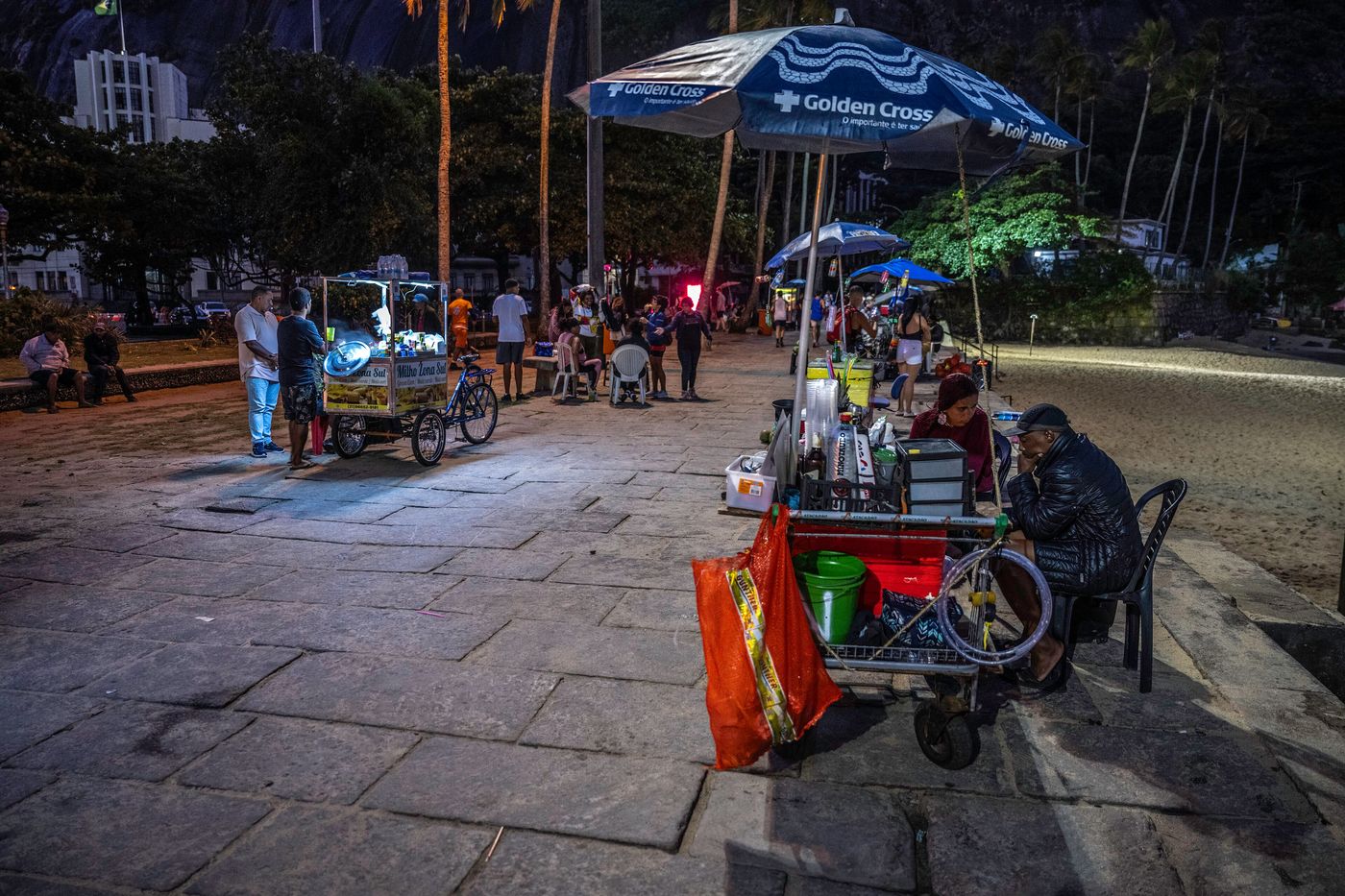
The city licenses its beach mate sellers: in March 2024 it issued 195 more licences, valid along the whole waterfront. A municipal decree of 2 March 2012 had already declared the work of beach vendors of mate, lemonade and polvilho biscuits part of Rio's cultural heritage.
Queijo coalho
Queijo coalho is a firm cow's-milk cheese from the Northeast, set with rennet, which is coalho in Portuguese. It holds its shape over heat, so it can be toasted, and it is eaten in slices, as a snack and on skewers. In the Northeast it also goes into home dishes such as baião de dois.
Selling it on the sand is regulated. Rio's beachfront decree of 27 May 2025, Decree 56.160, which replaced a first version of 15 May, requires a specific city permit for street trading on the seafront, and it singles out food on wooden sticks, queijo coalho included, along with grills, portable stoves and gas cylinders. The city stepped up enforcement on the beaches between Leme and Leblon in July 2026, so you may see fewer walking sellers there than in earlier years. To try it, ask the concierge or the chef where they like to go.
Açaí
Açaí, the fruit of the açaí palm, is eaten two ways in Brazil. In the Amazon it is traditionally served cold with manioc flour or tapioca, and some people make it into a pirão to eat with fish or shrimp, while others drink it as a juice with sugar.
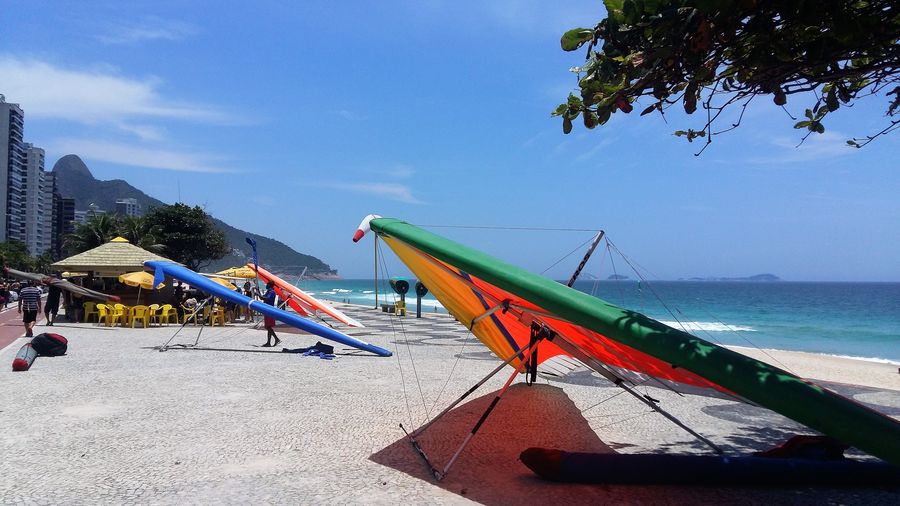
Elsewhere, Rio included, the frozen pulp is blended with guaraná syrup into a thick, sorbet-like cream, sometimes with fruit or cereal added, and served as açaí na tigela, açaí in a bowl. It is the cold, filling snack after a swim. On São Conrado beach, the Voo Livre kiosk has it on the menu along with juices and coffee.
Coconut water and cold drinks
Coconut water, the natural juice inside the coconut, is a refreshing drink in Brazil's beach towns and coastal cities, and an easy way to keep cool in the middle of the day.
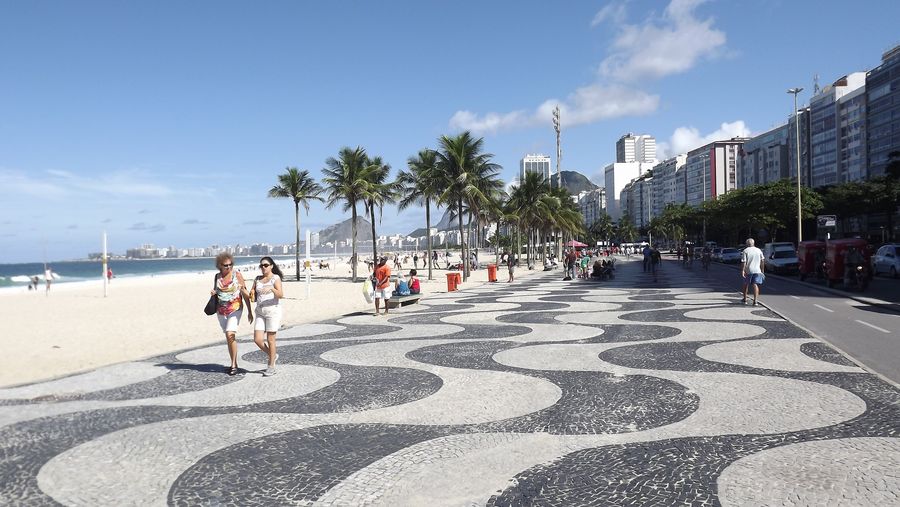
The mate and lemonade sellers carry their jugs along the sand, so there is rarely far to go for a cold drink. For a proper meal, the kiosks on the promenade serve full menus, some from breakfast through to dinner.
Drinks sold from the barracas on the sand come in cans and plastic, not glass: the 2025 decree bans glass bottles at the barracas and any other sales point on the sand. The kiosks on the promenade are excepted and work under their own rules. It keeps broken glass off the sand, which barefoot children will appreciate.
Chairs, umbrellas and barracas
The barracas, the fixed stalls on the sand, rent out chairs and umbrellas. According to Procon-SP, the São Paulo consumer-protection agency, renting them is a paid service like any other, but under the consumer code a barraca may not require a minimum spend on food or drinks. All prices should be clearly communicated.
Each city sets its own beach rules. Rio's 2025 decree requires kiosks and barracas to display their current prices, menus, conditions of sale and any extra fees, and it bans the cercadinho, the practice of fencing off public sand with rows of chairs. Ask the price for the day before you sit down and agree what is included.
Paying on the beach
Most Brazilians pay with Pix, the instant transfer system, and some beach sellers take it. Pix is built for customers of financial institutions in Brazil, so most visitors pay on the beach by card or with small notes. The money guide covers cards, cash and Pix in more detail.
Whatever you use, agree the price first and check the amount before you pay: look at the card machine's screen, and if you do pay by Pix, type the amount yourself and keep the phone in your own hands.
The kiosks on São Conrado beach
Orla Rio operates beach kiosks at Recreio, Barra da Tijuca, Ipanema, Copacabana, Arpoador and São Conrado. It says it has been on the city's seafront for more than 60 years, starting with a hot-dog stand on Barra da Tijuca beach, and that its kiosk concession began in 1992.
Orla Rio's own guide to São Conrado, published on 28 October 2026, picks out five kiosks. MUSA lists breakfast and brunch from 8 am to 1.30 pm, then lunch, dinner, drinks and smoothies, and is open from 8 am to 8 pm, Tuesday to Sunday. Voo Livre does croissants, pão de queijo, toasted ham and cheese, yoghurt, fresh juices, espresso and açaí, with the beach, Pedra da Gávea and Pedra Bonita in view.
QuiQui has a chef's menu signed by Daniel Pinho. At the 2026 Sabores da Orla awards its NhoQui took second place in the Prato Estrela category, and its Sweet PorQui, a pastel of glazed pork belly, Serra da Canastra cheese and coriander vinaigrette, took third in the Pastel do Pódio. Orla Rio suggests SOGA for a late-afternoon break with friends and the sunset.
Rio Eco Praia, run in partnership with Route Brasil, which works to reduce litter on beaches, gives stand-up paddle lessons every day from 7 am when the sea allows. Under the 2025 rules, kiosks may have live music between noon and 10 pm. Hours and menus change, so check before you go; the São Conrado Beach guide covers the sand and the sea.
A beach day from the villa
The beach is a few minutes downhill from the house, so a morning on the sand and lunch back by the pool is an easy rhythm. Take a card, some small notes and your phone, and leave the rest at the villa.
Go down early, when the sand is cooler and the kiosks are already serving breakfast, and come back up before the sun is at its highest. Buy a mate and a bag of Globo from the first vendor who passes, then have a swim and a coconut.
If you have arranged the private chef through Art de Vivre's concierge, lunch can be waiting at the table for twelve when you come back up. For other beaches within reach, see beaches near São Conrado, and for the drink to finish the day, caipirinha and cachaça.
Questions
What do people eat on the beach in Rio?
The classic is Biscoito Globo, a light polvilho biscuit, with cold mate tea, often with lemon. Açaí in a bowl, coconut water and kiosk meals are the other staples.
Is Biscoito Globo from Rio?
It was created in the early 1950s by three brothers in São Paulo's Ipiranga district, who then brought it to Rio and stayed. The name comes from the bakery in Rio where they baked their first batches.
Can visitors pay with Pix on Rio's beaches?
Some beach sellers take Pix, but it is built for customers of financial institutions in Brazil, so most visitors without a Brazilian account cannot use it. Bring a card and some small notes instead.
Do you have to buy something to use a beach chair in Rio?
Not necessarily. A barraca may charge to rent a chair or umbrella, but Procon-SP says the consumer code does not allow it to require a minimum spend. Ask the price before you sit down.
Stay at the villa a few minutes above São Conrado beach, book direct with Art de Vivre, and spend the mornings on the sand and the afternoons by the pool.
Sources
Facts on this page were checked against these sources in October 2026. Opening hours and prices change: confirm before you go.
- Conheça a história da embalagem do Biscoito Globo, símbolo do Rio, Acessa.com (Jun 2023)
- Patrimônio do Rio, Biscoito Globo fecha fábrica pela 1ª vez na história, DOL (May 2020)
- Tradicional guloseima carioca, Biscoito Globo chega a São Paulo, Catraca Livre (2015)
- Polvilho, Wikipédia
- Atividade de vendedor ambulante é agora patrimônio cultural carioca (Decreto 35.179/2012), Migalhas
- Prefeitura do Rio legaliza os vendedores de mate, Correio da Manhã (Mar 2024)
- Chá-mate, Wikipédia
- Matte Leão, Wikipédia
- Centenária Matte Leão prepara chá de crescimento para dobrar de tamanho em cinco anos, AgFeed (Aug 2025)
- Orla Rio, home page
- Queijo coalho, Wikipédia
- Decreto Rio nº 56.160, de 27 de maio de 2025, Normas Brasil
- Programa Tolerância Zero chega à Zona Sul nesta quinta (16), Correio da Manhã (Jul 2026)
- Açaí, Wikipédia
- Água de coco, Wikipédia
- Cobrança na praia: barracas podem exigir pagamento por cadeira e guarda-sol?, Folhapress via Banda B (Dec 2025)
- Como pagar e receber pagamentos com Pix estrangeiro?, Olhar Digital (Jan 2024)
- Ambulante é preso no Arpoador após cobrar R$ 700 por dois açaís, Diário do Rio (Mar 2026)
- O que fazer em São Conrado além da praia, Orla Rio (Oct 2026)
- Sabores da Orla 2026, Riotur