Reserve direct
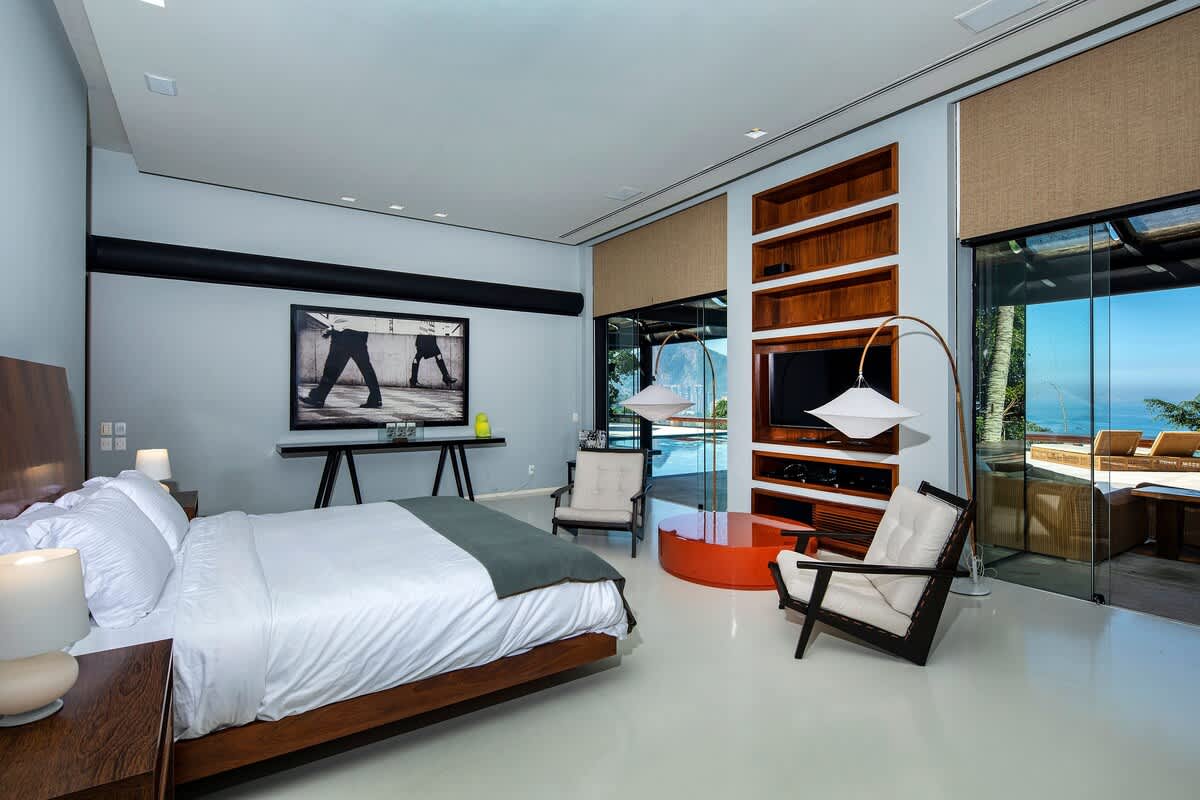
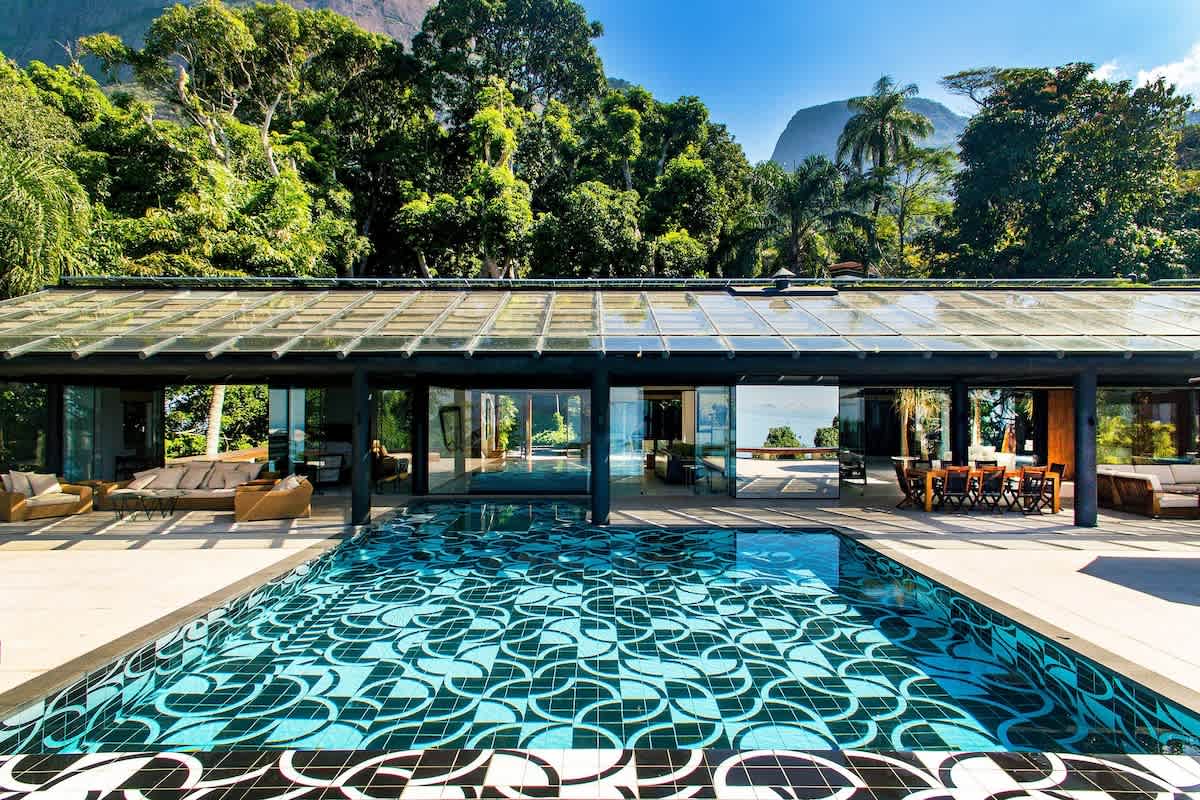
We run a five-suite villa with an infinity pool above São Conrado beach, and its rates and live availability are on the Art de Vivre booking page.
Book directPlanning the morning
Rio's old centre is compact enough to see on foot in one morning. This route starts at Cinelândia, where the opera house, the national library and the fine arts museum share a square, then works north through the old streets to Praça XV, the Candelária church and the Mosteiro de São Bento on its hill above the port. The driver drops you at the first stop and collects you at the last.
Come on a weekday. Centro is the city's business district, lively from Monday to Friday in working hours and quiet in the evenings, at weekends and on public holidays. Several stops keep office hours too. The Real Gabinete Português de Leitura opens on weekdays only, the library's free guided visits run Monday to Friday, and the CCBB closes on Tuesdays, so a Wednesday, Thursday or Friday suits the whole route.
From São Conrado the centre is about 20 km by road, a drive of under half an hour when the roads are clear and longer at rush hour. Getting to Rio and around covers the driver, the apps and the airports.
Cinelândia and the Theatro Municipal
Cinelândia is the everyday name for Praça Floriano and the blocks around it, and the metro station underneath carries the same name. The name comes from the cinemas along it. Francisco Serrador, a Spanish-born businessman who owned cinemas and theatres, wanted to make the square a Brazilian Times Square, and the name Cinelândia caught on from the 1930s.
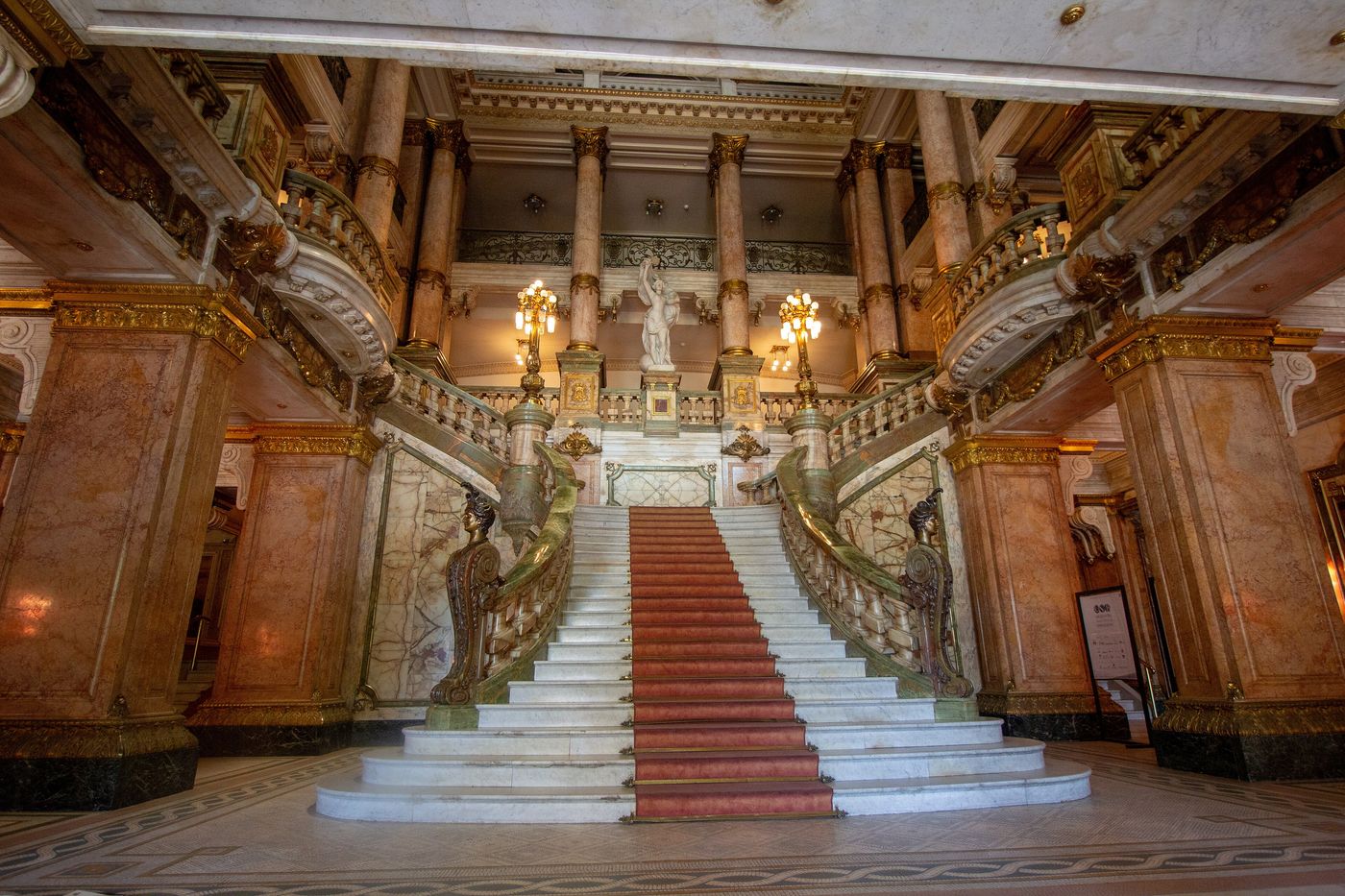
The Theatro Municipal opened on the square on 14 July 1909. It was designed by Francisco de Oliveira Passos with the Frenchman Albert Guilbert, and draws its inspiration from Charles Garnier's opera house in Paris. The auditorium now seats more than 2,200, up from 1,739 when it opened, and the theatre reopened after its last major restoration on 27 May 2010.
You can see inside without a ticket to a performance. Guided tours of about 45 minutes run on several days a week, with some sessions in English or Spanish, and tickets go on sale at the box office on Avenida Treze de Maio on the day of the tour. The times move with the performance calendar, so check the theatre's own site before you plan the morning around one.
Biblioteca Nacional and Belas Artes
A few steps away on Avenida Rio Branco stands the Biblioteca Nacional. Its collection began with the Portuguese royal library, shipped over after the court moved to Rio, and 29 October 1810 is counted as its founding day. The present building, an eclectic mix of neoclassical and art nouveau, opened exactly a century later, on 29 October 1910, and with about ten million items it is the largest library in Latin America.
Free guided visits run from Monday to Friday between 10:00 and 17:00, in Portuguese, English or Spanish, starting from the desk in the main hall. Bags go into lockers that take a R$ 1 coin, so bring one with you.
On the same side of the square, the Museu Nacional de Belas Artes fills a building put up between 1906 and 1908 for the national school of fine arts, designed by the Spanish architect Adolfo Morales de los Ríos. The museum itself was created in 1937, and its collection includes Victor Meirelles's First Mass in Brazil, painted in 1861. The museum has been reopening its galleries in stages after works that began in 2020, so check which rooms are open on the day of your visit.
Real Gabinete Português de Leitura
A short walk north-west, on Rua Luís de Camões, is the room many visitors remember longest. Portuguese immigrants founded the Real Gabinete Português de Leitura in 1837, and its building went up between 1880 and 1887 to designs by the Portuguese architect Rafael da Silva e Castro. Emperor Pedro II laid the first stone, and Princess Isabel opened the building in 1887.
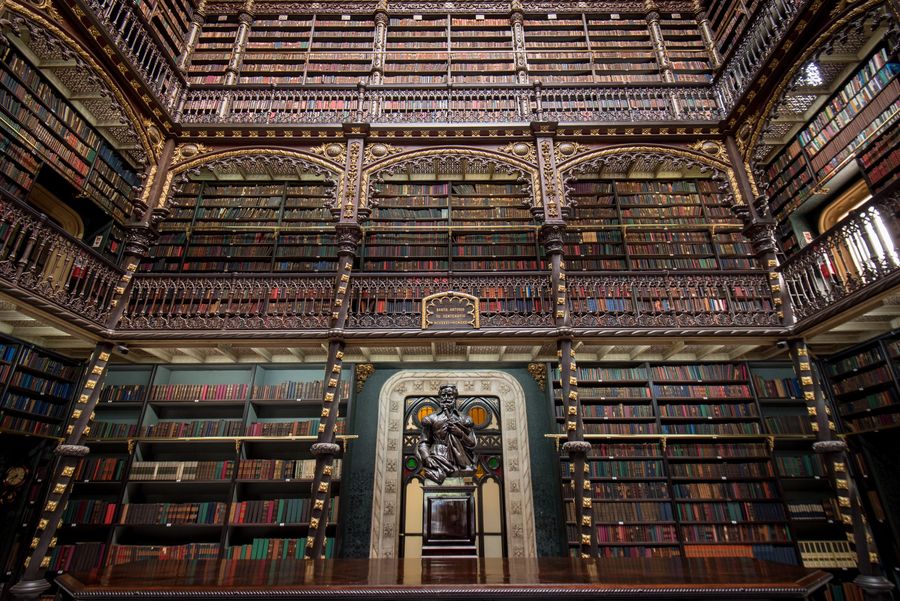
The façade is Neo-Manueline, inspired by the Jerónimos Monastery in Lisbon, and the style carries on inside around the doorways. The reading room is lined with wooden bookcases under a chandelier and an iron-framed skylight, recorded as the first of its kind in Brazil, and the collection runs to about 350,000 volumes. In 2014 it was included in Time's list of the world's 20 most beautiful libraries.
Entry is free. It opens on weekdays only, from mid-morning to late afternoon, and stays closed at weekends and on public holidays. It is still a working library, so voices stay low.
Confeitaria Colombo
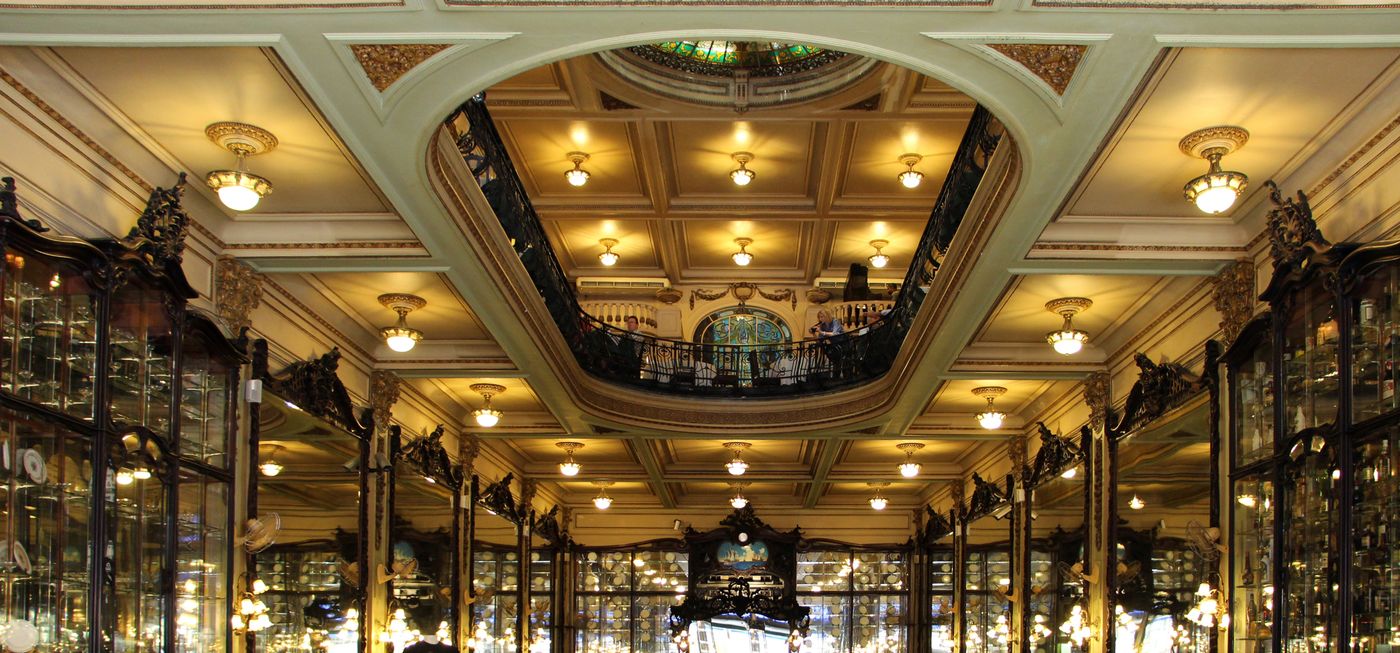
A few minutes east, Confeitaria Colombo has been in business since 1894, when two Portuguese immigrants, Joaquim Borges de Meireles and Manuel José Lebrão, opened it. The main room owes its look to a renovation between 1912 and 1918, when large crystal mirrors were brought from Antwerp and set in frames of carved jacaranda, with wooden furniture carved by Antônio Borsoi.
In 1922 a tea room was added on a second floor, and an opening in the ceiling lets you look up to its stained-glass skylight. That upper floor now houses the Restaurante Cristóvão. Stop for coffee and a cake in the mirrored room halfway through the walk, or have lunch upstairs; the hours change through the week, so check them before you go.
Praça XV and the Paço Imperial
Keep walking towards the bay and the streets open onto Praça XV, named after 15 November 1889, the day the Republic was proclaimed. The fountain on the square is by Mestre Valentim and dates from 1789.
The Paço Imperial on the square was finished in 1743 as the residence of the colonial governors, became the royal palace when the Portuguese court arrived in 1808, and later served as the seat of the empire. Two turning points in Brazilian history took place at the palace. On 9 January 1822 the prince regent Pedro refused to return to Portugal, the day remembered as the Dia do Fico, and on 13 May 1888 Princess Isabel signed the law that abolished slavery.
Since 1985 the palace has been a cultural centre linked to IPHAN, the national heritage institute, with exhibitions usually open from noon to 6 pm, Tuesday to Sunday, and free of charge. The ferry terminal on the waterfront is where the boats leave for Niterói, and Niterói by ferry covers the crossing.
Candelária and the CCBB
A few minutes north stands the Igreja da Candelária. According to tradition a small chapel stood on the site from 1609; work on the present church began in 1775, and it opened in 1811 while still unfinished. The dome was only completed in 1877, built of Portuguese lioz stone cut in Lisbon, and the bronze doors by the Portuguese sculptor Teixeira Lopes were added in 1901.
Facing it across the Largo da Candelária is the Centro Cultural Banco do Brasil. The building opened in 1906 as the home of the city's commercial association, became Banco do Brasil's headquarters in the 1920s and reopened as a cultural centre on 12 October 1989. The conversion kept the columns, the ornaments and the marble stairs.
The CCBB counted a million visitors in the first half of 2026. It opens from Wednesday to Monday, 9:00 to 20:00, and closes on Tuesdays; tickets come from the box office or Banco do Brasil's culture site.
Mosteiro de São Bento
Finish on the hill above the port at the Mosteiro de São Bento. The first Benedictine monks reached Rio in 1586 and founded the monastery four years later, in 1590. Work on the church began in 1633, and its interior is covered in gilded carved wood in styles that run through late 17th-century Baroque into 18th-century Rococo, part of it carved by the Portuguese monk Frei Domingos da Conceição.
The monastery lists the church as open from 6:30 to 18:30, with the entrance on Rua Dom Gerardo. The monks keep services through the day, so step in quietly.
If you are in Rio on a Sunday, come back for the 10 am conventual mass, which the monks sing in Gregorian chant. It makes a short outing of its own, separate from the weekday walk.
The VLT and Lapa
The VLT, a light tram that has run through the centre since June 2016, links most of the stops on this walk. Cinelândia, Candelária and São Bento are on Line 1 and Praça XV is on Lines 2 and 4, and the trams take their power from a rail in the ground, so no overhead wires cross the old streets. It is handy for skipping a stretch on foot.
Line 1 carries on to the Parada dos Museus stop at Praça Mauá, the start of the port walk in Museu do Amanhã and Praça Mauá. Lapa, with the Escadaria Selarón, the 215 steps the Chilean-born artist Jorge Selarón began covering in tiles in 1990, is a separate trip by car. Most of the stops are indoors, so the route also works on a wet morning, and What to Do in Rio When It Rains has more ideas for one.
Questions
What is the best day to visit Rio's historic centre?
A weekday. Centro is the business district, busy from Monday to Friday in working hours and quiet in the evenings, at weekends and on public holidays. The Real Gabinete Português de Leitura opens on weekdays only and the CCBB closes on Tuesdays.
Can you tour the Theatro Municipal in Rio de Janeiro?
Yes. Guided tours of about 45 minutes run on several days a week, including some sessions in English or Spanish, and tickets are sold at the box office on Avenida Treze de Maio on the day. Check the theatre's site for current times.
Is the Real Gabinete Português de Leitura free?
Yes, entry is free. It opens on weekdays and is closed at weekends and on public holidays.
What time is the Gregorian chant mass at São Bento in Rio?
The Sunday conventual mass at 10 am is sung by the monks in Gregorian chant. On weekdays the conventual mass is at 7:15 am.
How far is Rio's Centro from São Conrado?
About 20 km by road. With clear roads the drive takes under half an hour, and longer at rush hour.
Spend the morning in the old centre and the afternoon by the pool: book the villa direct with Art de Vivre, and the concierge arranges the driver who drops you at Cinelândia and collects you at São Bento.
Sources
Facts on this page were checked against these sources in October 2026. Opening hours and prices change: confirm before you go.
- Theatro Municipal do Rio de Janeiro (Wikipédia)
- Visita guiada ao Theatro Municipal do Rio de Janeiro: como funciona (Fui Ser Viajante, updated 16/08/2026)
- Cinelândia (Wikipédia)
- Biblioteca Nacional (Brasil) (Wikipédia)
- Visita orientada, Biblioteca Nacional (gov.br)
- Museu Nacional de Belas Artes (Wikipedia)
- A memória em obras (Correio da Manhã, September 2026)
- Real Gabinete Português de Leitura (Wikipédia)
- Real Gabinete Português de Leitura: horários e entrada (Audiala)
- Confeitaria Colombo (Wikipédia)
- Confeitaria Colombo, official site
- Palácio sede do Império recebe exposição de mais de 100 artistas (Agência Brasil, March 2026)
- Paço Imperial (Wikipédia)
- Praça Quinze de Novembro (Wikipédia)
- Igreja da Candelária (Wikipédia)
- Centro Cultural Banco do Brasil (Rio de Janeiro) (Wikipédia)
- CCBB Rio chega a 1 milhão de visitantes em 2026 (Diário do Rio, June 2026)
- Mosteiro de São Bento do Rio de Janeiro, official site
- Mosteiro de São Bento (Rio de Janeiro) (Wikipédia)
- VLT Carioca (Wikipédia)
- Centro, Rio de Janeiro (Wikipedia)
- São Conrado to Centro (Rome2rio)
- Escadaria Selarón (Wikipédia)
- The 20 Most Beautiful Libraries in the World (Time, 2014)