Reserve direct
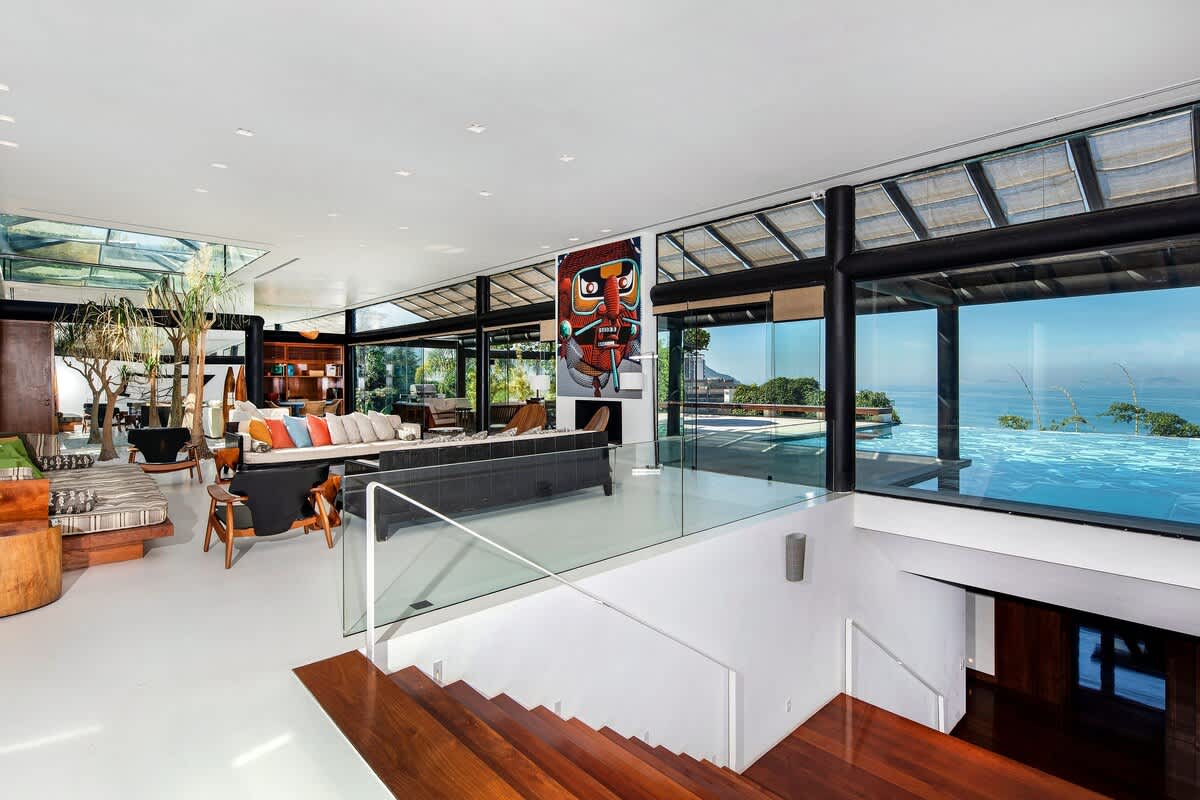
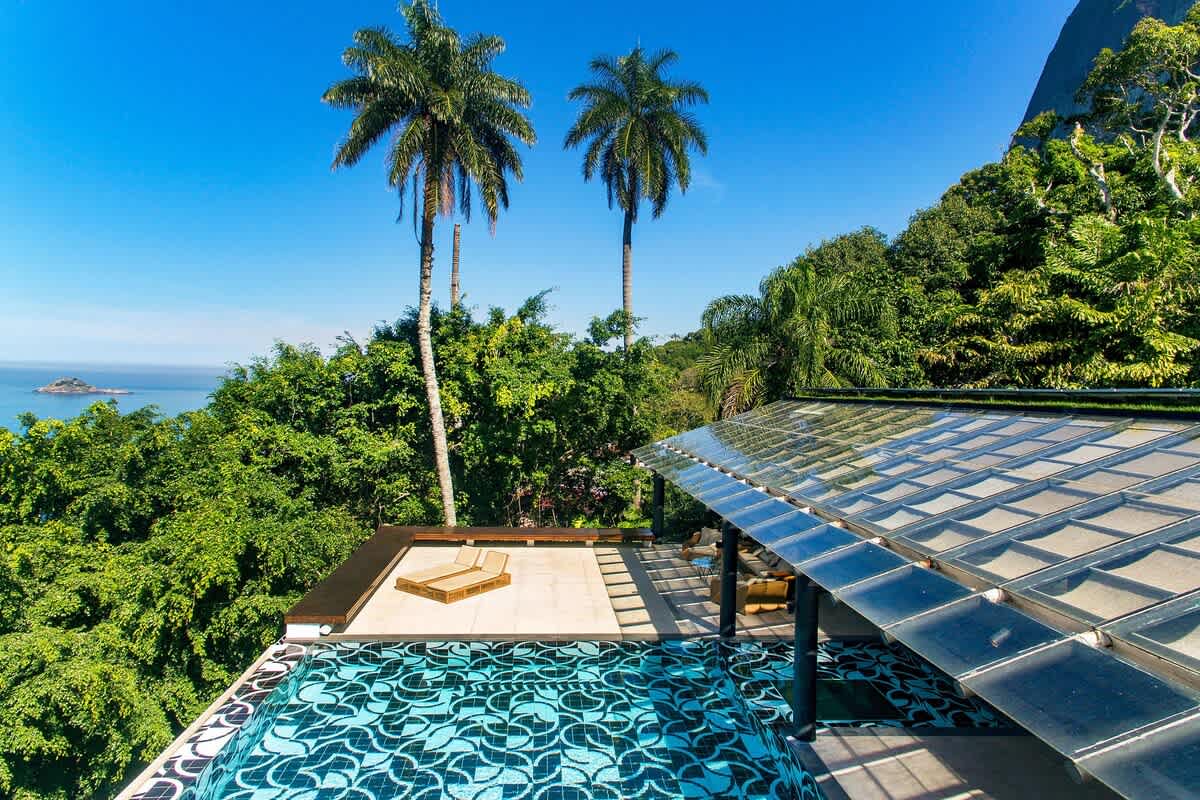
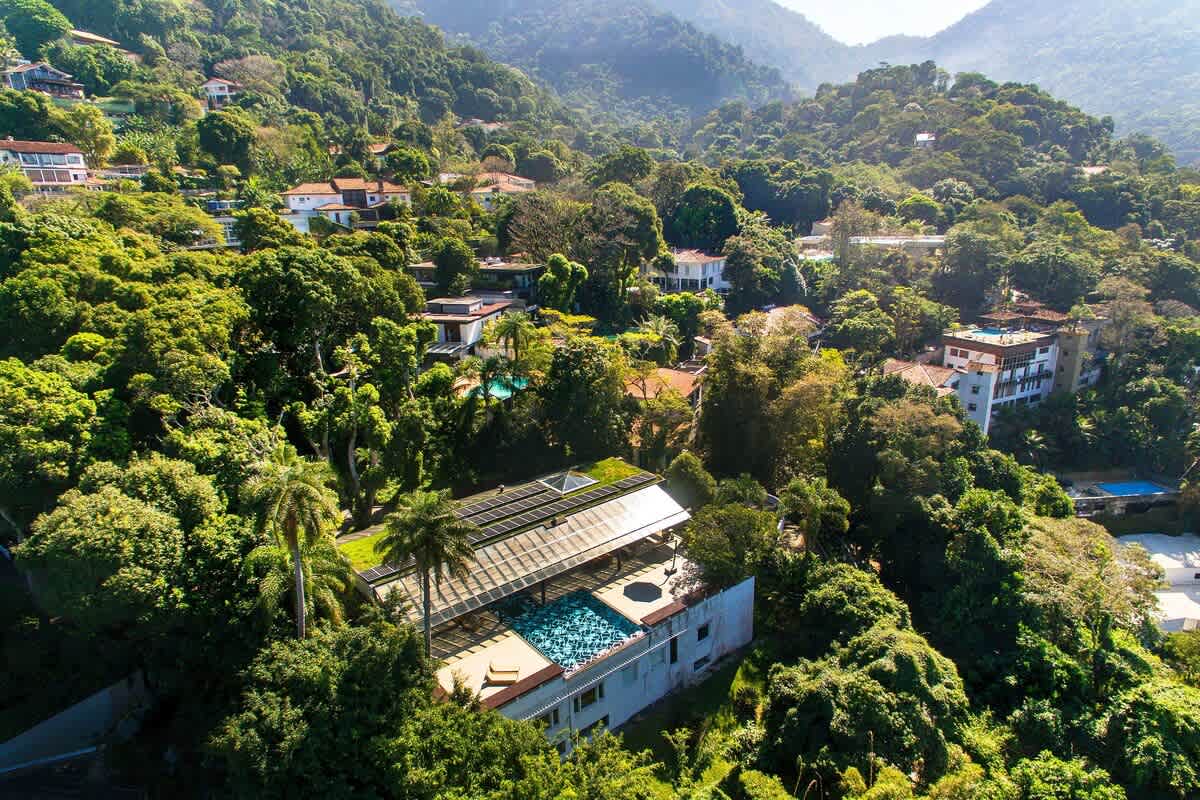
We run a five-suite villa with an infinity pool above São Conrado beach, and its rates and live availability are on the Art de Vivre booking page.
Book directThe end of the coast road
Drive west from São Conrado, through Barra and out past Recreio, and the apartment blocks give way to green hills. Avenida Estado da Guanabara climbs over a headland to Prainha, then runs on to Grumari, and from Recreio it is the only road in. Both beaches sit inside municipal parks, so the hillsides stay wooded and nothing is built on the sand.
The hills behind them belong to the Pedra Branca massif, and the protected areas overlap here: the two municipal parks, their environmental protection areas and the Pedra Branca State Park. Between them, they keep this stretch of coast green from the ridge to the sand.
From the villa the route runs through the Joá tunnels, along Avenida das Américas and out by the Estrada do Pontal. On a clear road it is about 40 minutes, and longer on a sunny weekend. Grumari lies about 4.5 km beyond Prainha, so the two fit easily into one day.
The short note on Prainha in beaches near São Conrado gives the outline. This guide covers both beaches in more depth: the surf, the trails, the parks and how to plan the day.
Macumba and Secreto on the way
The last stretch before Prainha passes two smaller beaches. Praia da Macumba runs for about 1.3 km between Praia do Pontal and Prainha, and longboarders like it for waves that work all year. Its name comes from the Umbanda and Candomblé offerings traditionally made on its sand, and in the late 1980s it was the main outdoor setting of the telenovela Top Model.
Just before the climb to Prainha, little Praia do Secreto has a natural rock pool filled by the sea. When a south swell comes in, its right-hand wave draws bodyboarders, and you can see both beaches from the Caeté lookout above Prainha.
Prainha
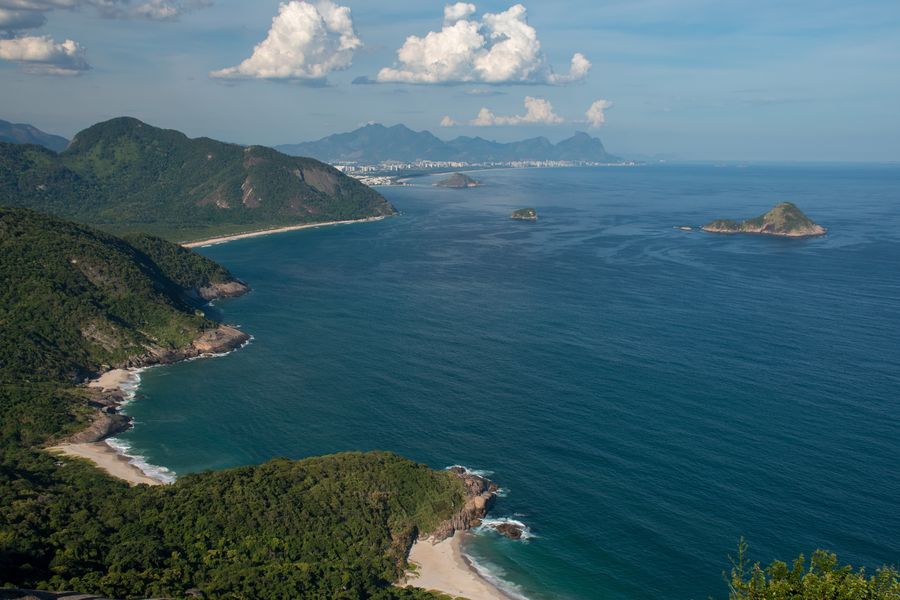
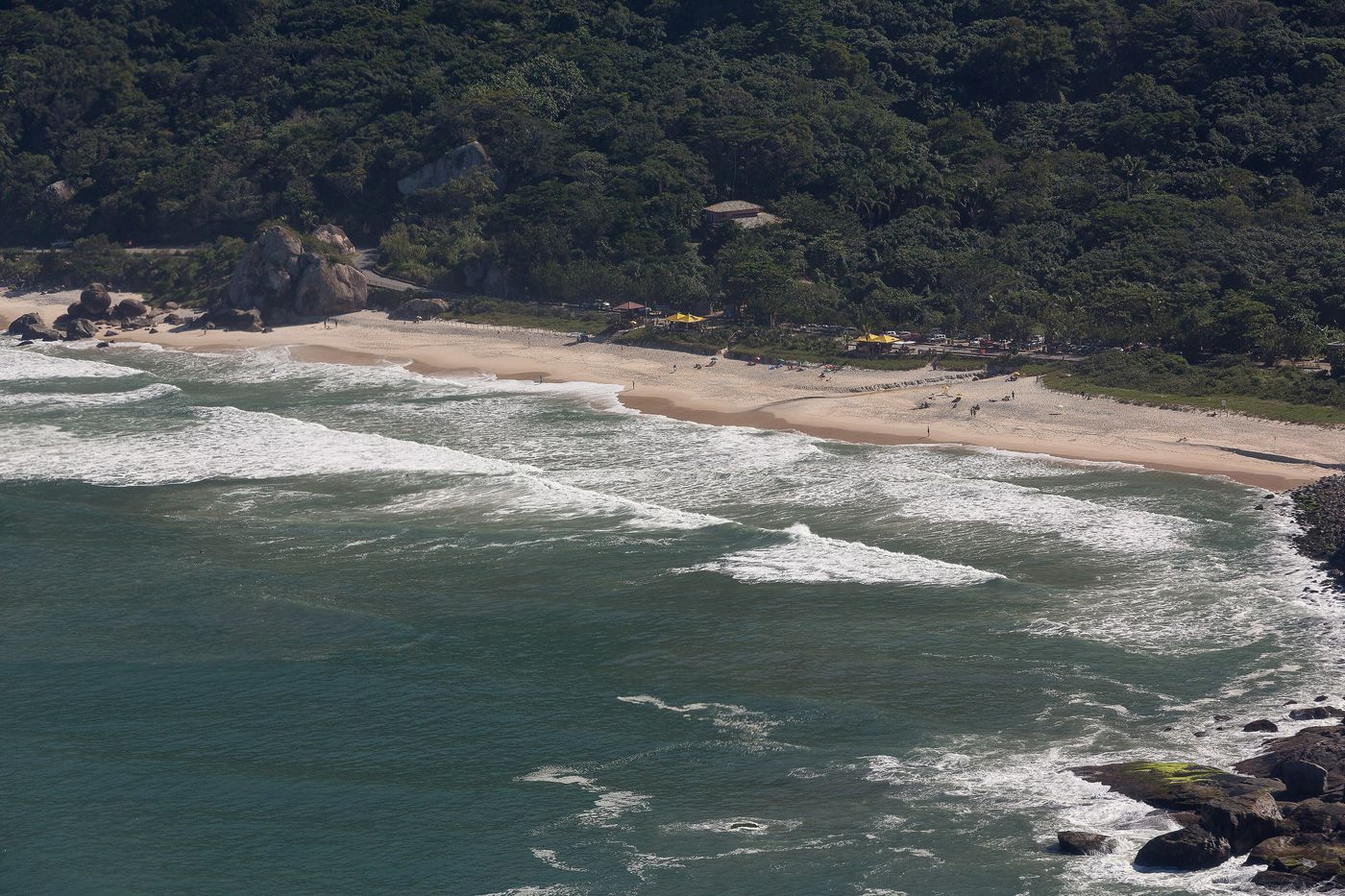
Prainha means little beach, and the name fits: a narrow strip of sand pressed between the Pedra Branca massif and the Atlantic, with forest coming down the slopes behind it. It is one of the best-loved surf beaches in Rio, and on most days you will find surfers, bodyboarders and longboarders out on the waves.
The surfers helped keep it this way. In 1989, surfers and beachgoers protested against plans for a condominium and hotel here and called for the area to be protected. A municipal law created the Prainha environmental protection area in 1990, and a city decree of 25 March 1999 made the land behind the beach a natural park.
The Parque Natural Municipal da Prainha opened to visitors in 2001 and covers about 147 hectares. At its entrance by the beach there are toilets, showers, drinking fountains and a playground, its headquarters has a visitor centre, and it is open Tuesday to Sunday until 5 pm; sources differ on the opening time, so check before you go.
If you are not surfing, Prainha is a beach for watching. Find a spot on the sand, follow the sets rolling in and keep to the shallows unless the sea is flat.
The Prainha trails
Two short, easy trails start in the park, and both suit children who are used to walking. The Trilha Circular loops for about 500 metres around the visitor area, which is enough for small legs after a morning on the sand.
The Trilha do Caeté climbs gently for about 800 metres to the Mirante do Caeté. From the lookout you see back along the coast over Praia do Secreto, Macumba, the Pedra do Pontal, Recreio and Barra, with Pedra da Gávea, the mountain behind the villa, standing at the far end. It is a good way to show the group how far west you have come.
Go up in the morning, before the heat builds, and take water. A third path, up the Pedra dos Cabritos, is steeper and is not an official trail, so stay with the two park trails. The Pedra da Gávea and Pedra Bonita hiking guide covers the bigger climbs closer to home.
Grumari
Grumari is the long one: more than 2.5 km of pale sand and greenish water, backed by low hills of forest and restinga, the scrub that grows on coastal sand. It has been an environmental protection area since 1986, and a city decree of 2 July 2001 made it the Parque Natural Municipal de Grumari. The park protects a large area of restinga, and building is not allowed.
The waves here draw surfers too, but they tend to break further out, so swimmers can cool off in the smaller water near the sand. At some tides, small natural pools form along the beach, which are good for children.
Services on the sand are few and simple, a handful of beach businesses at most, so bring water and snacks and do not count on finding a kiosk open. On most days Grumari is far emptier than the beaches of the South Zone, and it feels wild. The park's information point is on the beach road, Avenida Estado da Guanabara, and the Transcarioca trail's notes list it as open Tuesday to Sunday from 8 am to 5 pm, later in summer.
Abricó and the wild beaches
Next to Grumari, Praia do Abricó is Rio's naturist beach, the only one around the city. It is worth knowing which cove you are stopping at before the group piles out of the car.
Beyond Grumari, the park runs on toward Barra de Guaratiba, where its wilder beaches, Perigoso, Meio, Funda and Inferno, lie along a coastal trail and are reached on foot or by sea. The Transcarioca, the 180 km trail that crosses the city to Morro da Urca, begins at Barra de Guaratiba, and its first section links Barra de Guaratiba and Grumari. The walk out to these beaches is covered in the Pedra do Telégrafo guide.
Lunch at Point de Grumari
Past the end of Grumari beach, the Estrada de Grumari climbs over the hill toward Barra de Guaratiba, and Point de Grumari is at number 2710. It has served seafood here since 1992: moquecas, grilled fish and prawns, with a long view across the water to the Restinga da Marambaia.
It opens from 11 am to 6 pm on weekdays and to 7 pm on weekends and public holidays, according to its website. Ordinary tables are first come, first served, but groups of six or more are asked to book ahead by WhatsApp, so a villa party should reserve a day or two before.
There is free parking on site, and the menu comes in English as well as Portuguese and Spanish. Check the hours before you set off, since they can change with the season.
Getting there and busy days
With a single road in, timing matters. On summer weekends Grumari fills up, the road slows and parking gets hard to find, so arrive early in the morning or come on a weekday, when the beaches are quieter.
The easiest way is with an English-speaking driver arranged through Art de Vivre's concierge, who drops the group at the sand and comes back at an agreed time. Agree that time before you arrive, as the phone signal at Grumari can be patchy. Tell the concierge the night before which beach you want to start at, so the driver can leave early enough to stay ahead of the weekend traffic.
Bring water, sunscreen and a hat for a long day in the sun. Pack a beach umbrella and a cool box too, if the group wants shade and cold drinks on hand.
A day out from the villa
A good order for the day: leave after breakfast, stop at Prainha to watch the surf and walk up to the Mirante do Caeté, then move on to Grumari for a swim and a few hours on the sand. Lunch at Point de Grumari, and you are back at the villa by late afternoon, in time for the pool.
Families with young children may prefer Grumari, with its calmer water near the sand and the natural pools at the right tide; Rio with children has more ideas for the week. Keen walkers can start even earlier with the Pedra do Telégrafo hike and finish the day on Grumari's sand.
Read the sea before anyone swims. On a big swell, Prainha is for watching from the beach, and Grumari's inshore water is the place to cool off. Both beaches face the open Atlantic, so they are at their best on calm, sunny days; if the weather turns, save them for later in the week.
Questions
How far is Prainha from São Conrado?
About 28 km by road, through Barra and Recreio. On a clear road the drive takes around 40 minutes, and longer on summer weekends.
Is Grumari good for swimming?
Usually, yes. The bigger waves tend to break further out, so swimmers can cool off in the smaller water near the sand, and at some tides small natural pools form along the beach. Check the sea on the day.
Is Prainha a surf beach?
Yes. Prainha is one of the most popular surf beaches in Rio, used by surfers, bodyboarders and longboarders. Non-surfers usually watch from the sand or walk the park's trails.
Is Abricó beach a nudist beach?
Yes. Praia do Abricó, next to Grumari, is the naturist beach of Rio de Janeiro, the only one around the city.
Are there restaurants at Grumari?
Services on the sand are few and simple, so bring water and snacks. For a full lunch, Point de Grumari, on the road over the hill toward Barra de Guaratiba, has served seafood since 1992; check its hours before you go.
Prainha and Grumari make an easy day out from the villa in São Conrado, with the driver arranged through Art de Vivre; book the villa direct with Art de Vivre and plan the beach days before you arrive.
Sources
Facts on this page were checked against these sources in October 2026. Opening hours and prices change: confirm before you go.
- Parque Natural Municipal da Prainha (Wikipédia)
- Recreio dos Bandeirantes (Wikipedia)
- Recreio dos Bandeirantes (Wikipédia)
- Grumari (Wikipedia)
- Conservation Units | Trilha Transcarioca
- APA de Grumari: diagnóstico ambiental e alternativas para a sua conservação (UERJ, Interagir)
- Praia de Grumari (Time Out Rio de Janeiro, 2023)
- Grumari (Guia Melhores Destinos)
- Prainha Municipal Natural Park (Rio Film Commission)
- Point de Grumari (official site)
- Point de Grumari: FAQ
- Point de Grumari: Como chegar
- 01. Barra de Guaratiba x Grumari | Trilha Transcarioca
- Nova trilha no Rio nas Ilhas Cagarras (Melhores Destinos, 2026)