Reserve direct
We run a five-suite villa with an infinity pool above São Conrado beach, and its rates and live availability are on the Art de Vivre booking page.
Book directWhere Gávea is
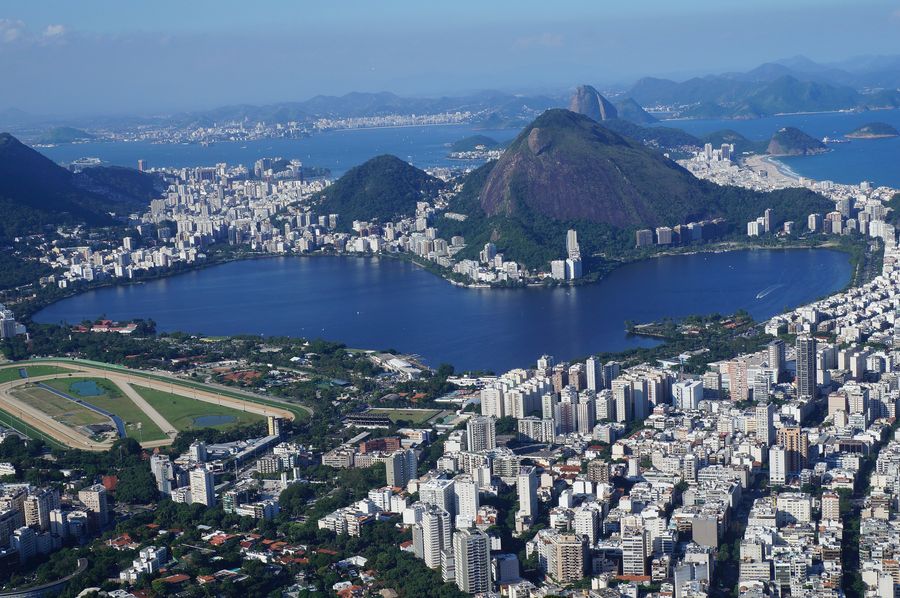
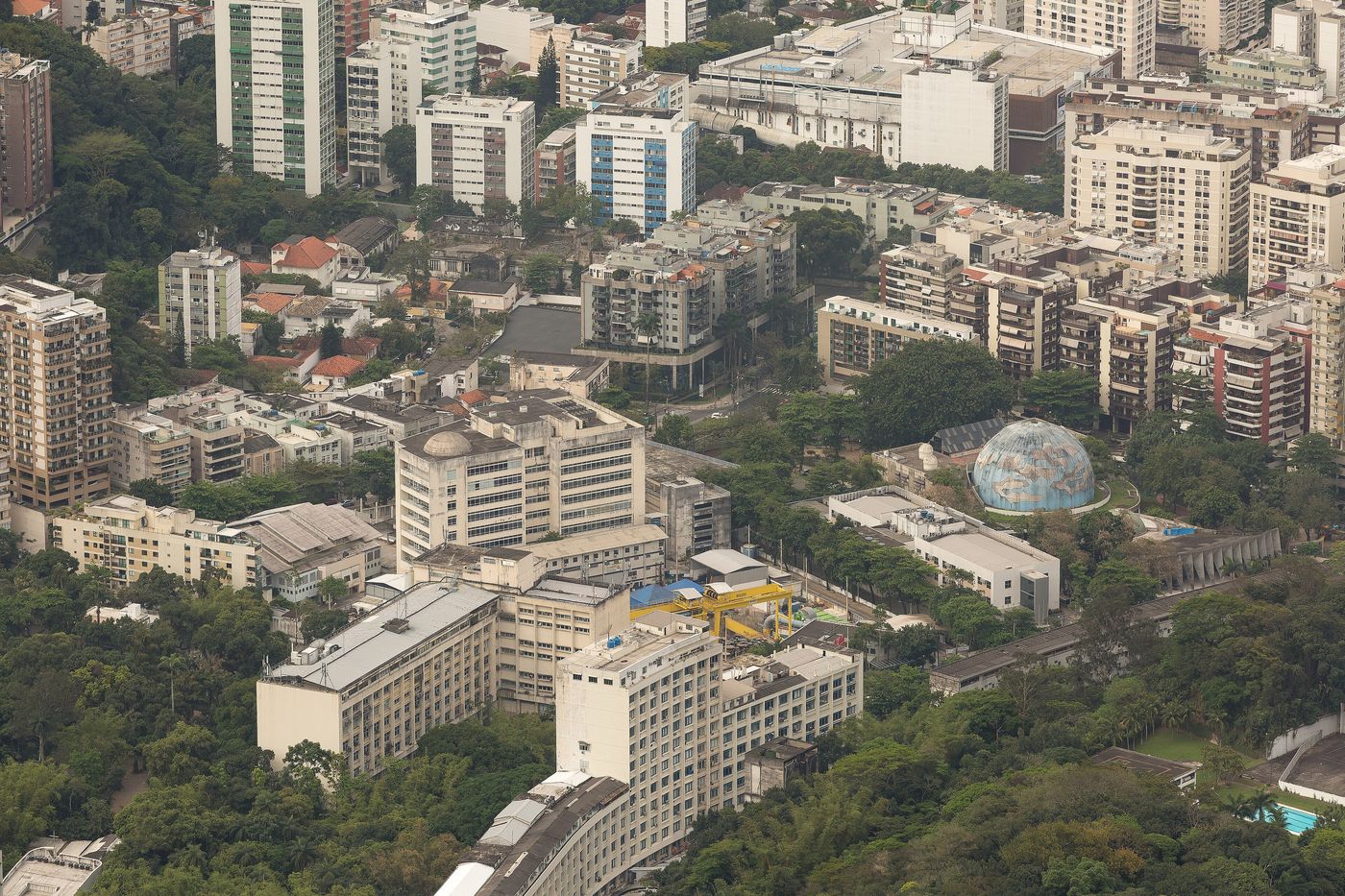
Gávea sits on the far side of Morro Dois Irmãos from São Conrado, between the slope of the mountain and the western shore of the Lagoa Rodrigo de Freitas. From São Conrado you reach it through the Túnel Zuzu Angel, on the Lagoa-Barra motorway, which begins in Gávea on Avenida Padre Leonel Franca. Praça Santos Dumont is about 7.5 kilometres and ten minutes away in light traffic.
Its neighbours are Leblon, Jardim Botânico, Lagoa, Alto da Boa Vista, Rocinha, Vidigal and São Conrado, and like São Conrado it belongs to the city's Lagoa administrative region. The 2022 census counted 14,176 residents on about 2.6 square kilometres, and in 2000 Gávea had the highest human development index of the 126 bairros assessed in the city.
It is a residential bairro with a lot packed into it: a racecourse, a planetarium, a university, theatres and a park, and Flamengo, the football club, has its social headquarters here too. For guests at the villa it makes an easy half day or an evening out without crossing the city.
Where the name comes from
The name comes from the mountain. Portuguese sailors exploring this coast in 1501 and 1502 saw in the outline of Pedra da Gávea the shape of a gávea, the lookout basket at the top of a ship's mast. The name later passed to the land below, first to the Gávea Pequena area and then to the present-day bairro.
That older, wider use of the name explains why several things called Gávea are elsewhere. Pedra da Gávea itself stands over São Conrado, on the other side of Morro Dois Irmãos from the bairro that took its name. The Gávea Golf & Country Club is in São Conrado too, at Estrada da Gávea 800, and the Estrada da Gávea itself runs through São Conrado.
How Gávea grew
Gávea grew out of rural estates that were divided into building plots from the 1930s onwards. In the same years the roads around it hosted the Circuito da Gávea, the street race whose route also ran along Avenida Niemeyer.
The bigger change began in the early 1970s. The Túnel Dois Irmãos, now the Túnel Zuzu Angel, opened in 1971, and the Lagoa-Barra motorway that runs through it now links Gávea with Barra. Taller buildings followed, yet only 44.5 per cent of the bairro's area is counted as urban or altered.
Praça Santos Dumont and Baixo Gávea
The centre of the bairro is Praça Santos Dumont, the square that gives the Jockey Club its address, at number 31. Locals divide Gávea informally into Alto Gávea, on the higher ground, and Baixo Gávea, the lower part around the square.
Baixo Gávea is the bohemian corner of the bairro and a favourite with young Cariocas in the evening. It is an easy night out from São Conrado, and the dining guide covers where to eat and drink around the square.
The Jockey Club and the racecourse
The Hipódromo da Gávea, the racecourse of the Jockey Club Brasileiro, opened on 11 July 1926 and reached its centenary in 2026. It lies beside the Lagoa, with a 2,200-metre grass track and a 2,040-metre sand track.
Its five grandstands, in an eclectic style with Louis XV touches, can hold 70,000 people, and the main part of the complex has been listed as heritage since 1996. Race meetings are held several days a week, so check the Jockey Club's calendar before you go.
The big day is the Grande Prêmio Brasil, first run in 1933 and held in June, usually on a Sunday. In 2026, the centenary year, the race was run on 14 June over 2,400 metres of grass, inside a four-day festival with free entry. On race day the third floor of the grandstand asked for a suit and tie, and pets and outside food, apart from water and a few exceptions, were not allowed, so look up the rules for the day.
The club has several restaurants open to the public, among them Rubaiyat and Casa Camolese, so a long lunch on a race day is an easy way to see the place. Ask the concierge to check the race calendar when you book the table.
The Planetário
The Planetário do Rio, run by the city's Fundação Planetário, opened in Gávea on 19 November 1970 and marked its 55th anniversary in November 2025 with free entry. It is on Rua Vice-Governador Rubens Berardo, about 600 metres from Praça Santos Dumont, and in August 2026 it held a free night of sky watching, from 21:00 to 03:00, for the lunar eclipse of 27 August.
It has two domes: the Carl Sagan dome, 23 metres across with about 260 seats, and the smaller Galileu Galilei dome, with 90 seats. Next to them, the Museu do Universo has 60 interactive exhibits, and it reopened in January 2024 after renovation work.
Outside, the Praça dos Telescópios has four telescope systems that can find around 64,000 objects automatically, and sky watching there is free, with places limited. Sessions have usually been on Wednesday evenings, but the programme changes with works and the season, so check before you go. The Planetário is a good plan for a wet afternoon, and the rainy-day guide has more ideas.
PUC-Rio, the theatres and the IMS
Rua Marquês de São Vicente is one of Gávea's main streets. Along it is PUC-Rio, the Pontifical Catholic University, founded in the early 1940s by Dom Sebastião Leme, given its pontifical title in 1947, and today one of Brazil's leading private universities.
The Shopping da Gávea, on the same street, opened on 26 May 1975. Its four theatres are the Teatro dos Quatro, the Teatro das Artes, the Teatro Clara Nunes and the Teatro Vannucci, which is on the third floor, and all four have staged plays in 2025 or 2026. In the 1970s the mall also housed the Frenetic Dancing Days discotheque.
Higher up the hill is the Instituto Moreira Salles, the 1951 modernist house with Burle Marx gardens that has been the institute's Rio home since 1999. It is closed for renovation, with its Rio programme shown at partner venues for now, and its guide tells the story of the house.
Parque da Cidade
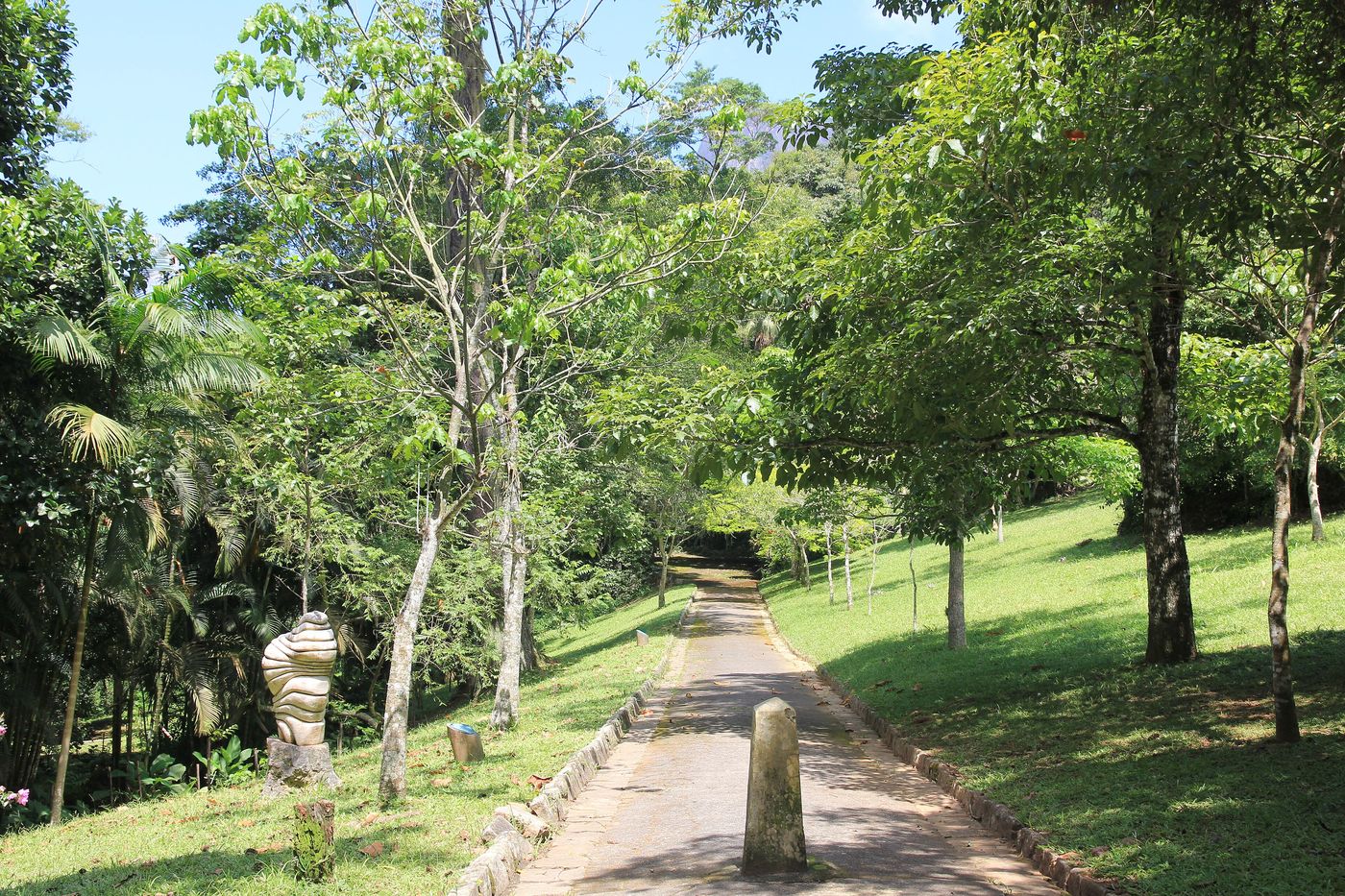
On the hillside above the bairro, at the end of Santa Marinha, is the Parque da Cidade, officially the Parque Natural Municipal da Cidade: about 470,000 square metres of gardens and woodland that reach towards the Tijuca National Park. It was the summer residence of the Marquês de São Vicente, in a house built in 1809, and the Guinle family passed the property to the city in 1939.
The house holds the Museu Histórico da Cidade do Rio de Janeiro, the city's history museum, which has been based here since 1948, under Mayor Ângelo Mendes de Moraes, and keeps a collection of about 24,000 pieces. It is open to visitors, with a free group show of 40 artists from 12 September to 8 November 2026 and visiting hours from 9:00 to 16:00, so check the current programme before you go.
The park and the Planetário are a few minutes apart by car, which makes them an easy pair for one morning. Bring water and comfortable shoes, as the paths climb the hillside.
Planning a visit from São Conrado
The drive is short: through the Túnel Zuzu Angel, 1,522 metres under Morro Dois Irmãos with two lanes in each direction, and you come out on the Gávea side. Allow about ten minutes to Praça Santos Dumont, more at rush hour.
Gávea's own metro station, on Line 4 between São Conrado and Antero de Quental in Leblon, is still under construction, with works under way in 2026. Until it opens, the villa's English-speaking driver, arranged through Art de Vivre's concierge, is the easy way in and out.
The Lagoa Rodrigo de Freitas is close by, so a morning at the Planetário or the Parque da Cidade pairs well with a walk by the water. The Lagoa guide covers that side.
A simple Gávea day starts with the Parque da Cidade and the museum while it is cool, moves on to the Planetário, and ends with lunch at the Jockey Club or around Praça Santos Dumont. On an evening out, a play at one of the Shopping da Gávea theatres followed by dinner in Baixo Gávea puts you back at the villa ten minutes after the last course.
Questions
How far is Gávea from São Conrado?
About 7.5 km through the Túnel Zuzu Angel, roughly ten minutes by car to Praça Santos Dumont in light traffic.
Why is the bairro called Gávea?
It takes its name from Pedra da Gávea. On the Portuguese voyage of 1501 and 1502, sailors thought the mountain's outline looked like a gávea, the lookout basket at the top of a ship's mast, and the name passed to the land below.
Is the Planetário do Rio open?
Yes. The Planetário in Gávea marked its 55th anniversary in November 2025 with free entry and held a free viewing night for the lunar eclipse of 27 August 2026. Check the programme before you go.
When is the Grande Prêmio Brasil at the Gávea racecourse?
In June. In 2026, the racecourse's centenary year, it was run on Sunday 14 June during a four-day festival with free entry.
Does Gávea have a metro station?
Not yet. The Gávea station on Line 4 is still under construction; the nearest working stations are São Conrado and Antero de Quental in Leblon.
Gávea is ten minutes from the villa through the tunnel, close enough for a morning at the Planetário and lunch back by the pool: book the villa direct with Art de Vivre, or message Charlie on WhatsApp, for your dates.
Sources
Facts on this page were checked against these sources in October 2026. Opening hours and prices change: confirm before you go.
- Gávea (Rio de Janeiro), Wikipédia
- Bairros_Censo_2022 layer, Prefeitura do Rio / IPP (Gávea population and area)
- Pedra da Gávea, Wikipédia (origin of the name)
- Hipódromo da Gávea, Wikipédia
- GP Brasil 2026 celebra 100 anos de Hipódromo da Gávea (BNLData, 10/06/2026)
- Planetário do Rio de Janeiro, Wikipédia
- Planetário do Rio comemora 55 anos nesta quarta-feira com entrada gratuita (Prefeitura do Rio, November 2025)
- Pontifícia Universidade Católica do Rio de Janeiro, Wikipédia
- Shopping da Gávea, Wikipédia
- Theatre listings, Teatro Vannucci and Teatro Clara Nunes, Shopping da Gávea (Correio da Manhã, 18/07/2025)
- Theatre listings, Teatro dos Quatro (Correio da Manhã, 16/01/2026)
- Parque da Cidade (Rio de Janeiro), Wikipédia
- Exposição inédita reúne 40 artistas no Museu Histórico da Cidade (Sopa Cultural, 08/09/2026)
- IMS Rio (Instituto Moreira Salles official page: closed for renovation)
- Planetário do Rio terá programação gratuita para ver o eclipse lunar (Diário do Rio, 2026)
- Túnel Zuzu Angel, Wikipédia (1,522 m, two lanes each way, opened June 1971)
- Teatro das Artes, Shopping da Gávea, 2º piso (Correio da Manhã, 21/07/2026)
- Teatro Vannucci, Shopping da Gávea (Correio da Manhã, October 2026)
- Flamengo plan for its Gávea social headquarters (Diário do Rio, 21/06/2026)
- Museu Histórico da Cidade: exhibition and hours (Diário do Rio, 09/09/2026)