The two peaks of the Rio year
Rio has two dates that dwarf everything else. Réveillon, on the night of 31 December, puts an enormous crowd on Copacabana beach for fireworks over the water. Carnival, in February or early March, takes over the entire city for the best part of a week.
Both are genuinely extraordinary and both are hard work. They involve crowds measured in the millions, transport that stops behaving normally, accommodation booked out months ahead, and minimum-stay requirements on almost every good house in the city. If you go in without a plan, you spend the trip queueing.
The argument for a house on the hillside during either one is simple: you can be inside the event when you want to be and completely out of it twenty minutes later. In a hotel in Copacabana at New Year you are inside the crowd whether you want to be or not, including at four in the morning when you would rather be asleep.
Réveillon: 31 December
The main event is on Copacabana. An immense crowd gathers on the sand through the evening, there is music on stages along the beach, and at midnight fireworks are fired over the water — from barges out at sea, so the display runs the length of the beach rather than from one point. It is one of the largest New Year gatherings anywhere on earth.
Two traditions matter and both are worth joining. People dress in white, which is close to universal and looks extraordinary en masse, so pack something white for the night. And through the evening people make offerings to Iemanjá — flowers set out on the sand or floated into the sea, in a tradition rooted in Afro-Brazilian religion. Watch respectfully; it is a religious observance rather than a piece of theatre.
The practicalities are unforgiving. Roads around Copacabana close, the metro runs on a special pattern and is packed, and getting a car anywhere near the beach at eleven at night is not realistic. The workable approach is to be dropped a long walk away and to arrange a collection point and time well outside the closed zone, or to accept that you are walking for a while. Take almost nothing: no jewellery, no watch, a little cash, a phone you have accepted may get wet.
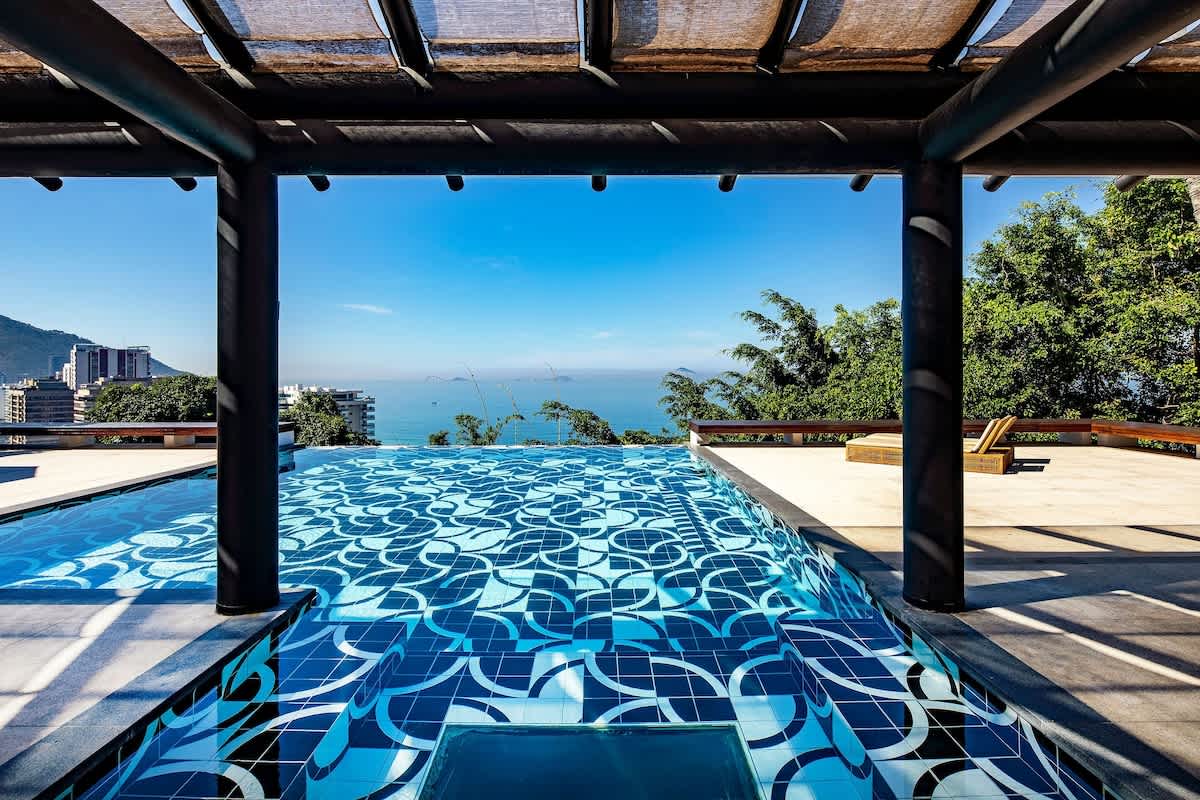
The alternative that many residents choose is to watch from somewhere higher and quieter. From the São Conrado hillside you are not looking at the Copacabana barges, but the sky along the coast is busy with displays and the city is audible for hours. A dinner on the terrace, the group in white, and a car into Copacabana at eleven for those who want the crowd is a better-shaped evening than dragging everybody down and back.
One more note: São Conrado's own beach is quiet on the 31st compared with Copacabana or Ipanema, which for families with young children is an argument rather than a drawback.
Carnival: the dates move
Carnival is set by the church calendar, so it moves each year with Easter, landing in February or early March. In 2027 it runs from Friday 5 to Wednesday 10 February.
The centrepiece is the Special Group parade at the Sambadrome — the Marquês de Sapucaí — where the major samba schools compete. In 2027 those parades fall on the Sunday, Monday and Tuesday, 7, 8 and 9 February, with four schools each night. The winners then parade again the following weekend in the champions' parade, which is a genuinely good option: the same schools, the same costumes and floats, a fraction of the pressure on tickets and on the city.
A Sambadrome night is long. Parades start in the evening and run into the following morning, one school after another, each with roughly an hour on the avenue. You do not need to stay for all of it — many visitors take three or four schools and leave. Seating ranges from grandstand benches to boxes; buy through a reputable seller rather than on the street, and buy early, because the good sectors go months ahead.
You can also parade rather than watch. Most schools sell costumes to visitors who want to walk in the parade, and it is more accessible than people expect — you buy the fantasia, turn up at the assembly area, and walk with your wing. It is the single best Carnival experience available to a visitor, and it needs arranging well in advance.
The blocos, which are the actual Carnival
The Sambadrome is the show; the blocos are the party. These are street bands with followings ranging from a few hundred to hundreds of thousands, and they move through neighbourhoods across the city from early morning to late at night, for days. Ipanema, Leblon, Botafogo, the centre and Santa Teresa all have their own, and the schedule for each year is published in advance.
The etiquette is straightforward. Dress up, at least a bit — a costume, or something absurd. Take almost nothing with you. Wear shoes you don't mind ruining. Drink water constantly, because February in Rio is hot and a bloco is hours of dancing in the sun. Go with the group and agree a meeting point in advance, because phone signal collapses in a crowd that size.
Choose your blocos by size and hour. The huge ones are a spectacle and a crush; the smaller neighbourhood ones are better company and easier with children or with anyone who does not want to be pressed into a crowd. Morning blocos are gentler than night ones by a wide margin.
From São Conrado you are fifteen minutes from the Ipanema and Leblon blocos, which is close enough to go and — crucially — close enough to leave. Being able to get out of a bloco and be at a quiet pool half an hour later is a luxury the people in the hotel down the road do not have.
How far ahead, and what to expect
Book accommodation for either event six to twelve months ahead. Good houses in Rio are gone for New Year by the middle of the year, and Carnival not long after. Expect minimum stays — a fixed number of nights across the peak dates is standard practice on any house of this kind, and it is not negotiable at the last minute.
Book the things inside the trip early too: Sambadrome seats, a costume if you want to parade, boat days, restaurant tables. In peak weeks a table for ten on a Friday is a week's notice at least, and the good places go further out than that.
Expect heat. Both events fall in Rio's summer, which means high twenties to mid thirties, high humidity, and afternoon thunderstorms that arrive fast and clear fast. Plan mornings and evenings, and use the middle of the day for the pool. When to visit Rio has the seasonal detail.
Expect the city to be busier and looser than usual. Ordinary things — a taxi, a supermarket, a quiet dinner — take longer during Carnival week, and some businesses simply close. Build slack into every plan and do not schedule anything that matters for the Tuesday.
And build in recovery. Both events are physically demanding, and the groups that enjoy them most treat them as two or three big nights inside a longer, calmer stay rather than as a solid week at full tilt.
Why the house makes both of them better
The pattern that works is the same for both events. You spend the days at the house — pool, terrace, breakfast that nobody had to queue for — and you go into the city for the nights you actually want. A driver takes you and, more importantly, collects you, so nobody is negotiating a ride home at three in the morning in a crowd of a million people.
The cook matters more in these two weeks than at any other time of year, because eating out is at its hardest exactly when the city is fullest. Dinner at the house before a Sambadrome night, and something waiting when you get back, is the difference between a good week and an exhausting one. Dinner at the villa gives the shape of it.
And a house lets the group split. At Carnival, some people want the eight-in-the-morning bloco and some want the pool, and a house accommodates both without anyone having to negotiate. That is much harder from five hotel rooms.
If you are considering either date, ask early — these are the two periods that book furthest ahead, and the answer for a specific week is either yes or long gone.
New Year and Carnival are the two weeks that go first. Ask us now for the dates you have in mind and we'll tell you straight whether they are open.