The question people actually mean
"Is it safe?" is usually two questions. The first is whether you will have a problem walking around, which is about ordinary urban common sense. The second, less often said out loud, is whether a group in a large house with a pool is exposed — whether you are conspicuous. Those need different answers, and both are more mundane than the internet suggests.
Rio is a large city with real inequality and real crime, and it is also a city where hundreds of thousands of people go to the beach every weekend without incident. The useful frame is not danger versus safety, it is habits: the visitors who have problems are almost always the ones doing something a local would never do, at a time a local would never do it.
What follows is the practical picture for a stay in São Conrado specifically, which is a quieter and more residential situation than Copacabana or the centre.
What a gated estate actually gives you
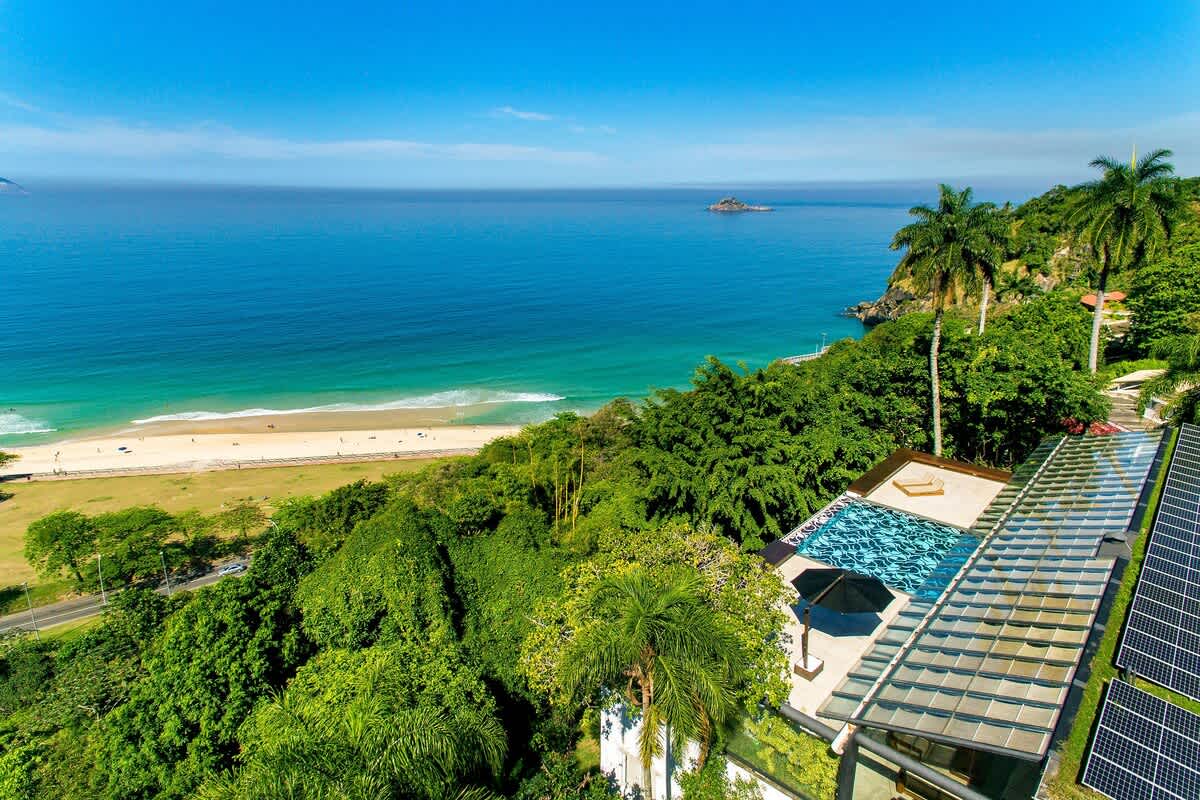
This is the substantive part, and it is structural rather than reassuring language. A private residential estate on the São Conrado hillside means a single controlled entrance with staff, a road inside used only by residents and their guests, and parking within the perimeter. You are not on a street.
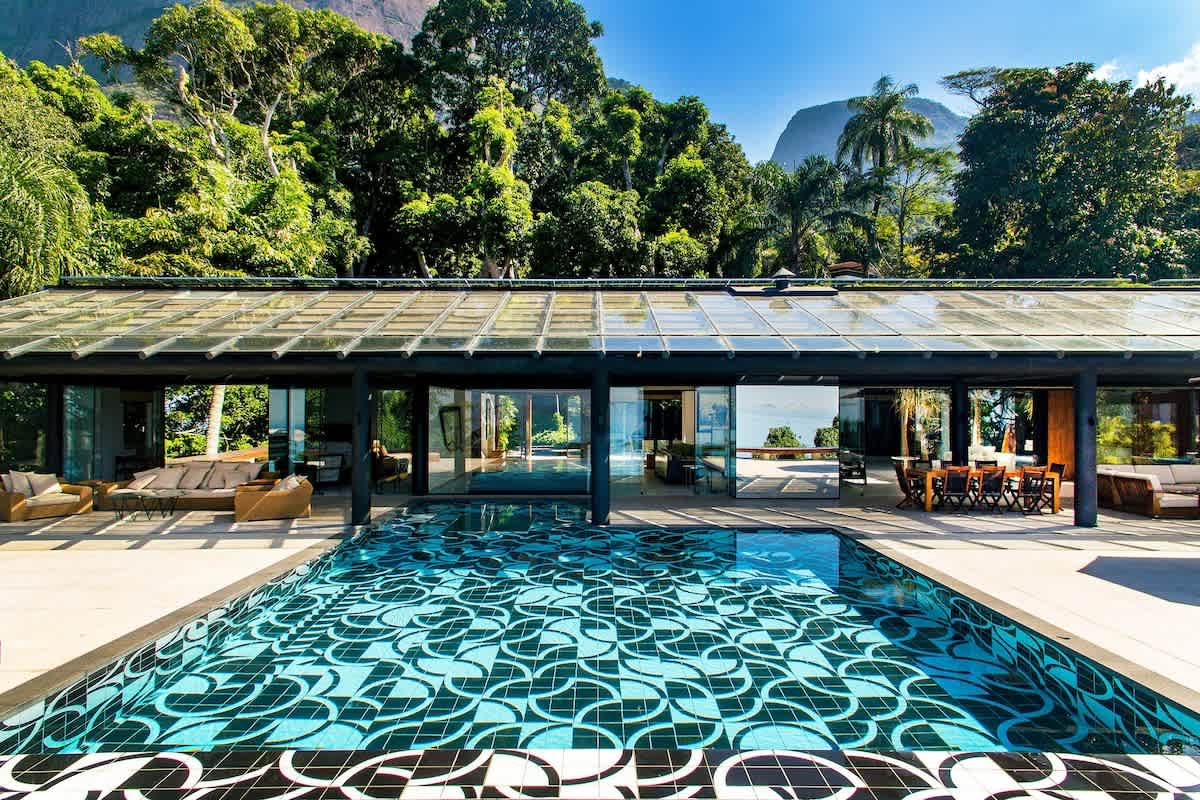
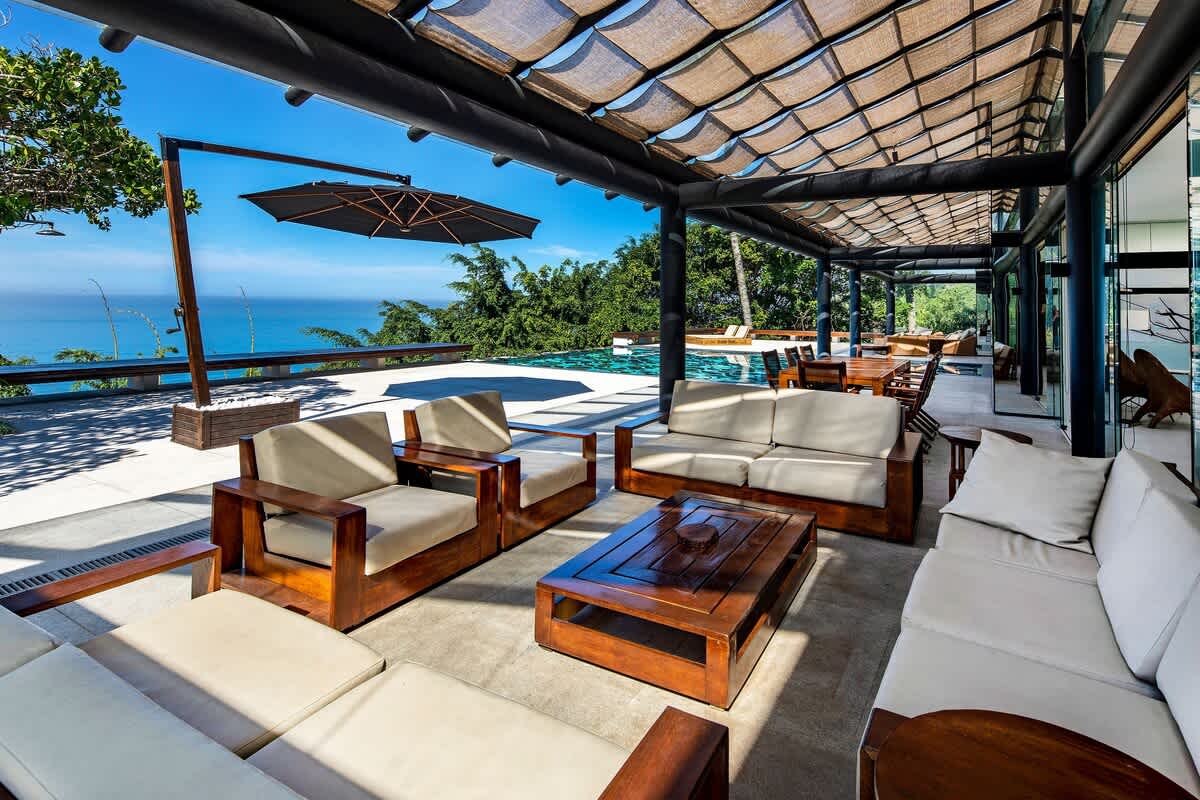
The practical effect is that ordinary behaviour becomes easy. Terrace doors stay open through the day. Children move between the pool, the kitchen and the garden without anyone tracking them. A driver waits inside rather than at a kerb. Deliveries, the cook, a masseuse, a guide collecting you for a climb — all of it arrives through a gate that knows the house is expecting them.
The other half of it is who your neighbours are. An estate of long-term family residents behaves quietly and watches its own road; a compound that has become mostly short-stay rentals behaves like a hotel corridor. This is worth asking about anywhere in Rio, and it is the difference between privacy and merely a fence.
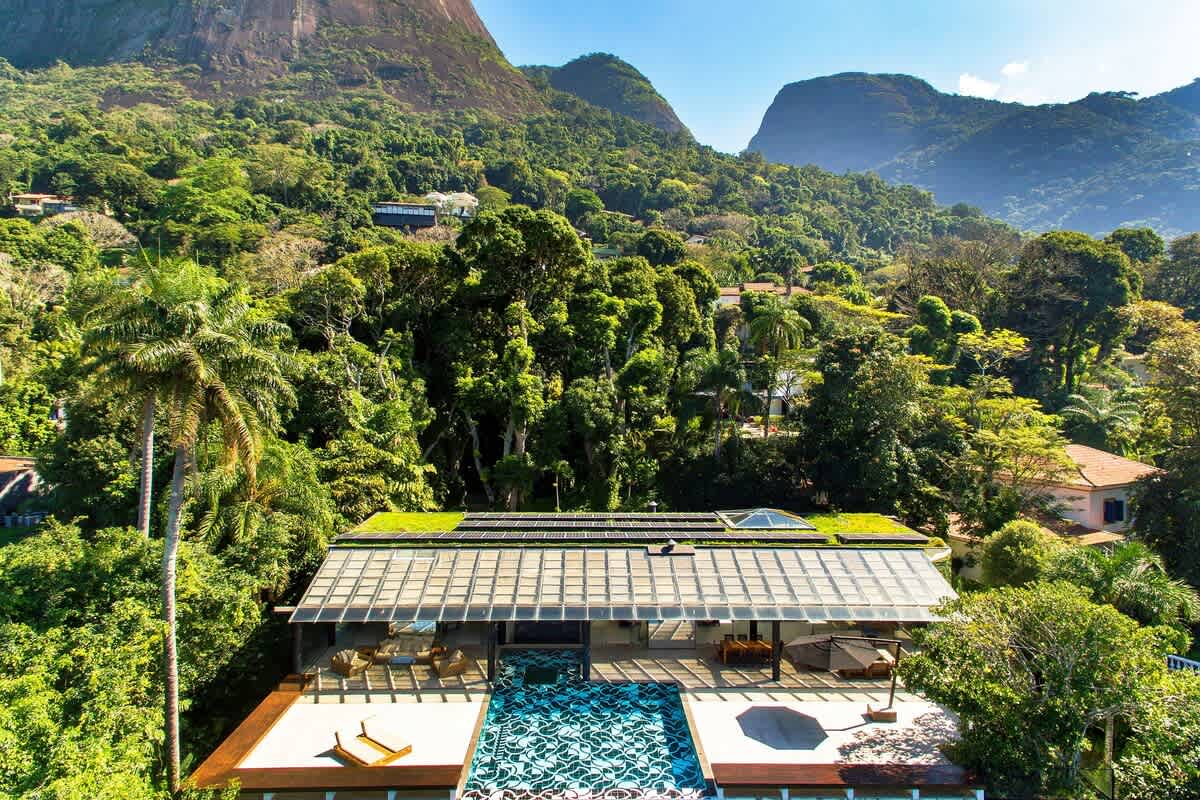
The house is inside a private estate of family houses on the hillside, with a staffed entrance and parking within the gate. When you arrive, the gate is told who is coming, in how many cars, and when — which is also why we ask for those details in advance.
The habits that actually matter
Use a car at night. This is the single most useful rule in São Conrado, and it is about the geography rather than about danger — the estates are on a steep hillside connected by unlit roads with no pavements, so walking down at eleven at night is a bad idea for the same reasons it would be on any mountain road. A driver removes the question entirely.
Take little to the beach. Locals go to the sand with a towel, a little cash, sunglasses and nothing else. Leave watches, jewellery, passports and the good camera at the house, and don't leave a phone unattended on a towel while you swim. This is normal beach behaviour in Rio rather than a precaution.
Keep phones out of hands in traffic and at junctions, especially with a window down. Use the safe for passports and keep a photograph of them on your phone. Prefer ride apps or the house driver over hailing on the street.
Don't wander into unfamiliar areas on foot at night, and be more careful the further you are from the beachfront strips. If in doubt, ask the driver or the house manager — they live here and will tell you plainly. That is what they are for.
None of this is specific to Rio. It is the same list you would give someone visiting any large coastal city, applied consistently rather than occasionally.
Rocinha, and being straight about the map
It is not honest to describe São Conrado without mentioning Rocinha. It is one of the largest favelas in Brazil, a neighbourhood of hundreds of thousands of people built up the hillside above the Lagoa–Barra road on the Gávea side, and its scale is part of the view in that direction. Pretending the hill is empty forest would be silly, and guests notice within an hour of arriving.
The practical reality for a visitor is undramatic: you drive past it on the way to Gávea and the Lagoa, exactly as residents do daily. Rocinha is a functioning neighbourhood with shops, schools, businesses and a great many people commuting to work, and it is part of the same city as the golf club at the bottom of the hill.
The sensible position is the same one a resident holds. You don't wander in as sightseeing, in the way you wouldn't wander uninvited around any residential neighbourhood you don't know, and you don't treat it as a spectacle. Guided visits are a thing that exists and opinions on them differ sharply, including among people who live there; we don't market them as an attraction. If you want to understand the city's inequality seriously, there are better and more respectful ways in, and the concierge can point you at them.
The neighbourhood's history explains the geography behind all of this — a valley reachable only by cliff road and tunnels, with everything built up the slopes. That history is here.
The drive, which is the genuine hazard
The realistic risk on a Rio holiday is not crime, it is roads. Avenida Niemeyer is a two-lane cliff road with the sea below it, motorcycles filter between lanes constantly, and heavy summer rain occasionally brings rock and mud down onto it and closes it. The hill roads up to the estates and up Estrada das Canoas to the flight ramp are narrow, steep and blind in places.
If you drive yourself, drive defensively, expect motorcycles, and do not attempt the hill roads at night unfamiliar and in the rain. Most guests conclude within two days that a driver is the right answer, which is also true for the wine at dinner.
Rain deserves its own note. Rio's summer storms are heavy and brief, and they change the day — surf gets rough, hillside trails get slippery and are best avoided for a day afterwards, and traffic on the coastal roads slows sharply. Build flexibility into plans in the wet months rather than fixed schedules.
Discretion, which is a different subject
For a good number of guests the concern is not security at all, it is attention. A private house behind a gate solves that in a way a hotel structurally cannot: no lobby, no other guests, no restaurant tables next to yours, nobody photographing the group by the pool, and no staff who don't work for the house.
Practically, that means arrivals and departures happen inside the perimeter, the household is a small fixed team rather than a rotating one, and nothing about the stay is discussed outside it. If you need the address handled carefully, name-free bookings, or arrangements made without the property being identified, say so at enquiry and it is handled as a matter of course.
The photographs on this site are of the house; the exact address is given to confirmed guests rather than published, which is standard for houses of this kind and is one of the reasons booking is by enquiry rather than instant checkout.
If there is a specific concern — a public-facing guest, a family situation, press interest, a security team of your own that needs to be accommodated — raise it early. It is easier to arrange in advance than to improvise on arrival, and it is a normal request rather than an unusual one.
In practice, during a stay
You will have one phone number that reaches a person who can fix things, rather than a front desk. Ask for it on the first day and use it — a driver who knows the roads and a house manager who knows the neighbourhood are worth more than any amount of general advice.
Agree the week's transport on the first morning: who is going where, and when. Groups that do this stop thinking about logistics for the rest of the week, which is the actual luxury.
And then behave normally. The reason people take a house on this hillside is that daily life here is calm — you are on a quiet residential slope inside a national park's edge, with a beach below and a gate at the top of the drive. The security arrangement exists so that you can stop thinking about it.
If you have a specific privacy or security requirement, tell us at enquiry — it is a normal request and much easier arranged in advance than on arrival.