Reserve direct
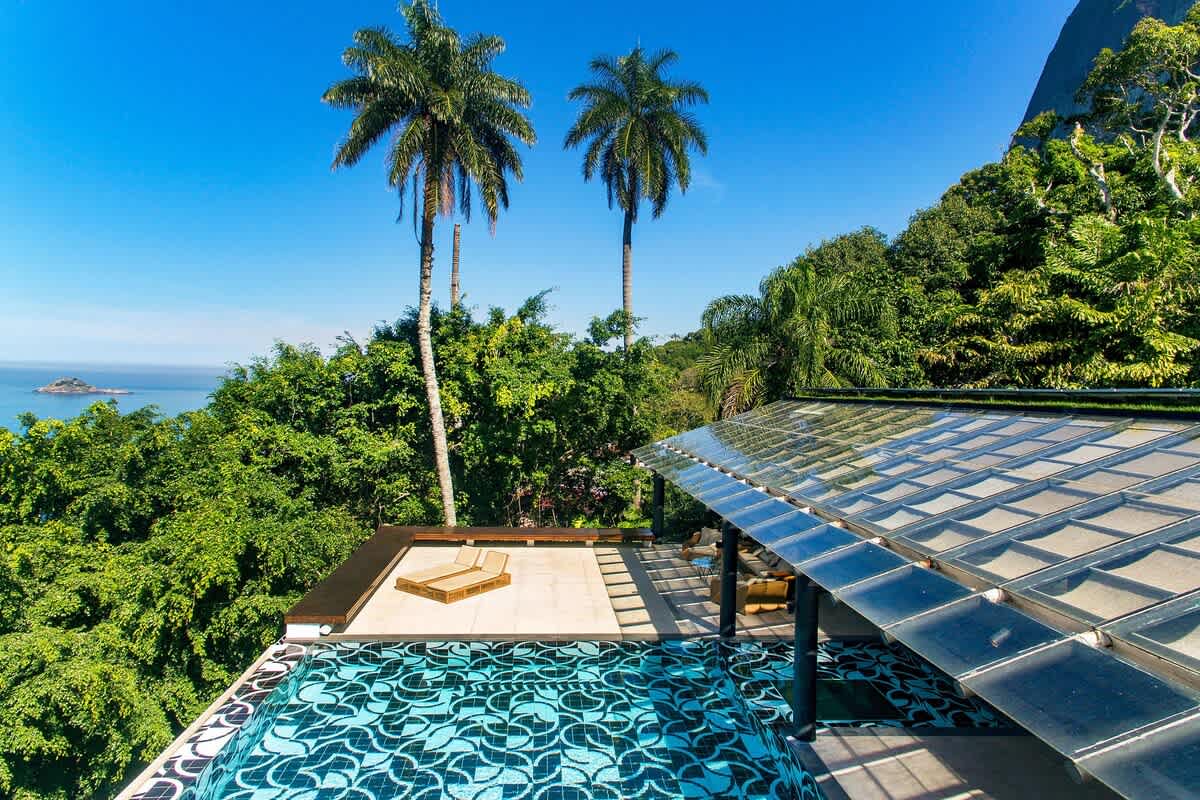
We run a five-suite villa with an infinity pool above São Conrado beach, and its rates and live availability are on the Art de Vivre booking page.
Book directGetting there
Arraial do Cabo is about 180 km east of São Conrado by road, a drive of around two and a half to three hours. The route crosses the Rio-Niterói Bridge and heads east along the coast; one usual way in follows the RJ-104, RJ-106, RJ-132 and RJ-102.
With an English-speaking driver, arranged through Art de Vivre's concierge, a long day trip works: leave early, take a morning boat and be back by dark. It is more relaxed as an overnight, so book a night nearby and give the sea two days. Tell the concierge which boat you want, and the driver will plan the start around it.
If you drive yourselves, watch for the speed bumps on the roads around Arraial, as some are unmarked and hard to see at night. Búzios is about 40 km away, around an hour by car, so the two make an easy pair.
Cold, clear water
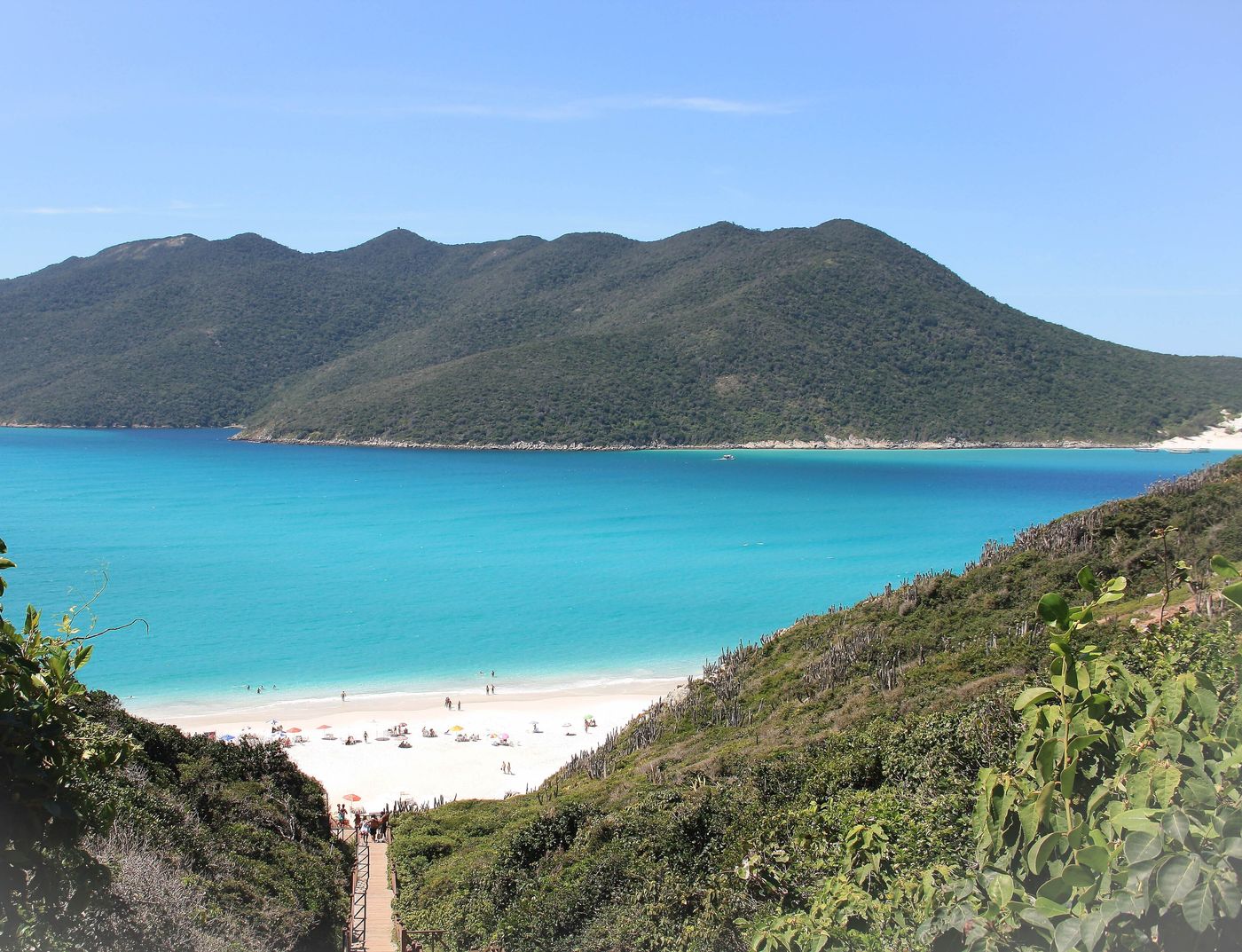
Arraial do Cabo is known for its transparent water and for how cold it can feel on a hot day; even the neighbouring town's name, Cabo Frio, means cold cape. The cold comes from upwelling, ressurgência in Portuguese: off this stretch of coast, deep South Atlantic water rich in nutrients rises towards the surface, and the local currents run noticeably colder than ordinary coastal water.
Three things drive it: the shape of the coast, the core of the Brazil Current moving offshore in spring and summer, and the prevailing spring and summer winds, which push the warm surface water out to sea. So the upwelling shows up in late spring and summer, when you might expect the warmest sea of the year.
The nutrients feed plankton and, through it, a rich marine life, which is why fishing and diving matter so much here. If you plan to spend a long time in the water, a light wetsuit makes it more comfortable.
The boat trip
The classic day out is a boat trip of about four hours from Praia dos Anjos, the town beach where the Porto do Forno, a marina with three piers, sits. Tours call at the Ilha do Farol, Praia do Forno and the Gruta Azul, with other stops such as the Pedra do Macaco along the way.
Take an early tour if you want to see the Gruta Azul, as some later departures visit only two or three beaches and skip the cave. Tour boats in the marine reserve work under credentials from ICMBio, the federal conservation agency, so book with a registered operator.
For a group of ten or twelve, ask about a private boat so you can choose the stops and the pace. Take sunscreen, a hat and plenty of water. A small port fee, around R$ 10 a person in 2026, is paid at the pier, so carry some cash. For skippered days nearer the villa, see Rio's islands by boat.
Ilha do Farol and the Gruta Azul
The Ilha do Farol, named after its lighthouse, can only be reached by boat. Its beach, the Praia do Farol, was voted the most perfect beach in Brazil by Veja magazine in 2000. The island is under the jurisdiction of the Brazilian Navy, which controls landings, so only registered boats stop at the beach and the time ashore is limited, often 30 to 40 minutes.
The old lighthouse, the Farol Velho, dates from the 1830s, and its ruins stand on the island. The trail up to them needs separate authorisation from the Brazilian Navy and is not part of the usual boat tour, so treat the island as a beach stop.
The Gruta Azul is a sea cave about 30 metres long and 15 metres high, and its walls look blue depending on how the light falls on them. You see it from the boat, and the tours do not stop there for a swim.
Praia do Forno and the Prainhas
Praia do Forno lies just north of the town and can be reached by a trail of about 20 minutes from near Praia dos Anjos, or by boat. From the beach, another trail leads towards the Prainha and passes the ruins of an old fort that local history links to Vespucci.
The Prainhas do Pontal do Atalaia are small beaches below the Pontal do Atalaia headland and a regular stop on the boat tours. On foot, a wooden staircase of more than 200 steps leads down to them, and the headland above is a popular place to watch the sun go down.
Praia Brava is reached by steep steps and a short walk along the cliff, and its water is cold, so it suits sure-footed swimmers. Wear proper shoes for the steps and carry everything you need for the day.
Diving
Arraial is known as the capital do mergulho, the diving capital, and it has dozens of recreational dive sites; part of its reputation comes from the shipwrecks off the cape. Dive centres in town run trips out to the sites, so ask them about the right dive for your experience.
The sea off the town is protected as the Reserva Extrativista Marinha do Arraial do Cabo, created by presidential decree on 3 January 1997 to protect the natural resources the town's artisanal fishers have traditionally used. ICMBio, the federal agency that runs it, puts its area at about 51,600 hectares.
Snorkellers do well at the calmer beaches and on the boat stops, and the clear water makes even a short swim worth the cold. Pack your own mask if you have one, so everyone can look under the surface at every stop. For beach days closer to the villa, see beaches near São Conrado.
The town and Praia Grande
Long before the Portuguese arrived, Tamoio and Tupinambá peoples lived on this coast and fed on its fish and shellfish. Local history dates the town to 1503, when the navigator Amerigo Vespucci anchored at what is now Praia dos Anjos. Arraial split from Cabo Frio to become a municipality on 13 May 1985, and about 30,000 people live here today.
Praia dos Anjos is the harbour beach, with the boats in front and the Igreja de Nossa Senhora dos Remédios, which local history dates to 1506, looking down on it. The Porto do Forno is also where the area's salt is shipped out, and the arrival of the Companhia Nacional de Álcalis in 1943 gave the local economy a lift.
Praia Grande is the largest beach, and its water can be cold compared with beaches elsewhere in Brazil; a fishermen's lookout, the Ponto de Observação dos Pescadores, stands above it. The municipality also takes in the Restinga de Massambaba, a protected coastal sandbank bordered to the north by the Lagoa de Araruama and known for its orchids.
On a grey day, the Museu Oceanográfico Almirante Paulo Moreira has marine skeletons, pieces of shipwrecks and aquariums with live animals. It has opened in the afternoons from Tuesday to Sunday, so check the hours before you go. The aquariums make it an easy stop with children.
A day or a night in Arraial
For a day trip, leave the villa at about 6.30am, be at Praia dos Anjos for a morning boat, and spend the afternoon on Praia do Forno before the drive home.
With a night nearby, the pace eases. Take the morning boat on the first day and watch the sunset from the Pontal do Atalaia, then keep the second morning for a dive or a snorkel and lunch before the drive back. Add a night in Búzios and you have a long weekend on the coast.
When to go
Arraial do Cabo has a tropical climate with strong winds that keep temperatures steady, and it is dry for this coast, with about 800 mm of rain a year, less than half the total around Angra dos Reis. Average highs run from about 24°C in July to 29°C in February, with lows of roughly 18°C to 22°C.
The upwelling is seen in late spring and summer, so the water can feel cool even on a hot day. The strong winds also make the boat deck breezy, so bring a light layer even on a warm day. The cave's blue depends on how the light falls, so an early tour on a sunny day is the best bet for the Gruta Azul. For the seasons back in the city, see when to visit Rio.
Questions
Why is the water so cold in Arraial do Cabo?
Off Arraial do Cabo, cold, nutrient-rich South Atlantic Central Water rises towards the surface, a process called upwelling (ressurgência). It shows up in late spring and summer.
How far is Arraial do Cabo from Rio?
About 180 km by road from São Conrado, around two and a half to three hours by car across the Rio-Niterói Bridge.
Can you visit the Ilha do Farol?
Yes, by boat: the tours from Praia dos Anjos stop at the Praia do Farol, on an island under the jurisdiction of the Brazilian Navy, and the time ashore is limited. Walking up to the ruins of the old lighthouse needs separate authorisation from the Navy.
Can you swim at the Gruta Azul?
The boat tours see the Gruta Azul from the water and do not stop there for a swim. The swimming stops are beaches such as the Praia do Forno, and divers have dozens of sites around Arraial.
When was the Arraial do Cabo marine reserve created?
The Reserva Extrativista Marinha do Arraial do Cabo was created by presidential decree on 3 January 1997 to protect the natural resources the town's artisanal fishers have traditionally used.
Spend a day in Arraial's clear water and come home to the pool above São Conrado: book the villa direct with Art de Vivre, and the concierge will arrange the driver for the early start.
Sources
Facts on this page were checked against these sources in October 2026. Opening hours and prices change: confirm before you go.
- Arraial do Cabo (Wikipédia)
- Arraial do Cabo (Wikipedia)
- Ressurgência (Wikipédia)
- Reserva Extrativista Marinha do Arraial do Cabo (Wikipédia)
- Resex Marinha do Arraial do Cabo (ICMBio)
- Arraial do Cabo (Wikivoyage)
- Passeio de barco por Arraial do Cabo (Civitatis)
- Normas para acesso à Ilha do Cabo Frio, Portaria 87/2022 (IEAPM, Marinha do Brasil)
- Ilha do Cabo Frio Biological Reserve (Wikipedia)
- Ilha do Farol em Arraial do Cabo (Esse Mundo é Nosso, atualizado em 15/10/2025)
- Passeio de barco em Arraial do Cabo (Mala de Aventuras, atualizado em 30/08/2026)
- O que fazer em Arraial do Cabo (Esse Mundo é Nosso, atualizado em 12/01/2026)
- Pontal do Atalaia, Arraial do Cabo (Quanto Custa Viajar)
- Museu Oceanográfico, Arraial do Cabo (Buser)
- Climate data for Arraial do Cabo (Arraial do Cabo, Wikipedia)
- Angra dos Reis (Wikipédia)
- Cabo Frio (Wikipedia)
- OSRM route São Conrado to Arraial do Cabo (OpenStreetMap data)
- OSRM route Búzios to Arraial do Cabo (OpenStreetMap data)