Reserve direct
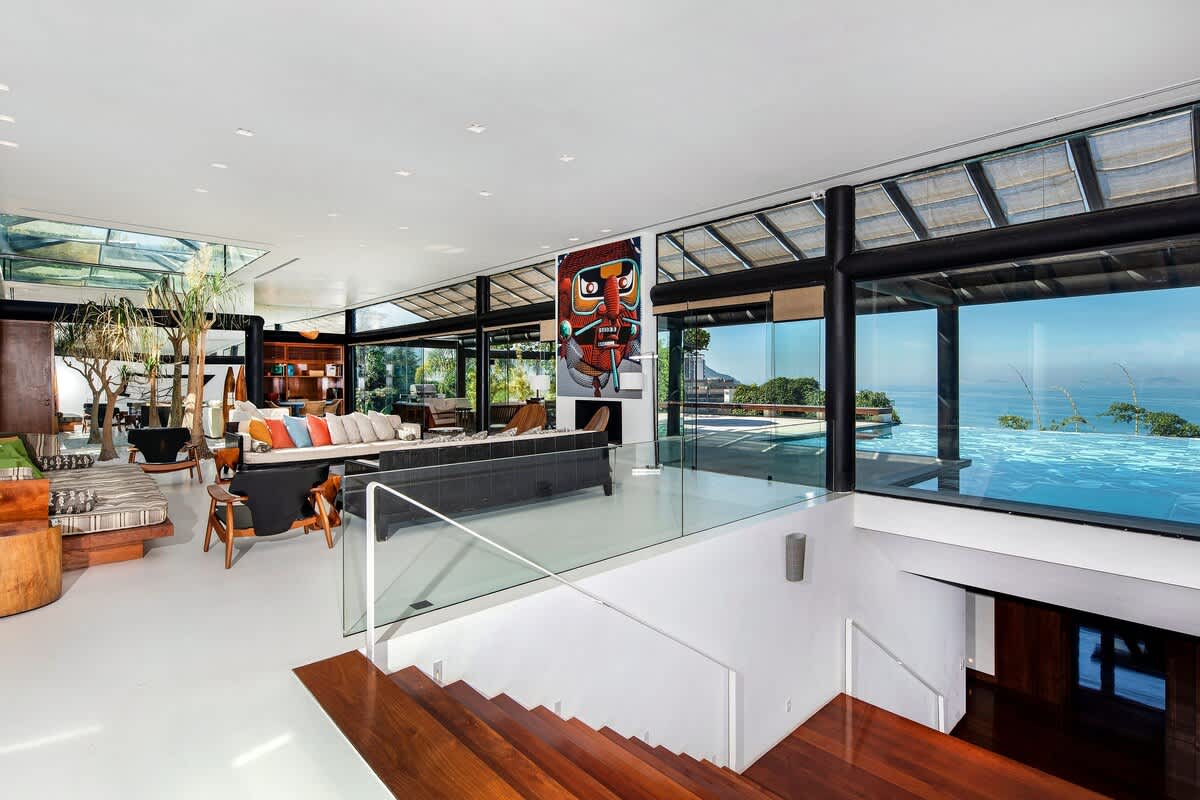
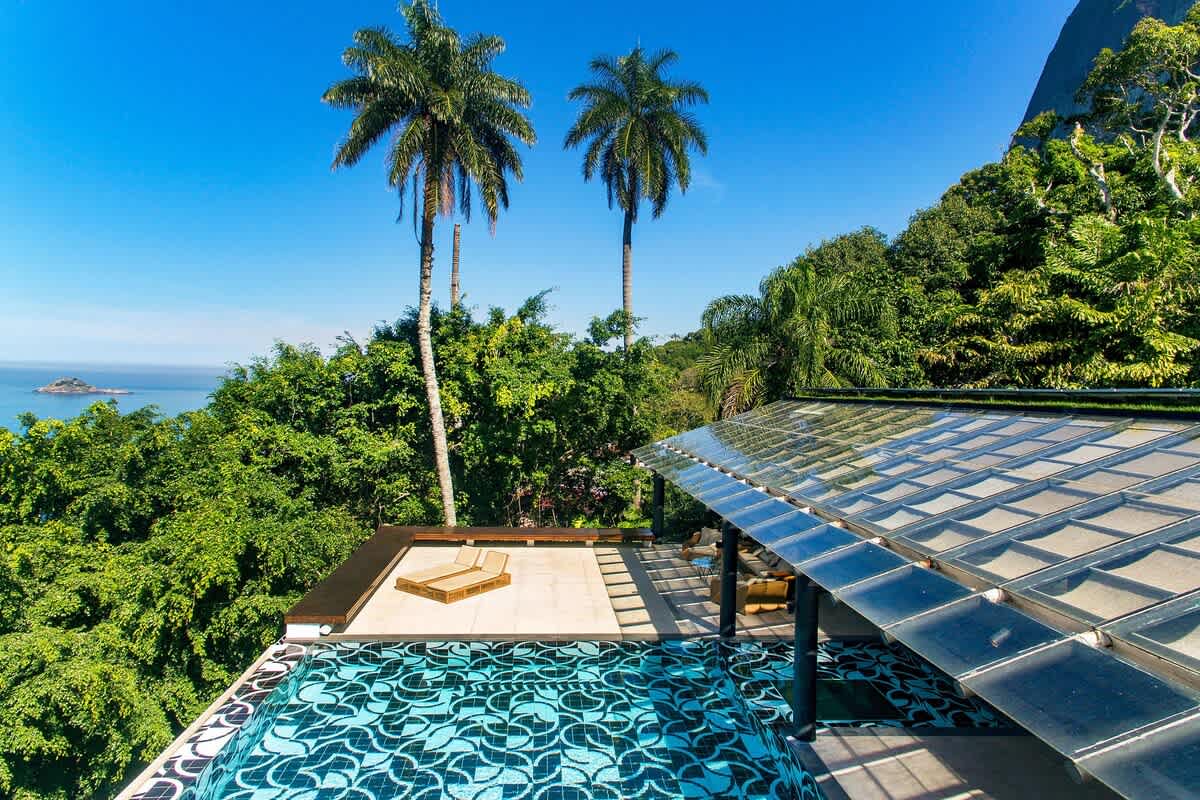
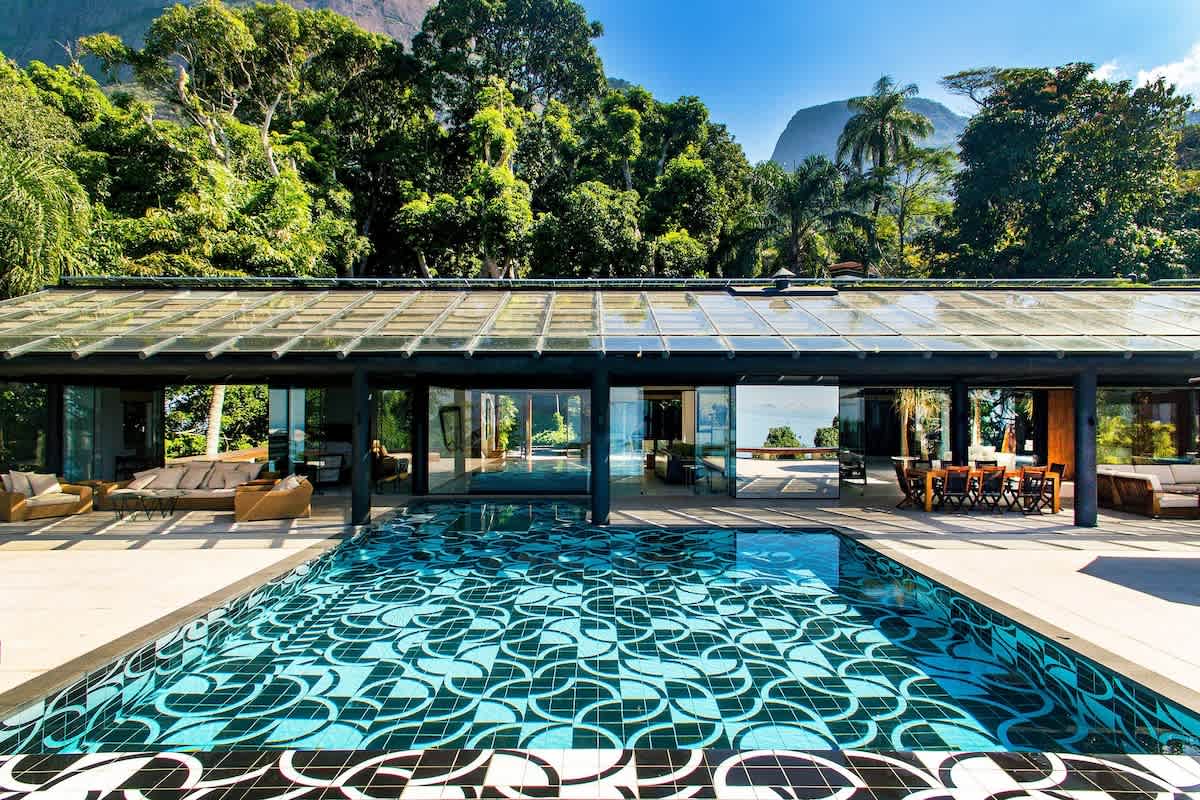
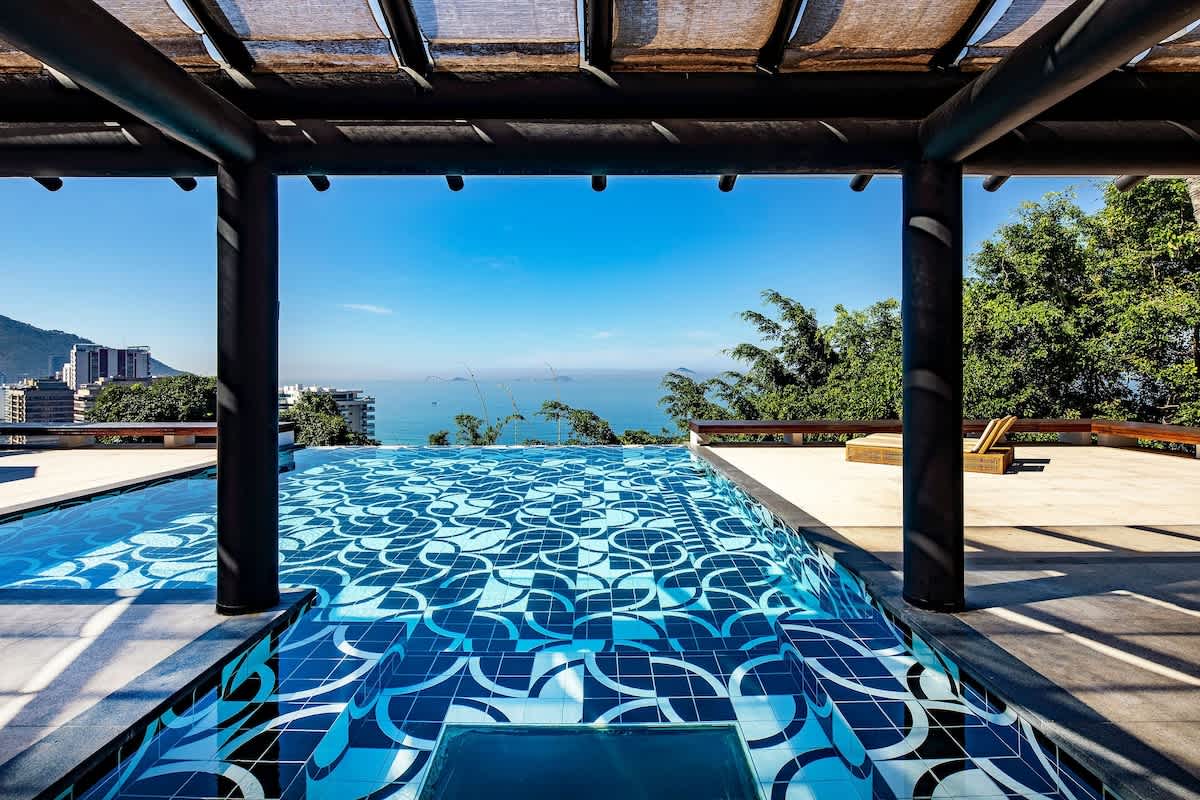
We run a five-suite villa with an infinity pool above São Conrado beach, and its rates and live availability are on the Art de Vivre booking page.
Book directA day on the water
Rio looks different from the sea. Once you are out past Sugarloaf, the city lines up along the shore: Copacabana, Ipanema and Leblon, with Dois Irmãos and Pedra da Gávea rising behind them. Two groups of islands sit offshore. The Cagarras lie about 5 km off Ipanema and are a protected natural monument, while the Tijucas sit a few kilometres off São Conrado and Barra.
Through Art de Vivre's concierge, guests can arrange a skippered boat day out of Marina da Glória, with an English-speaking driver taking the group to the marina and collecting it at the end. For eight to twelve people, a private boat is the easy way to see the islands: you set the pace, choose where to stop and swim, and make the day as long or as short as the group likes.
Things to do in Rio gives the short version of a boat day. This guide covers what the islands are, what lives on them, where you can go ashore and how to plan the day around the sea.
Leaving from Marina da Glória
Marina da Glória sits inside Flamengo Park, on the inner shore of Guanabara Bay, and it was the sailing venue for the Rio 2016 Olympics and Paralympics. From the villa it is around half an hour to 45 minutes by car, depending on traffic.
The usual way out to the islands runs past Urca and the Sugarloaf cable car, then along Leme, Copacabana and the Arpoador rocks before the boat turns offshore. On a leisurely boat the run to the Cagarras takes about an hour and a half, and a faster boat does it in less when the sea is calm.
On the way home, some boats loop back through Guanabara Bay, with Niterói and its contemporary art museum across the water. Agree the shape of the day with the skipper before you leave the dock, so that time at anchor goes where your group wants it.
The Cagarras islands
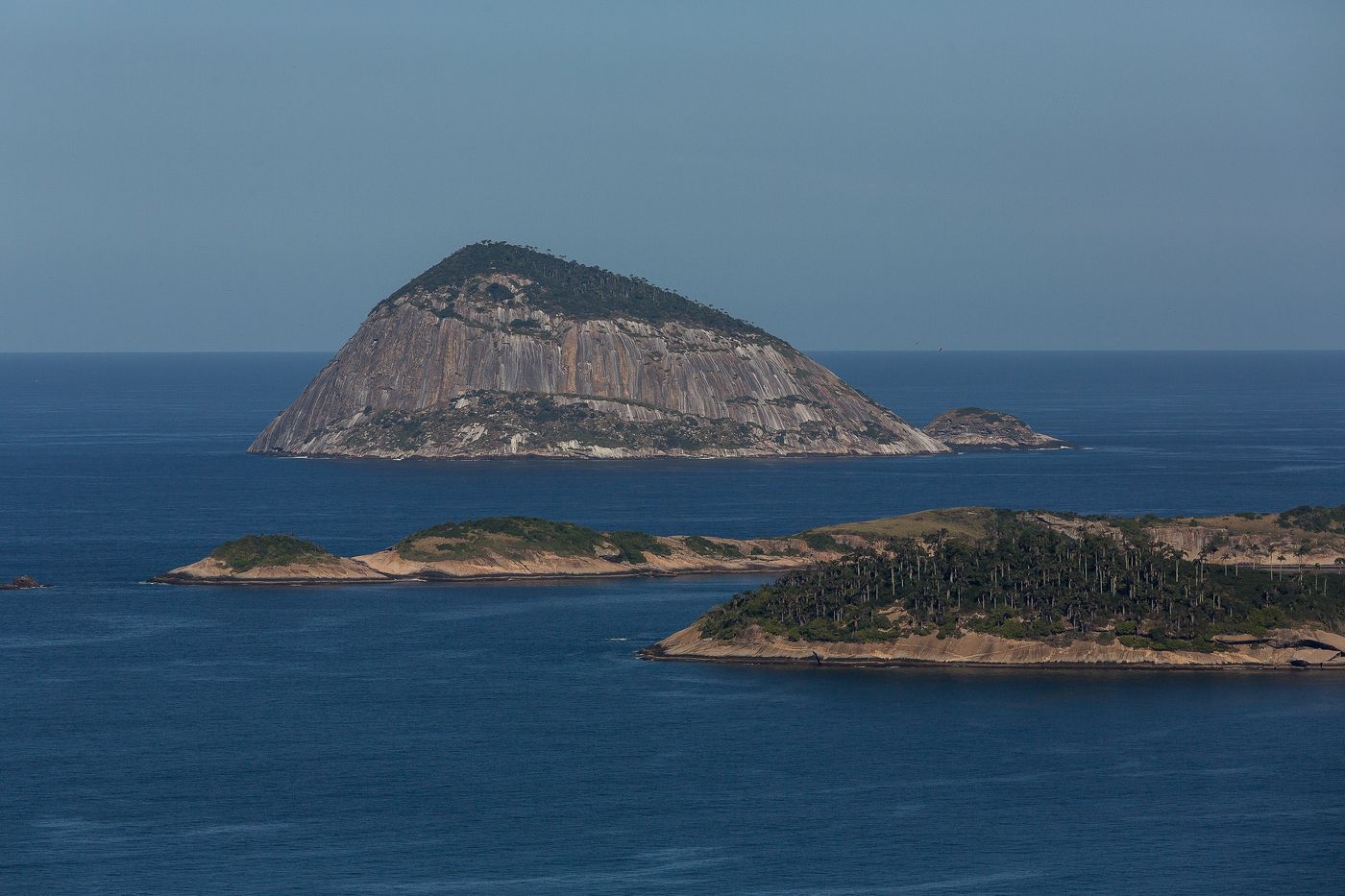
The Monumento Natural do Arquipélago das Ilhas Cagarras was created by federal law no. 12,229 of 13 April 2010, and it is run by ICMBio, Brazil's federal agency for protected areas. It covers about 91 hectares: the islands themselves plus a strip of sea ten metres wide around them.
The law names six pieces of land. Cagarra, Palmas and Comprida sit together with the islet called Filhote da Cagarra, and Ilha Redonda and its own islet, Filhote da Redonda, stand about 4 km further out to sea. The islands are steep and rocky, with remnants of island Atlantic Forest, cacti and bromeliads on top. Writers disagree about the name, and the version given most often points to the seabirds, whose droppings streak the rock white.
In April 2021, Mission Blue, the ocean conservation alliance led by Sylvia Earle, named the islands and the surrounding waters a Hope Spot, then the second in Brazil after Abrolhos. The designated area reaches back to the beaches from Leblon to Praia Vermelha.
Birds, fish and whales
The birds are the first thing you notice. Around 5,000 magnificent frigatebirds use the islands, one of the largest nesting colonies in the South Atlantic, and you will see them hanging over the cliffs on long, angled wings. Brown boobies nest on the archipelago as well.
Under the water, researchers have catalogued around 220 species in and around the monument, seahorses among them, and young groupers grow up among the rocks. Turtles and dolphins are often seen in the nearby water.
Humpback whales pass along this coast on their migration, mainly between June and August, and researchers monitor six whale and dolphin species here, including bottlenose dolphins, Bryde's whales and orcas. A winter boat day may bring a spout on the horizon.
Swimming and the Ilha Comprida trail
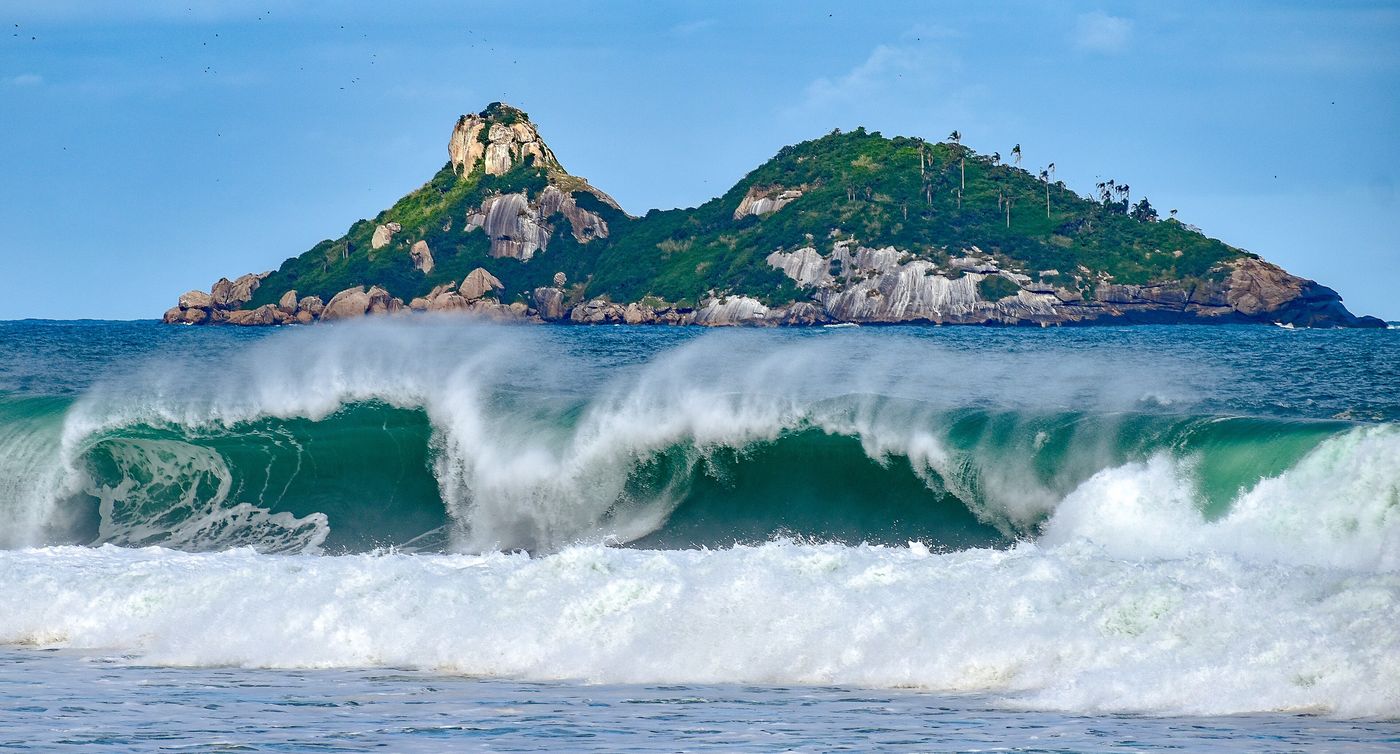
Most visitors meet the islands from the water. The boat anchors nearby, everyone jumps in, and the swim around the rocks is the main event of most island days. The monument's rules keep the islands as they are: net and trap fishing, camping without permission, sports competitions and anything that endangers the ecosystem are not allowed. For scuba diving, ICMBio publishes a list of accredited dive operators.
Since 28 June 2026 you can also walk on one of the islands. The Trilha da Comprida, on Ilha Comprida, offers three routes of about 400 metres, 800 metres and 1.2 km, open daily from 7 am to 5 pm at launch, with no overnight stays; ICMBio's page has the current rules. There is no pier: you swim the last 20 to 30 metres from the boat to the rocks, with a life vest and ropes to help you up. From the island you look back at Ipanema, Copacabana, the Arpoador, Dois Irmãos and Sugarloaf, and signs along the way explain its rocks, plants and animals.
ICMBio rates the walk moderate to hard, over wet and uneven rock with little shade, and does not recommend it for children under 12 or anyone with limited mobility. It suggests going with an accredited guide, who can take up to five people at a time. The trail is also the first stretch at sea of the Transcarioca, the 180 km trail that runs across the city from Barra de Guaratiba, near Pedra do Telégrafo, to Morro da Urca.
The Tijucas off São Conrado
The Tijucas are closer to home. Ilha do Meio, Alfavaca and Pontuda lie roughly 2 to 3 km off the shore between São Conrado and Barra, out in front of the villa's stretch of coast, and on a clear day they sit in the view from São Conrado beach. Pontuda carries a small lighthouse.
They are small and rocky, with scrub on top, and herons nest on them. Divers come for the marine life around the rocks, especially around Pontuda. Paddleboarders make the crossing of about 2 km from the Barra side when the sea is flat, which takes 45 minutes to an hour, and the water around the islands is about 8 metres deep, with good visibility on calm days. Boats and boards usually set out from the Canal da Joatinga, at the end of Barra beach.
Shallow rocks lie close to the surface around the islets, so the skipper keeps to deeper water, and this is a trip for someone who knows the area. A longer boat day can carry on west from the Cagarras, about 8 to 10 km, past Leblon and Vidigal to these islands and the cliffs of Joá and Joatinga, so you see your own beach and the hillside above it from the sea.
Sea, season and what to bring
The water is warmest from January to March, roughly 25 to 27°C, and coolest from July to September, around 22°C. Summer suits long swims, and winter brings the whales; when to visit covers the seasons on land.
The open sea beyond Copacabana can roll, even on a fine day. If anyone in the group is prone to seasickness, a tablet before leaving the dock helps, and the skipper may shorten the route or keep to the calmer water inside the bay if the swell is up. Weather can move a boat day, so keep one or two possible dates in hand.
Bring swimwear, a towel, sunscreen, a hat and sunglasses, a light layer for the ride home and a dry bag for phones. If you plan to land on Ilha Comprida, add water shoes with good grip, and leave anything you would mind getting wet on the boat.
Planning the day from the villa
A good boat day starts early. The driver takes the group to Marina da Glória after breakfast, you are past Sugarloaf by mid-morning, and the swim at the Cagarras comes around midday. Tell the concierge in advance who wants to swim, who wants to walk on Comprida and whether there are young children aboard, so the skipper can plan the stops.
Half a day covers the Cagarras and the coast. A full day adds the Tijucas and the run along São Conrado, or a slower loop back through the bay. Either way, you are back at the villa in time for the pool and the sunset. If some of the group would rather stay ashore, split the day: the boat for the swimmers, the pool and a long lunch at the villa for everyone else.
Questions
How do you get to the Ilhas Cagarras?
Only by boat. Private and group boats leave from Marina da Glória, and the run out past Sugarloaf and Copacabana takes about an hour and a half on a leisurely boat. The islands lie about 5 km off Ipanema.
Can you go ashore on the Cagarras?
Yes, on Ilha Comprida, where a trail opened in June 2026. There is no pier, so you swim the last 20 to 30 metres to the rocks, and ICMBio recommends going with an accredited guide and does not advise it for children under 12.
Can you swim at the Cagarras?
Yes. Boats anchor near the islands and people swim and snorkel from them. Net fishing, camping without permission and anything that endangers the ecosystem are not allowed inside the monument.
What birds live on the Ilhas Cagarras?
Around 5,000 magnificent frigatebirds, one of the largest nesting colonies in the South Atlantic, and brown boobies, which also nest on the archipelago.
What are the islands off São Conrado called?
They are the Ilhas Tijucas: Ilha do Meio, Alfavaca and Pontuda, roughly 2 to 3 km offshore between São Conrado and Barra. Pontuda has a small lighthouse.
A skippered boat day out of Marina da Glória is one of the extras Art de Vivre's concierge arranges for guests at the villa, along with the driver to the dock; book the villa direct with Art de Vivre and plan the day before you arrive.
Sources
Facts on this page were checked against these sources in October 2026. Opening hours and prices change: confirm before you go.
- MONA do Arquipélago das Ilhas Cagarras (ICMBio)
- Lei nº 12.229, de 13 de abril de 2010 (Câmara dos Deputados)
- Rio inaugura primeira trilha insular em unidade de conservação nas Ilhas Cagarras (Folha de Pernambuco, 2026)
- Nova trilha no Rio nas Ilhas Cagarras (Melhores Destinos, 2026)
- Ilhas Cagarras, no Rio, entram para lista de locais de esperança (National Geographic Brasil, 2021)
- Ilhas Cagarras (Wikipedia)
- Ilhas Cagarras (Wikipédia)
- Ilhas Tijucas (Wikipédia)
- Ilhas Tijucas (Rio de Janeiro), sea-seek
- Travessia SUP Ilhas Tijucas (Mala de Aventuras)
- Marina da Glória (Wikipedia)
- Passeio às Ilhas Cagarras (Viciada em Viajar)
- Best time to swim in Rio de Janeiro: sea temperature by month