The two words that do the most work in a listing
"View" and "pool" appear in nearly every luxury house listing in Rio de Janeiro, and both words hide an enormous range. A view can mean the Atlantic filling your windows from a hillside, or it can mean a sliver of sea visible from one corner of a back bedroom if you lean out. A pool can mean twenty metres of water on a terrace above the beach, or a plunge basin in a shaded side yard that four adults cannot comfortably share.
The gap matters because these two features are the reason most people rent a house in Rio instead of taking hotel rooms. If the view and the pool are real, you spend your days at the house and go into the city by choice. If they are nominal, you have paid house money for hotel behaviour — out every morning, back to sleep. Everything below is about telling the two situations apart from a laptop, weeks before you arrive.
None of it requires trusting a description. Sun direction, sightlines, road noise, tide, and paperwork are all checkable facts, and a serious host will answer every one of them in writing.
What a view actually means here
Rio's geography is vertical. The city is built around granite peaks that drop straight into the sea, so a hundred metres of elevation changes everything you can see, and so does the direction the house faces. Ask which compass direction the main terrace looks, and what stands between the terrace and the water. Then ask for a photograph taken from the terrace at eye level, standing, not one taken by a drone hovering out over the neighbour's roof.
There are three views worth naming in Rio, and they behave differently. A sea view gives you weather, light on water, and the horizon; it is the one that holds up all day. A mountain view — Pedra da Gávea, Corcovado, the Tijuca ridges — gives you scale and green, and it is the one that changes most with cloud. A city view gives you lights at night and haze in the afternoon. The best houses on this coast have two of the three at once because they sit on a hillside with the sea in front and rock behind.
The specific failure mode to check for is obstruction by growth and by construction. Rio's Atlantic forest grows fast, and a sightline that was clear when the photographs were taken three years ago may now be half canopy. Newer buildings are the other risk, mostly in Barra and the flatter stretches. A house inside a mature gated estate on a protected hillside is the safest bet, because the plot next door cannot suddenly become a tower.
One more thing that photographs never show: noise. Some of the most photogenic terraces in Rio sit directly above a busy coastal road, and the traffic is constant. Ask what you hear on the terrace at eight in the morning and at eleven at night.
The pool question, in detail
Start with whether the pool is yours. In condominium buildings and many gated developments the pool is shared, with posted hours and other families in it, which is a completely different holiday from a pool that belongs to the house. If a listing says "pool" without saying "private", assume shared until told otherwise.
Then ask about sun hours, because this is where hillside houses in Rio genuinely differ. A pool terrace facing roughly north or west holds afternoon and evening light; one tucked behind the house on the mountain side can lose the sun by two in the afternoon even in January. Ask directly: at what time does the sun leave the pool in summer, and in winter? A host who knows their own house answers immediately.
Size and shape decide whether the pool is for swimming or for standing in. Anything under about eight metres is a cooling-off pool, which is fine if that is what you want. Long enough to swim lengths is a different amenity, and worth confirming in metres rather than adjectives. Heating matters more than visitors expect: Rio's winter, from June to August, is mild in the air and cool in the water, and an unheated pool in July is bracing rather than inviting.
Finally, privacy and edge. Is the pool overlooked from a neighbouring plot or a road above? Is there an infinity edge that drops toward the view, or does a wall cut the sightline at chest height when you are in the water? The whole point of a pool with a view is that the two things happen at the same time, and a badly placed parapet quietly removes one of them.
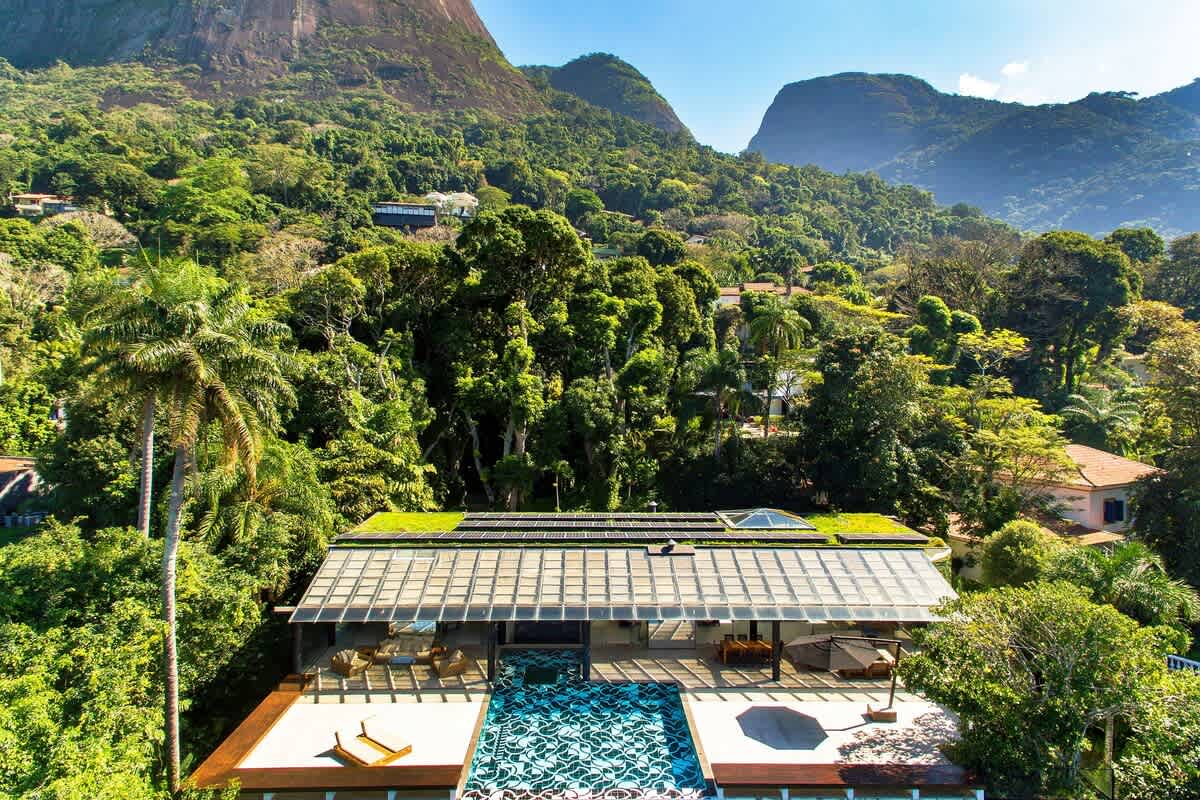
The pool at this house is private, unheated by default and heatable on request, cut into the terrace on the sea side with a mosaic-tiled infinity edge that runs toward the water, with the beach below and Pedra da Gávea standing behind the house.
Where in Rio the houses with both actually are
Honest answer: not in Ipanema or Leblon. Those neighbourhoods are flat, dense and mostly vertical — you can rent a very good apartment with a sea view there, and a rooftop pool in a building, but detached houses with private pools are rare and largely off the rental market. If you want the beach-street life more than the house, that is the trade you are making.
The houses are on the hillsides, and they cluster in a handful of places. São Conrado has gated estates climbing the slope under Pedra da Gávea with the beach below and the Tijuca forest behind. Joá, immediately west, is a small clifftop neighbourhood of private houses over the water. The Gávea and Alto Leblon slopes hold big houses with city and lagoon views, generally without the open sea. Itanhangá and the São Conrado hills continue the same pattern inland. Barra da Tijuca has newer houses in gated compounds, flatter, further from the classic postcard, with a long beach.
Santa Teresa deserves a mention because it does have historic houses with pools and a genuine city view over the centre and the bay — but it is a hill neighbourhood twenty-five minutes from the beach, and the character is bohemian rather than coastal. It answers a different brief.
So the honest shortlist for a house with a private pool, an ocean view, and a gate is short: São Conrado, Joá, and a scattering of plots in the hills behind them. This house is in the first of those, in a private gated estate, about fifteen minutes from Leblon and Ipanema and roughly forty-five from Galeão airport. The neighbourhood guide covers the setting in detail, and Joá and Joatinga covers the coast immediately next door.
Privacy, the gate, and what it buys you
In Rio the difference between a house on a public street and a house inside a gated estate is not a small one, and it shows up in how you spend the day rather than in any dramatic incident. Inside a gate with a manned entrance you leave the terrace doors open, children move between pool and kitchen unsupervised, and deliveries, drivers and a chef arrive without anyone having to stand at a street door.
Ask three concrete questions. Is the entrance staffed twenty-four hours, or is it a keypad? How many houses share the estate, and are they mostly residents or mostly short-stay? Is there parking inside the gate for the number of cars your group will actually have, including a driver waiting?
The second question is the one people forget. An estate of long-term residents behaves quietly. A compound that has become mostly holiday rentals behaves like a hotel corridor. This house sits in a private residential estate of family houses on the São Conrado hillside, with a staffed entrance and parking inside the gate — the practical detail is in the privacy and security guide, which also deals plainly with the question everyone asks about Rio.
Paperwork, and who you are actually contracting with
This is the least glamorous section and the one that protects you. Establish who you are paying: an individual owner, a letting agent, or a management company with a registered entity and an address. Ask for the company name and registration, ask for a written rental agreement rather than a chat thread, and ask whether the house is permitted to be let short-term under the rules of its own condominium or estate, because that varies plot by plot in Rio and an estate can and does refuse entry.
Confirm what is included in writing before any payment: staff and their hours, cleaning frequency, linen changes, whether cook and driver are inside the rate or arranged at cost, utilities and air conditioning, pool heating, and what happens on arrival if a flight lands at five in the morning. Then confirm the cancellation and refund terms, and the damage deposit and how it is returned.
Ask for a video call from inside the house. Ten minutes of someone walking a phone from the gate to the pool to the master suite settles more questions than fifty photographs, and a host who won't do it has told you something. The full list is in how to book a luxury villa in Rio.
Staff, and why the chef changes the holiday
A house without service is a self-catering holiday in a beautiful setting, which some groups genuinely want. A house with a cook, daily housekeeping and a driver on call is a different product, and in Rio it is the normal shape for a house of this size, because the houses were built with staff space in them.
The chef is the piece that changes behaviour most. Once dinner happens at the house, the terrace becomes the place the day ends — you stop booking restaurants for a party of ten, you stop the logistics of getting everyone back down the hill at midnight, and the pool stays in use until late. Ask whether the cook shops for you, whether groceries are billed at cost, and whether they can handle the group's actual restrictions rather than a generic menu. Dinner at the villa describes how an evening here tends to run.
A driver is the other one. Rio rewards not driving: parking near the beaches is difficult, the coastal roads are busy at rush hour, and one person in the group otherwise spends the holiday behind the wheel. Ask whether the driver is dedicated to the house for the stay or shared, and what hours are covered.
How this house answers the brief
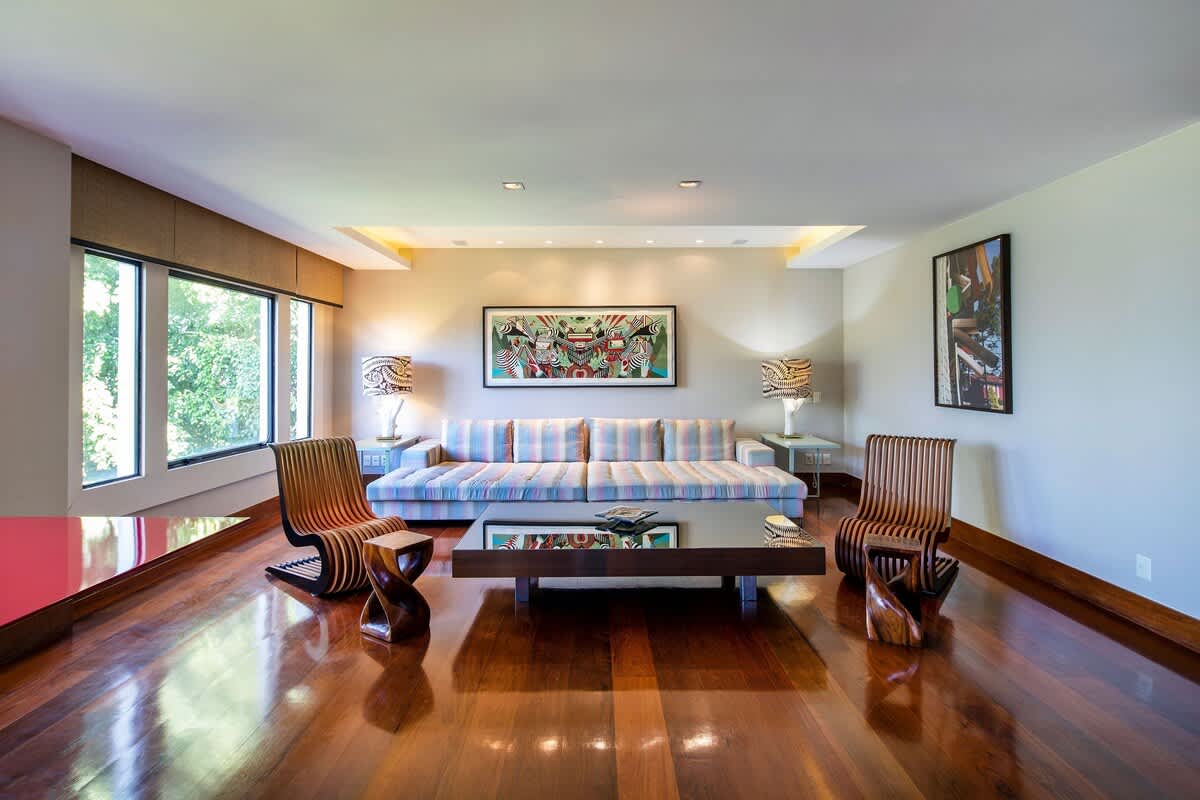
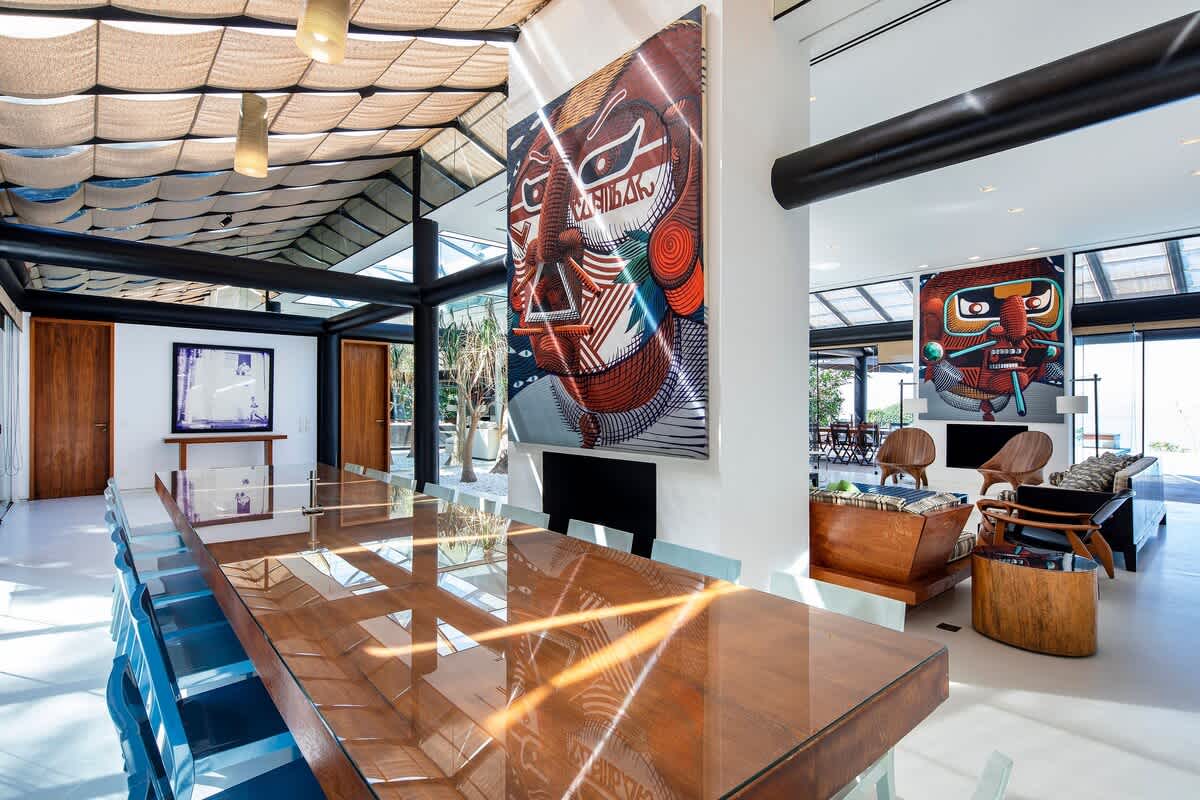
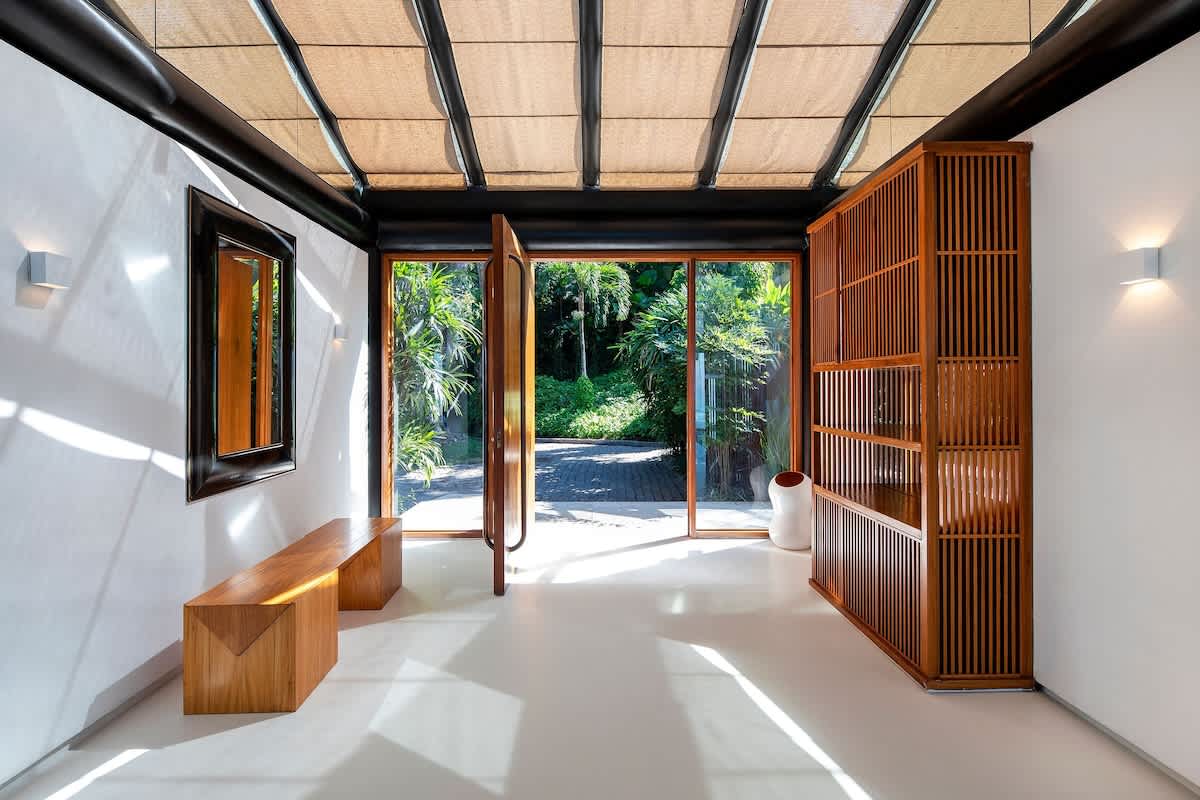
Set against everything above: a nine-hundred-square-metre glass pavilion on the São Conrado hillside, inside a private gated estate with a staffed entrance. Five suites, six bathrooms, comfortable for ten guests and up to twelve. Pedra da Gávea stands directly behind the house; São Conrado Beach is below it; the pool is private, mosaic-tiled, with an infinity edge on the sea side of the terrace.
The living space is glass on the view side and opens fully, so the distinction between the terrace and the room mostly disappears — which is the actual reason a house like this beats a suite with a balcony. Chef, housekeeping, driver and airport pickup are arranged through Art de Vivre before you land, and hang-gliders launching from the Pedra Bonita ramp pass in front of the terrace most afternoons on their way down to the sand.
If you are weighing this against hotel suites for a group, that comparison has its own page. If you are still deciding which part of Rio to base yourself in, start with where to stay in Rio.
If the brief is a private house in Rio with a real view and a pool you'd actually swim in, ask us for dates and we'll send photographs taken from the terrace, not a drone.