The green in the middle of São Conrado
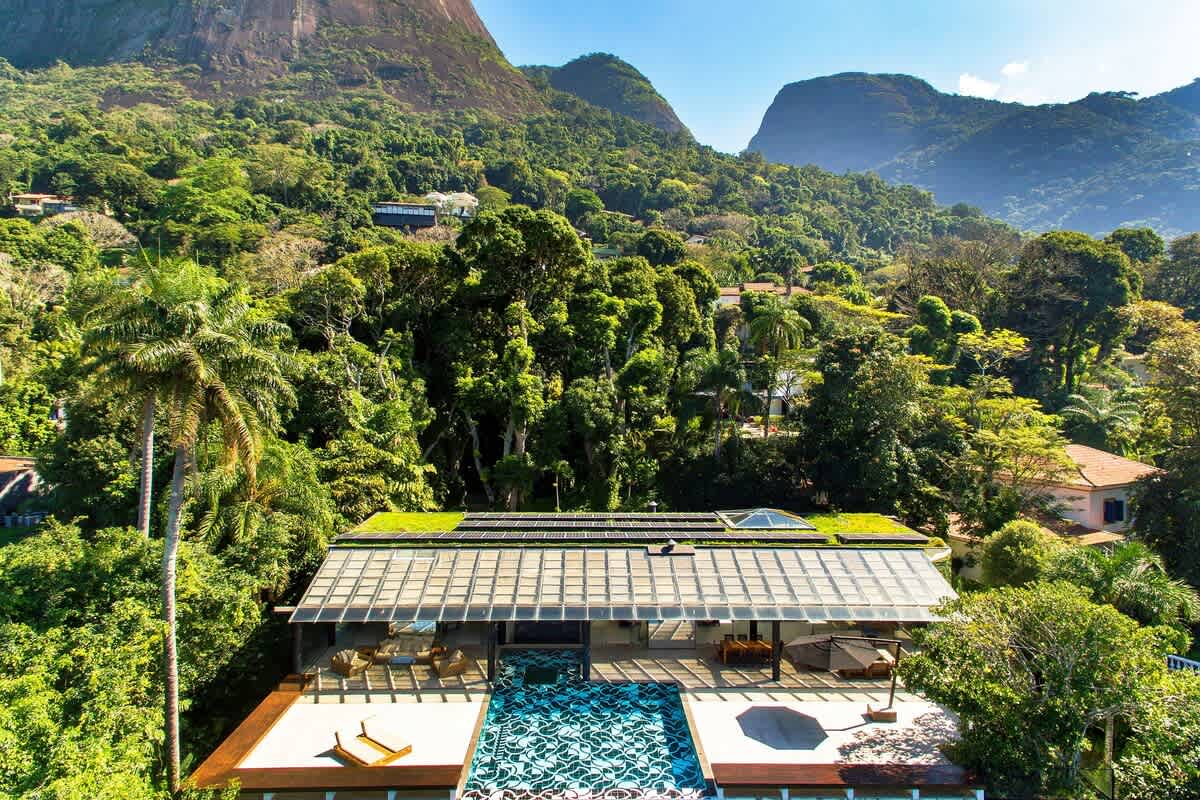
Look down from the hillside estates and a large part of the flat ground between the beach and the mountains is grass. That is Gávea Golf & Country Club, a private eighteen-hole course occupying most of São Conrado's valley floor, in front of the beach, with Pedra da Gávea on one side and the Tijuca forest wrapping the back.
It is one of the more dramatically sited golf courses anywhere. Very few courses have a nine-hundred-metre granite monolith standing over them and the Atlantic at the end of the property, and it consistently appears on lists of the best courses in Brazil and South America.
It matters to visitors even if you never pick up a club, because the course is the reason this neighbourhood is not built up. Several hundred metres of protected grass in the middle of São Conrado is why the views from the hillside carry all the way to the water, and why the valley is quiet.
How it got there
The club was founded in 1921 as the Rio de Janeiro Golf Club, initially with no course and no land of its own. It acquired the São Conrado land five years later, in 1926, and the full eighteen holes were completed in 1929. That makes it one of the oldest surviving golf clubs in Brazil and older than most of the buildings around it.
The original layout is credited to Arthur Morgan Davidson. Stanley Thompson — the Canadian architect behind Banff Springs and Jasper Park — later worked on the course, adding new tees at the first, fifteenth and eighteenth and building new greens at the second and seventeenth. Those two names are part of why the course is taken seriously by people who care about golf architecture rather than only about views.
The club arrived when São Conrado was still largely undeveloped land between the forest and the sea, decades before the hillside estates and the Niemeyer-designed hotel on Avenida Niemeyer. In practice it set the shape of the neighbourhood: the flat land was already committed, so everything that came later climbed the slopes. The neighbourhood's history follows that story through.
The course itself
Eighteen holes measuring a little over six thousand yards from the back tees — short by modern championship standards, and not the point. The interest is in the setting and the routing: the course is crossed by the Lagoa–Barra road, which divides it in two, with thirteen holes on one side and five on the other.
It is a walk with the rock in view for most of it. The land is largely flat valley floor with the mountain rising immediately behind, so almost every hole has scale behind it, and the light in the late afternoon on the granite is the thing members talk about.
Conditions follow Rio's climate: warm and humid most of the year, softer and greener in the summer rains from December to March, drier and more pleasant to walk in the cooler months from June to August. Early morning is the sensible tee time in summer for the same reason it is everywhere in the tropics.
Playing it as a visitor
Gávea is a private members' club, not a resort course, and that is the single most important practical fact. Visitor play is generally by arrangement — typically as the guest of a member, or through a reciprocal arrangement with your own club at home, and normally on weekdays rather than at weekends.
If you want to play during a stay, start early rather than on arrival. Bring evidence of membership and a handicap certificate from your home club, and expect a dress code of the traditional kind, on the course and in the clubhouse. Ask about caddies and club rental when you arrange rather than assuming.
The concierge can approach the club on your behalf and will tell you plainly whether it can be done for your dates, because it depends on the club rather than on us. If it cannot, there are courses in Barra da Tijuca and Itanhangá that take visitor play more readily, and the concierge can arrange those instead — a shorter drive west than most people expect.
Do not turn up at the gate hoping. It is a members' club in a city where that means what it says, and the answer at the door will be no.
The club as an institution
Gávea is a country club as much as a golf club, and it has been part of Rio's social architecture for a century. It has hosted national championships and it sits in the same tradition as the older Rio institutions — a place where membership passes through families and where the clubhouse matters as much as the course.
For a visitor, that means two things. Golf here is a privilege rather than a product, and it should be approached the way you would approach any private club abroad. It also means the atmosphere is genuinely of the place, which is more interesting than a resort course would be.
If golf is not the point, the club is still useful to know about as a landmark. It defines the middle of the neighbourhood, it is what you are looking across when you look down at the beach from the hillside, and it explains the geography of every drive you will take in São Conrado.
What is around the course
São Conrado Beach is directly in front of it, with the hang-glider landing area at the western end — the wings come down over the valley on their way in from the Pedra Bonita ramp. Avenida Niemeyer runs east along the cliffs toward Leblon, with the Hotel Nacional and the Sheraton on that stretch, and their restaurants are among the closest places to eat well without leaving the neighbourhood.
Behind the course the land climbs into the hillside estates and, further up, into Parque Nacional da Tijuca, where the trails to Pedra Bonita and up Pedra da Gávea start. Up the hill in the other direction, Gávea proper has the neighbourhood's better casual restaurants.
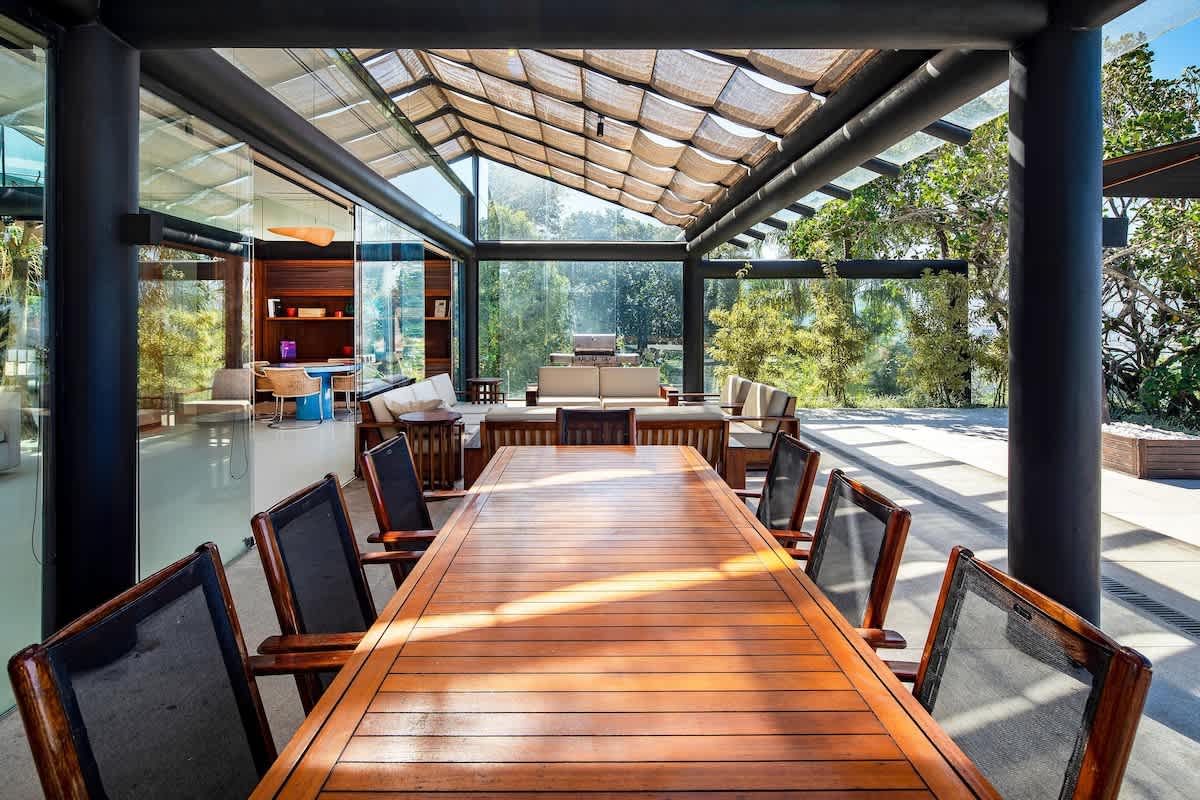
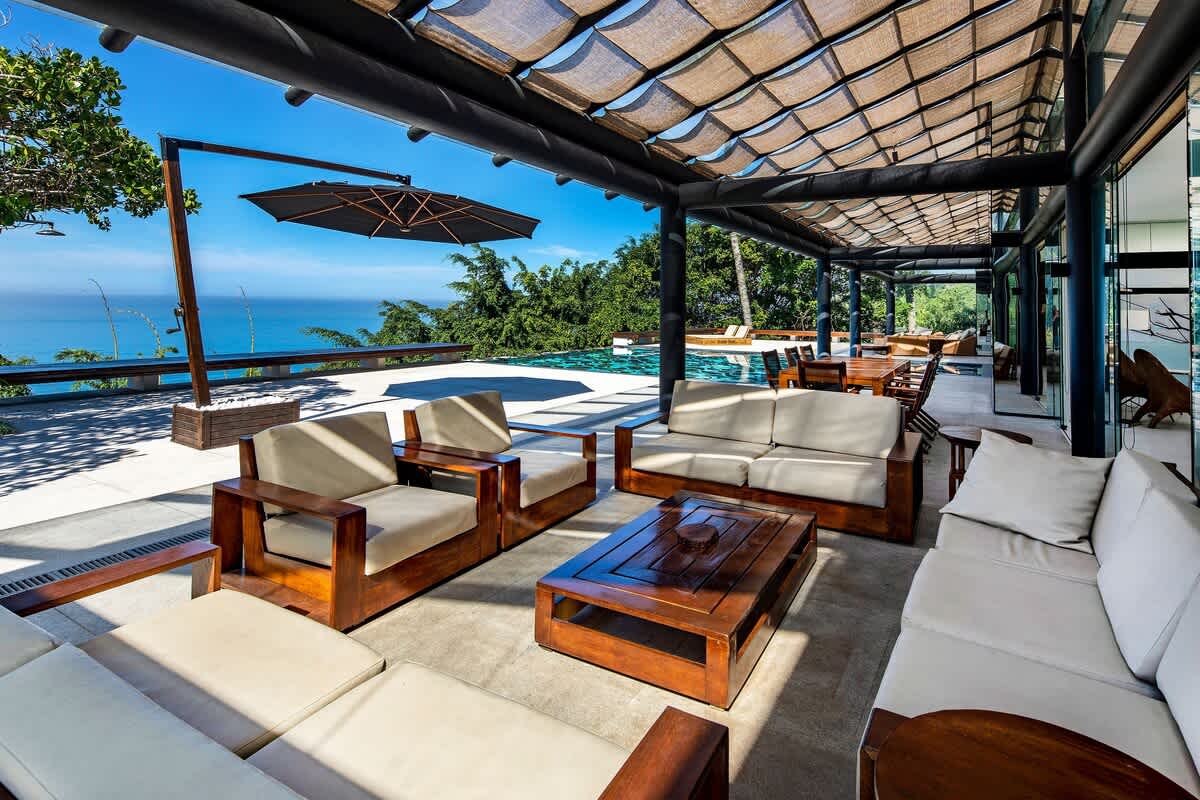
From the house, the course is a few minutes downhill. On the way to the beach you drive along the edge of it, which is the moment most guests realise how much of São Conrado is grass.
If golf is part of the trip, tell us early and we'll approach the club for your dates — and arrange an alternative nearby if the answer is no.