Reserve direct
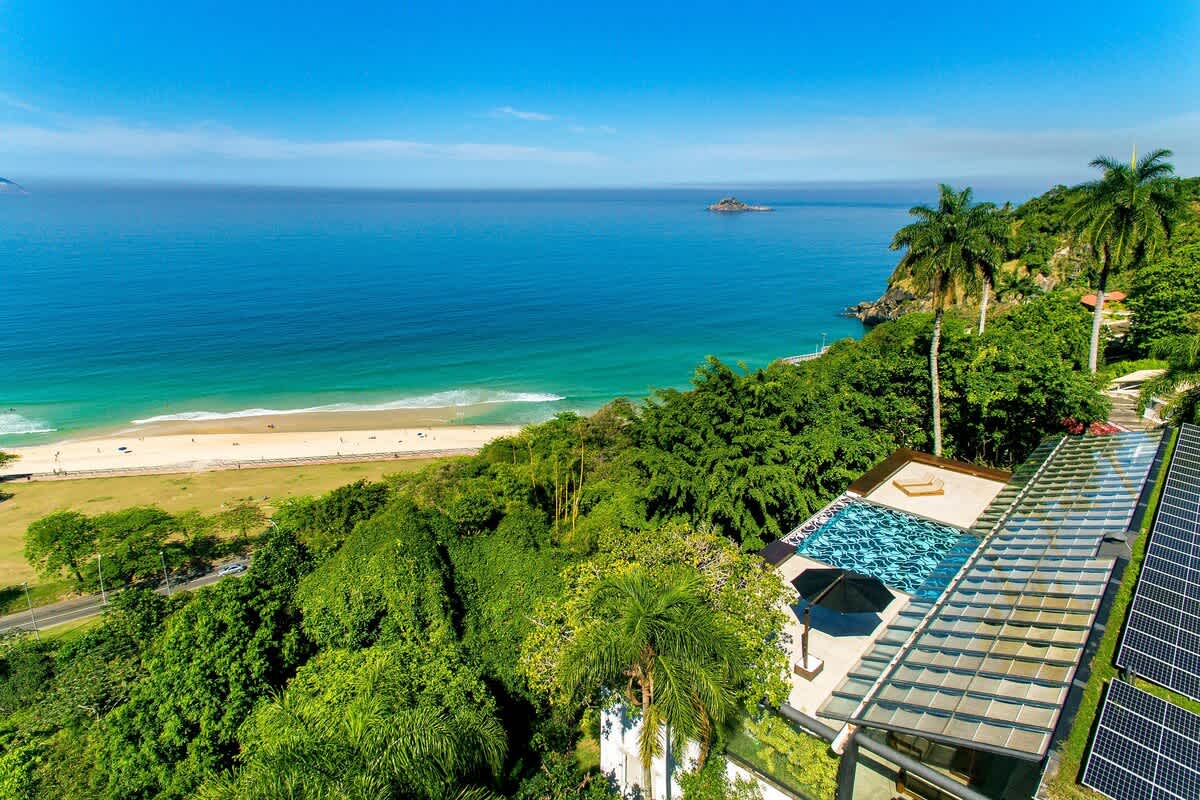
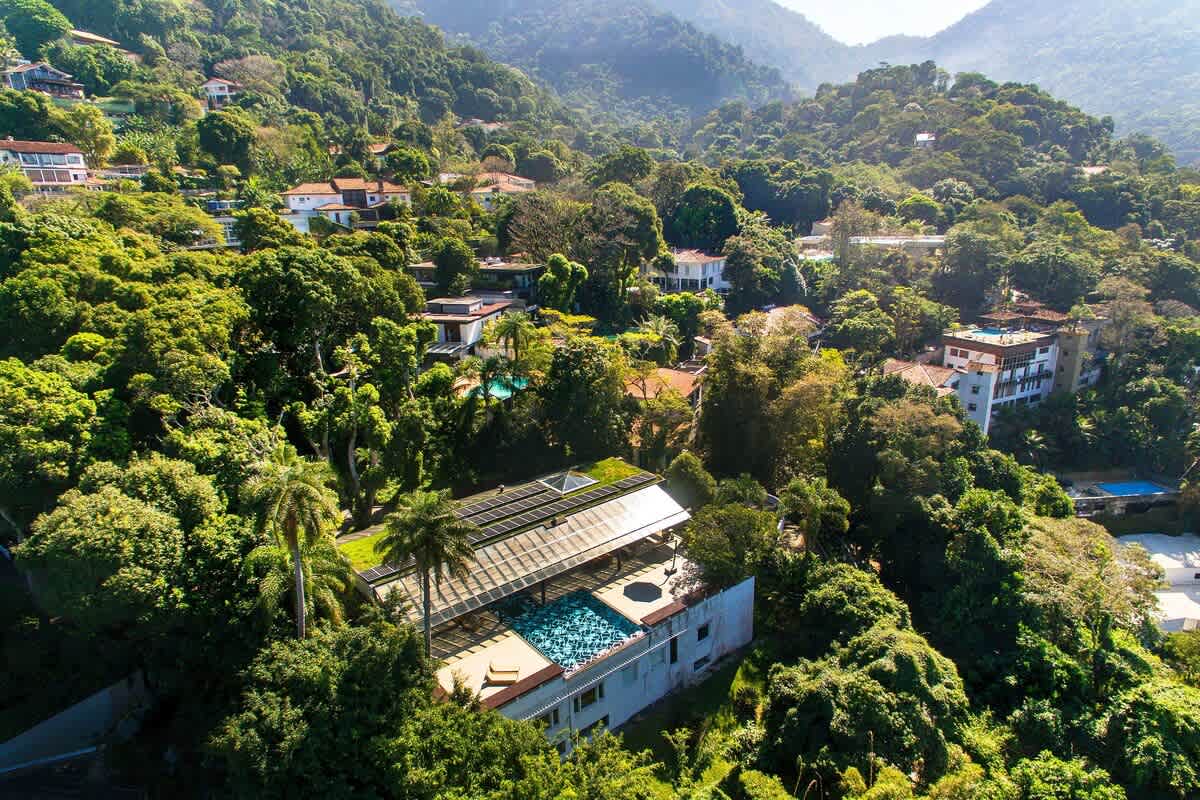
We run a five-suite villa with an infinity pool above São Conrado beach, and its rates and live availability are on the Art de Vivre booking page.
Book directThe port area today
Rio's old port, just beyond the historic centre, has been rebuilt since 2009, when a city law created Porto Maravilha, an urban project covering 5 million square metres across parts of Gamboa, Saúde, Santo Cristo, Caju and the centre. The biggest change was the removal of the Perimetral, the flyover that ran above Praça Mauá. Demolition began in February 2013, and the 300-metre stretch over the square was imploded on 20 April 2014.
Cars now pass beneath the port through new tunnels, the longest of them the 3,382-metre Túnel Prefeito Marcello Alencar, opened in June 2016. Above ground, the bay front became a promenade, the Orla Conde, named after the former mayor Luiz Paulo Conde. Its first stretch opened in April 2016, and in full it runs for 3.5 km between Armazém 8 and the Museu Histórico Nacional.
This guide stays in the port: Praça Mauá, its two museums, the Olympic boulevard, the aquarium and the streets of Saúde behind them. The old centre around Praça XV and Cinelândia has its own walk in Rio's Historic Centre.
Praça Mauá
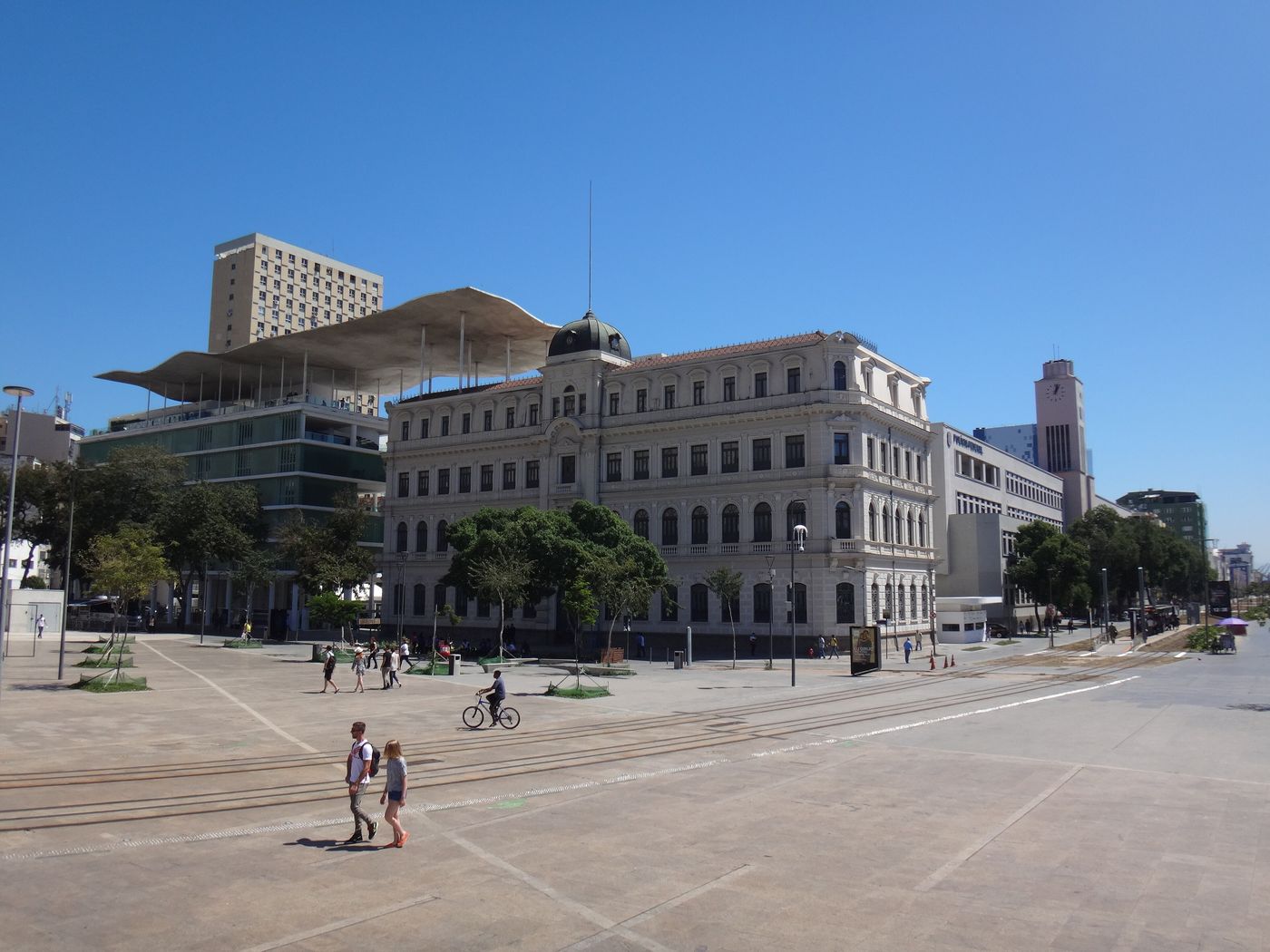
Praça Mauá took its name in 1910 from Irineu Evangelista de Sousa, the Barão de Mauá. The 8.5-metre monument at its centre, his statue by Rodolfo Bernardelli set on a column, went up the same year at the initiative of the Clube de Engenharia. The square was relaid under Porto Maravilha and reopened on 6 September 2015 after four years closed for works.
Today it is the front door to the port. The Museu de Arte do Rio stands on the square, and the Museu do Amanhã sits beside it on the Píer Mauá, a pier opened in 1953, so the two museums are a short walk apart.
Museu do Amanhã
The Museu do Amanhã, the Museum of Tomorrow, was designed by the Spanish architect Santiago Calatrava and opened on 17 December 2015. The building covers 15,000 m² over three floors and stands 20.85 metres high. Large steel structures on the roof carry solar panels and move like wings, and water drawn from Guanabara Bay cools the interior before it is reused in the pools outside.
The main exhibition is laid out in five parts: Cosmos, Earth, Anthropocene, Tomorrows and Us. Around the building, a site of about 30,000 m² holds gardens, reflecting pools and a cycle path by the water. The museum passed nine million visitors in August 2026, and tickets are sold online through Sympla.
It opens from Thursday to Tuesday, 10:00 to 18:00 with last entry at 17:00, holidays included, and closes on Wednesdays. Tickets cost roughly R$ 20 to R$ 40 depending on the ticket type, so check the official site for current prices. Since April 2025 entry has been free on national holidays, and Tuesdays, once the free day, are paid days. Children up to five and visitors over 60 have been admitted free; the official site has the current rules.
Museu de Arte do Rio
On the square itself, the Museu de Arte do Rio, known as MAR, opened on 1 March 2013 in two joined buildings: the Palacete Dom João VI, an eclectic-style palace, and a modernist building that once held a bus terminal and now houses the Escola do Olhar, the museum's learning space. The Rio architects Bernardes + Jacobsen tied the two together under a wave-shaped roof.
The visit usually begins on the top floor, at a terrace that looks over Praça Mauá and Guanabara Bay, and then works down through the galleries. The collection now passes 22,000 works, and the museum has welcomed more than five million visitors since it opened.
A full ticket was around R$ 20 in 2026, with half price at around R$ 10, and entry is free every Tuesday. The museum closes on Wednesdays and its exhibitions rotate through the year, so check its website for what is on and the current hours.
Boulevard Olímpico and the Kobra mural
From Praça Mauá the promenade carries on along the water as the Boulevard Olímpico. Its last stretch, about a kilometre long, opened on 5 August 2016, the opening day of the Rio Olympics, with big screens for the Games.
Its best-known wall is Etnias, also called Todos Somos Um, which the artist Eduardo Kobra painted for the 2016 Games. It is about 170 metres long and 15 metres high, with five faces of Indigenous peoples from five continents: the Huli of New Guinea, the Mursi of Ethiopia, the Kayin of Thailand, the Supi of Europe and the Tapajós of the Americas. In August 2016 Guinness World Records certified it as the largest spray-paint mural by a team, a record Kobra's team later broke itself with a larger mural in Itapevi, São Paulo, in 2017.
The boulevard is the open-air stretch of the day. Walk it between the museums and the aquarium, and if the afternoon is hot, save it for when the sun is lower.
AquaRio
A little further on, in Gamboa, AquaRio was inaugurated on 31 October 2016 and is described as the largest marine aquarium in South America. It holds about 4.5 million litres of seawater in more than 28 enclosures, with about 10,000 animals from 350 species, in a building of about 26,000 m², and a tunnel runs through the middle of its great ocean tank.
It opens every day at 9:00 and closes at 17:00 on weekdays, a little later at weekends and holidays, with last entry an hour before closing, and tickets bought online come with a discount. Rio with children has more ideas for a family week.
Cais do Valongo and Pedra do Sal
Behind the waterfront, the streets of Saúde and Gamboa hold the port's older history. The Cais do Valongo, a wharf built in 1811, was the landing point for enslaved Africans: between 500,000 and one million people came ashore there up to 1831. It was buried in 1843 under a new landing built for Princess Teresa Cristina, and the excavations of 2011 found both, one beneath the other. UNESCO inscribed the site on its World Heritage List on 9 July 2017, and it lies between Rua Coelho e Castro and Rua Sacadura Cabral.
A few streets away is the Pedra do Sal, the rock where enslaved workers unloaded the salt that gave it its name, with steps cut into it that climb to the Morro da Conceição. The state heritage institute listed it on 20 November 1984. It is the symbolic centre of the area known as Pequena África, where Donga, João da Baiana, Pixinguinha and Heitor dos Prazeres gathered in the early years of samba, and a quilombo community association, the Comunidade Remanescentes de Quilombos da Pedra do Sal, still lives around it.
The rock is still a samba stage. Free open-air rodas de samba take place there mainly on Monday evenings, and often on Fridays, though times change, so check the week's listings. Go with the driver and agree a pickup time and place before the music starts.
Getting there
From São Conrado the drive to Praça Mauá is about 20 km, under half an hour when the roads are clear and longer at rush hour. The Museu do Amanhã opens at 10:00, so you can leave after the morning rush and still arrive for the doors. The driver can drop you at the museums in the morning and collect you from the aquarium or from Pedra do Sal, which saves the walk back along the water at the end of the day.
Once you are there, the VLT handles the short hops. Line 1 runs from Santos Dumont airport and Cinelândia to the Parada dos Museus stop at Praça Mauá, then on towards the Utopia/AquaRio stop, so the old centre and the port join up easily in a single day.
Planning the day
The port fills a day comfortably. Start at the Museu do Amanhã when it opens at 10:00, cross the square to MAR and its terrace, walk the boulevard to the Kobra mural after lunch and finish at AquaRio, which takes its last weekday visitors at 16:00.
Choose any day except Wednesday, when both museums are closed. Tuesday is the free day at MAR, and the Museu do Amanhã is free on national holidays, which are listed in Rio Events Calendar 2027. Opening days change, so check both museums' websites before you go.
On a wet day the museums and the aquarium are under a roof, so the plan holds in the rain. What to Do in Rio When It Rains has more ideas for a day like that.
Questions
Who designed the Museu do Amanhã in Rio?
The Spanish architect Santiago Calatrava. The museum opened on 17 December 2015 on the Píer Mauá, next to Praça Mauá.
Is the Museu do Amanhã free on Tuesdays?
Tuesdays are paid days. Since April 2025 entry has been free on national holidays instead. The museum opens Thursday to Tuesday, 10:00 to 18:00, and closes on Wednesdays.
Which day is the Museu de Arte do Rio free?
Tuesday. On other days a full ticket was around R$ 20 in 2026, and the museum closes on Wednesdays.
What day is the samba at Pedra do Sal?
Mainly on Monday evenings, and often on Fridays. The roda is outdoors and free, and times change, so check the week's listings.
Is the Kobra mural in Rio a world record?
In August 2016 Guinness World Records certified Eduardo Kobra's Etnias, painted for the Rio Olympics, as the largest spray-paint mural by a team. Kobra's team broke that record itself in 2017 with a larger mural in Itapevi, São Paulo. The Rio mural is about 170 metres long on the Boulevard Olímpico.
Pair a day at the port with a quiet evening by the pool: book the villa direct with Art de Vivre, and the concierge arranges the driver to Praça Mauá and the pickup after the samba.
Sources
Facts on this page were checked against these sources in October 2026. Opening hours and prices change: confirm before you go.
- Porto Maravilha (Wikipédia)
- Praça Mauá (Wikipédia)
- Prefeitura inaugura primeiro trecho da Orla Conde na Região Portuária (Jornal do Brasil, April 2016)
- No dia da abertura, prefeito inaugura Boulevard Olímpico no porto (Lance!, August 2016)
- Museu do Amanhã (Wikipédia)
- Programe sua visita, Museu do Amanhã (official site)
- Museu do Amanhã terá entrada grátis em feriados nacionais (Melhores Destinos, March 2025)
- Museu do Amanhã celebra marca de nove milhões de visitantes (Folha de Pernambuco, August 2026)
- Museu de Arte do Rio (Wikipédia)
- Museu de Arte do Rio celebra 13 anos (Diário do Rio, March 2026)
- Museu de Arte do Rio (Guia Melhores Destinos)
- Museu de Arte do Rio, official site
- Mural de Kobra no Rio entra para o Guinness Book (Panrotas, August 2016)
- Kobra leva a leitura para os muros do Centro (Correio da Manhã, January 2026)
- AquaRio (Wikipédia)
- AquaRio, official site
- Cais do Valongo (Wikipédia)
- Pedra do Sal (Wikipédia)
- Pedra do Sal (Wikipedia)
- Toda segunda tem roda de samba na Pedra do Sal (Catraca Livre)
- VLT Carioca (Wikipédia)
- São Conrado to Museu do Amanhã (Rome2rio)
- Largest spray paint mural by a team (Guinness World Records)
- Brazilian artist leads team to spray paint record with Rio Olympic 2016 inspired mural (Guinness World Records, August 2016)
- Horários e ingresso, Museu de Arte do Rio (official site)
- Feriadão no Rio terá feijoada tradicional no AquaRio (Diário do Rio, September 2026, opening hours)
- The best sambas in Rio de Janeiro (Time Out, updated June 2024)