Reserve direct
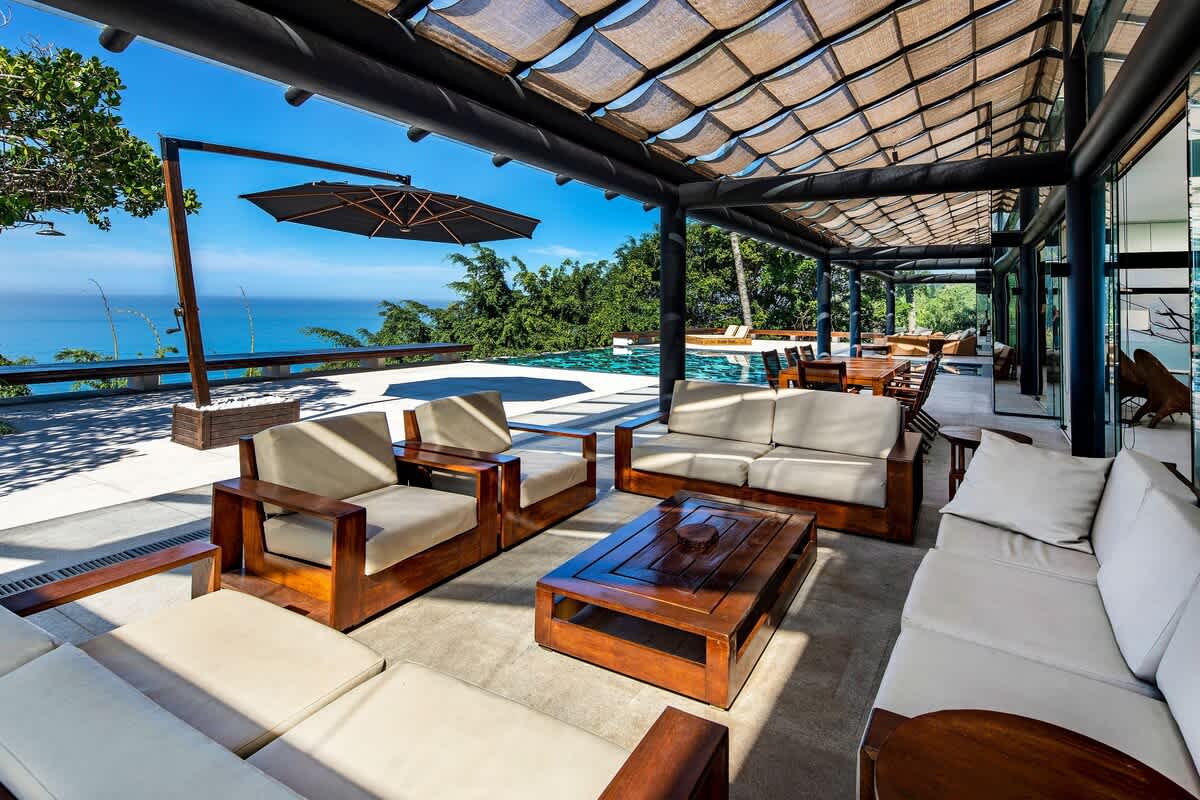
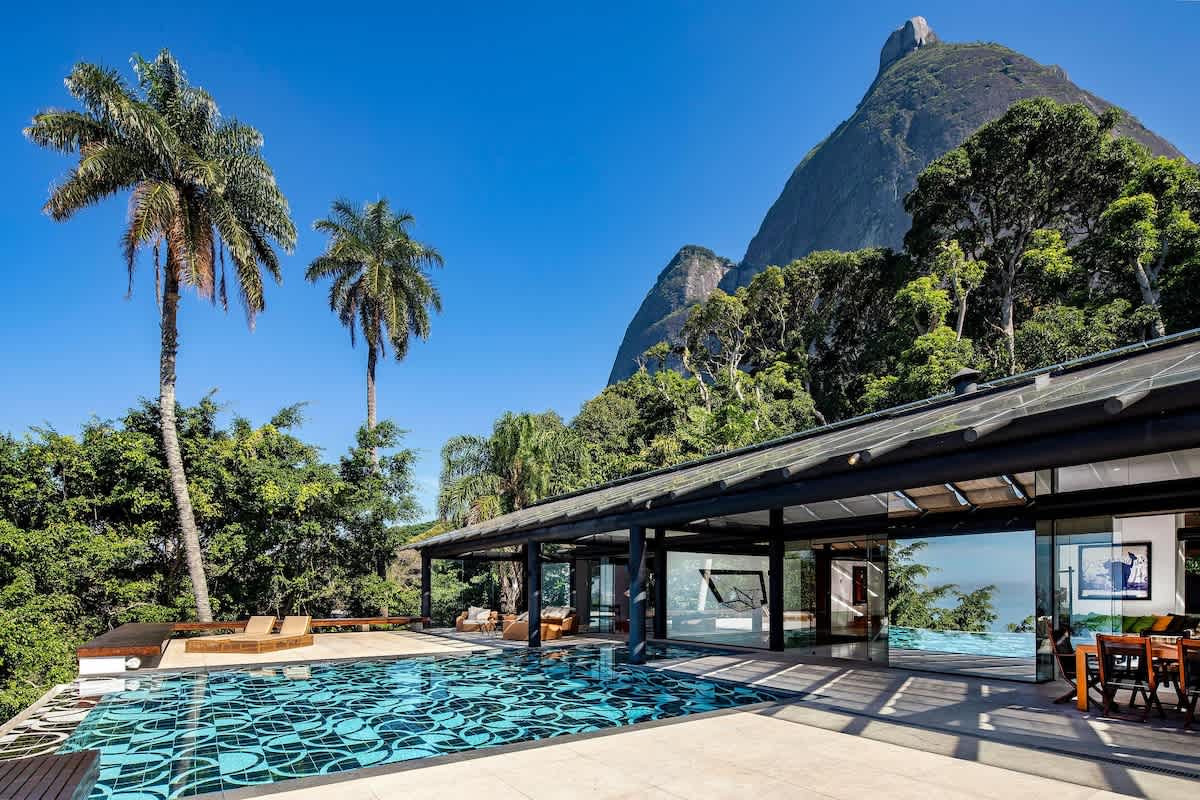
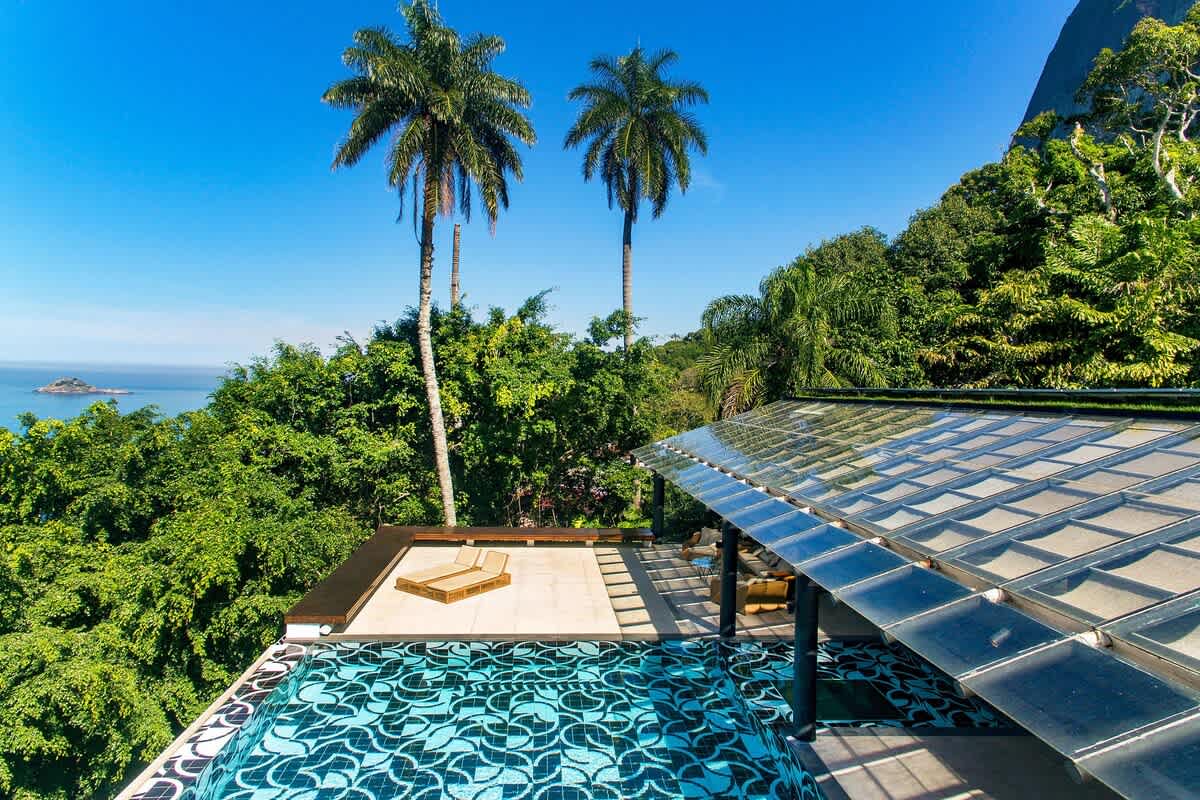
We run a five-suite villa with an infinity pool above São Conrado beach, and its rates and live availability are on the Art de Vivre booking page.
Book directThe rock above Barra de Guaratiba
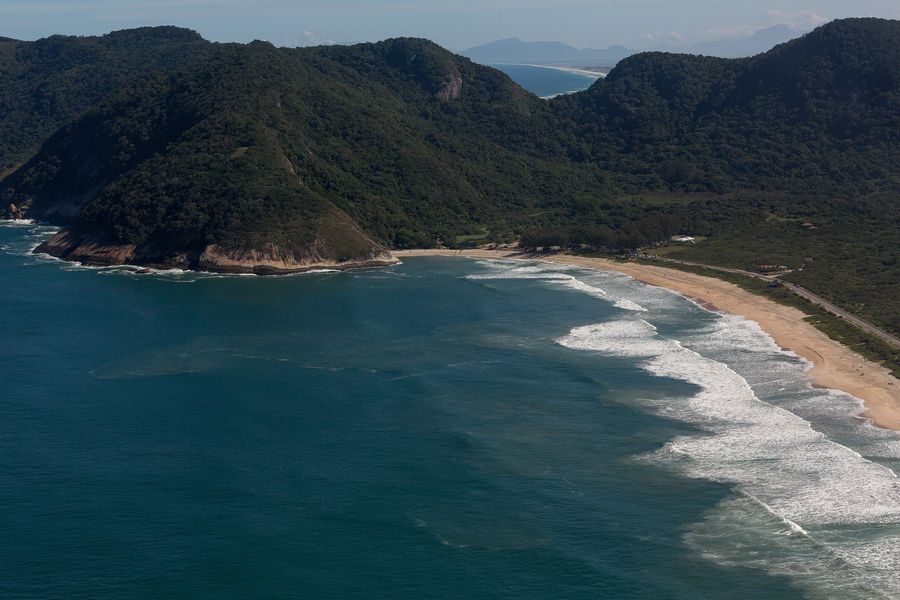
Barra de Guaratiba is a fishing village in Rio's West Zone, just past Grumari. Its beach borders the Restinga da Marambaia, the long sandbar that runs west from the village. Above the village, the Pedra do Telégrafo, Telegraph Rock, stands about 350 metres above the sea, and a photograph taken there has travelled all over social media: someone hanging by their hands from a rock, apparently over a huge drop to the ocean.
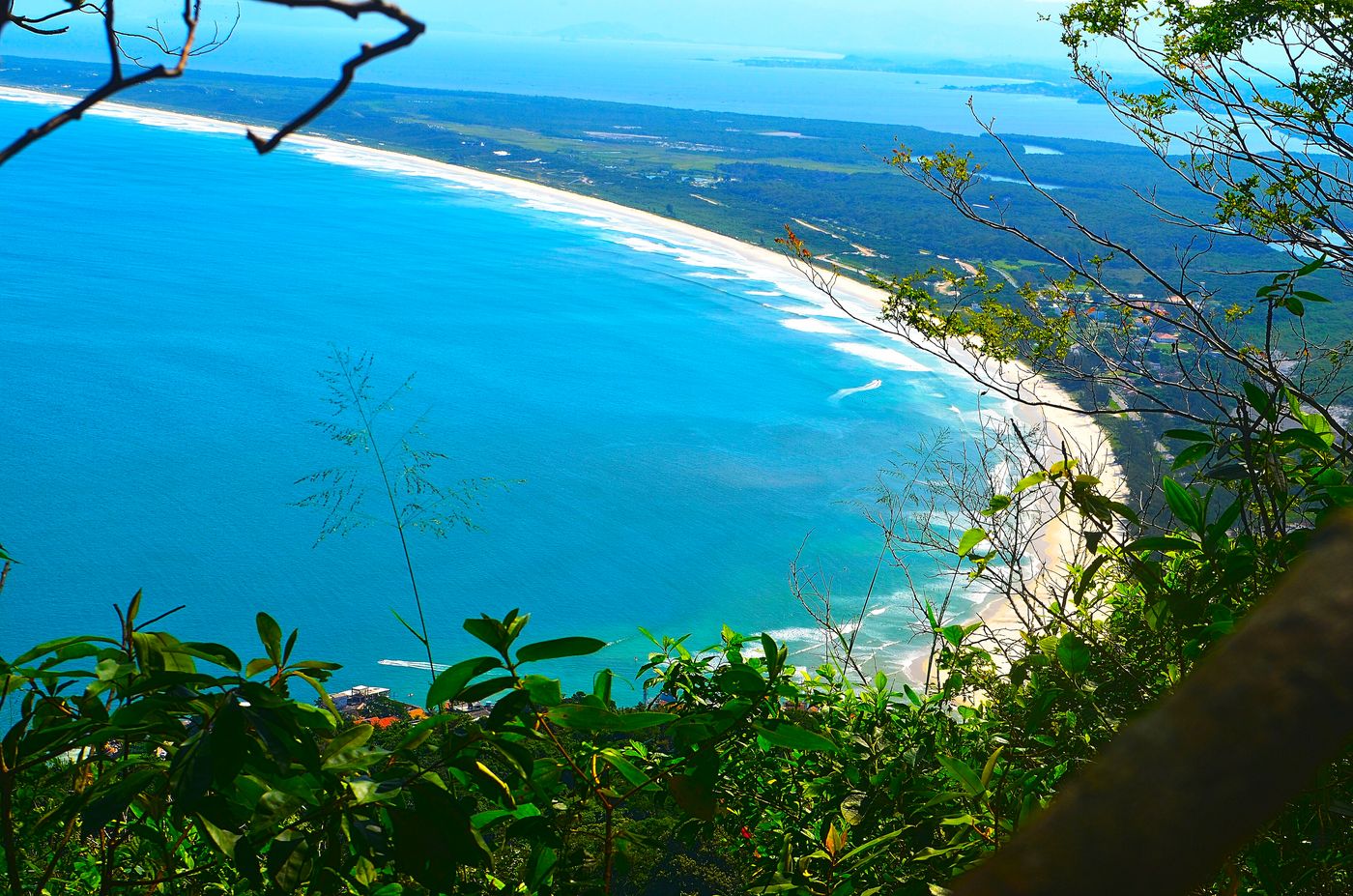
The walk up is about 2 km and free, and the view from the top takes in the coast in both directions. On one side you look back toward Grumari and Barra da Tijuca, on the other across the Restinga da Marambaia and the bay of Sepetiba, and on a clear day the silhouette of Pedra da Gávea, the mountain behind the villa, stands far off to the east.
From the villa it is about an hour by car, more on a summer weekend. Allow two to three hours for the walk up, the photo and the walk down, longer if there is a queue. It makes a full morning, and it pairs well with an afternoon at Prainha and Grumari on the way home.
How the photo works
The famous shot is an optical illusion. Under the rock there is a flat ledge where you can stand, and from the right camera angle the ledge disappears and the drop looks sheer.
People queue for their turn and take it in order. There are no railings at the spot where everyone poses, so take your time, keep children close and only do the hang if you are steady on your feet. The views from the top are worth the walk on their own, so nobody in the group needs to hang off anything to enjoy it.
The trail
The walk starts in the village and climbs through the streets above the beach before the path enters the forest. The traditional start is at Praia Grande, along the Caminho dos Pescadores, so ask the driver to drop the group near there. The Transcarioca long-distance trail starts in front of the village beach, and its markers, black footprints on yellow bases, lead up to the split where one branch climbs to the rock, about 700 metres further.
It is about 2 km each way. Most walkers reach the rock in 40 minutes to an hour, and an easy pace can take an hour and a half. The trail is rated moderate, with a few steep stretches and some shade along the way, and you do not need your hands to climb.
There is no gate or ticket: INEA, the state environment institute that runs the park, describes the rock as public and free. Go in daylight and choose a dry day, since the path gets slippery after rain. Rules at the park can change, so check the INEA website before you go.
Bring plenty of water. Vendors often sell drinks on the trail, but there is no shade where the queue forms at the top, so carry your own.
The hills around it
The rock sits inside the Parque Estadual da Pedra Branca, which the state environment institute, INEA, manages. The park was created by state law in 1974 and covers about 12,400 hectares of the Pedra Branca massif.
The Transcarioca, Rio's long-distance trail of about 180 km, starts at the beach in Barra de Guaratiba. Its first section, 7 km between the village and Grumari, passes the turning for the Pedra do Telégrafo and wild beaches such as Meio and Funda. The trail's own notes rate it moderate, with a lot of sun exposure, and suggest about four hours for the whole section.
The Restinga da Marambaia, the sandbar you see stretching west from the top, is under the responsibility of the Brazilian Navy. Mangroves grow around the village.
When to go
On sunny weekends and public holidays the wait for the photo can run to an hour or more, and reports from the busiest days are longer. A weekday is the easier choice.
Start the walk by eight at the latest, or at sunrise if the group is up for it. The air is cooler early, and the area where the queue forms at the top has no shade.
The wild beaches
Along this stretch of coast, between Barra de Guaratiba and Grumari, are the Praias Selvagens, the wild beaches: Perigoso, Meio, Funda and Inferno. Several can only be reached on foot or by boat, and there is little or nothing to buy once you are there. The trail's notes also warn that the small springs near the beaches are of doubtful quality and run dry in winter.
On the Transcarioca route, the Pedra da Tartaruga lookout comes first, with a wide view over the beaches, and Praia do Meio is the first beach after it. Walkers report about an hour and a half on foot between the rock and Meio. Perigoso is the busiest of the beaches. Past Praia Funda, a fork in the forest trail offers an express trail back to Barra de Guaratiba or the way on to Grumari.
If you plan to add a beach, carry swimwear, sunscreen, food and plenty of water, and allow for an hour and a half or so to walk back to the village. With children or a mixed group, it is easier to see the wild beaches from the top and swim at Grumari later.
Sítio Roberto Burle Marx
Twenty minutes or so from the village by car is the Sítio Roberto Burle Marx, the landscape designer's home and working garden, now run by IPHAN, the national heritage institute. He bought the old Sítio Santo Antônio da Bica in 1949, gathered more than 3,500 plant species there, gave it to the Brazilian government in 1985 and kept working there until his death in 1994. A small chapel on the grounds dates from 1690. In 2021 UNESCO inscribed the Sítio on the World Heritage List.
Visits are led by the Sítio's educators, take in the house, the garden and Burle Marx's work spaces, last about an hour and a half and must be booked ahead through the Sítio's website, so plan it as a half day of its own. For the deeper story of Burle Marx and his gardens, read Roberto Burle Marx on Joá Rio.
Lunch and the village
Barra de Guaratiba's own beach has calm water and is popular for swimming, volleyball and frescobol, especially on sunny weekends. Fishing boats work from the village, and its bars and restaurants are known for seafood. After the walk, a long lunch here is the natural end to the morning.
On the road back over the hill toward Grumari, Point de Grumari, at Estrada de Grumari 2710, has served seafood since 1992 with a view across to the Restinga da Marambaia. Its website lists 11 am to 6 pm on weekdays and to 7 pm on weekends and holidays, with free parking and reservations by WhatsApp for groups of six or more. The menu comes in English, and it takes cards, Pix and cash. Check the hours before you go.
Going from the villa
Plan an early start: the driver can have the group in Barra de Guaratiba soon after eight, wait while you walk and bring everyone home by mid-afternoon. A local guide can make the morning easier by finding the path out of the village and setting a comfortable pace, so ask the concierge whether one can be arranged.
Wear shoes with good grip, bring a hat, sunscreen and water, and carry just a phone and a little cash. Pack swimwear too, so the group can cool off at Barra de Guaratiba's calm beach or at Grumari afterwards. If the group enjoys the walk, the bigger climbs behind the villa are in the Pedra da Gávea and Pedra Bonita guide.
Questions
How long is the Pedra do Telégrafo trail?
About 2 km each way from Barra de Guaratiba. Most walkers reach the rock in 40 minutes to an hour, and an easy pace can take an hour and a half. The trail is rated moderate.
Is the Pedra do Telégrafo photo real?
It is an optical illusion. A flat ledge sits just below the rock, and from the right camera angle it disappears, so the drop looks sheer.
How long is the queue at Pedra do Telégrafo?
On sunny weekends and holidays the wait can run to an hour or more. Start by 8 am or go on a weekday to avoid the worst of it.
Do you pay to visit Pedra do Telégrafo?
No. INEA, the state institute that runs the Parque Estadual da Pedra Branca, describes the rock as public and free. Some walkers hire a local guide.
Can you visit the Sítio Roberto Burle Marx without booking?
No. Visits to the Sítio, a UNESCO World Heritage Site since 2021, are guided and must be booked in advance.
Pedra do Telégrafo makes a full morning out from the villa in São Conrado, with the driver arranged through Art de Vivre when you book the villa direct.
Sources
Facts on this page were checked against these sources in October 2026. Opening hours and prices change: confirm before you go.
- Trilha da Pedra do Telégrafo (Mala de Aventuras, 2024)
- Pedra do Telégrafo (Viciada em Viajar, 2023)
- 01. Barra de Guaratiba x Grumari | Trilha Transcarioca
- Conservation Units | Trilha Transcarioca
- Parque Estadual da Pedra Branca (Wikipédia)
- Barra de Guaratiba (Wikipédia)
- Sítio Roberto Burle Marx (Wikipedia)
- Sítio Roberto Burle Marx (Wikipédia)
- Roberto Burle Marx (Joá Rio)
- Point de Grumari (official site)
- Point de Grumari: FAQ
- Pedra do Telégrafo (OpenStreetMap node)
- Fila, cobrança e polêmica na Pedra do Telégrafo (Diário do Rio, 15/06/2025, nota do Inea)
- Sítio Roberto Burle Marx (official site, visits)
- About the Transcarioca Trail