Reserve direct
We run a five-suite villa with an infinity pool above São Conrado beach, and its rates and live availability are on the Art de Vivre booking page.
Book directGetting there
Paraty is about 250 km from São Conrado by road, a drive of around four hours that can run longer with traffic. The route follows the BR-101, the Rio-Santos highway, west along the coast past Mangaratiba and Angra dos Reis.
This suits two or three nights away, so book your nights in town and let an English-speaking driver, arranged through Art de Vivre's concierge, take you down and collect you at the end. Cars and trucks are not allowed in the historic centre, so the driver drops you at its edge and you walk from there.
Paraty pairs well with Ilha Grande. The boats to the island leave from Angra dos Reis, which you pass on the way, and from Conceição de Jacareí, about 120 km back towards Rio along the same road.
A short history
Paraty takes its name from the paraty, a kind of mullet, through the Tupi language. It became a town in 1667, and its fortunes changed in the 1690s, when gold was found in the mountains of Minas Gerais and Paraty became the port where it reached the sea. The Caminho Velho, the gold road between the mining region around Ouro Preto and Paraty, was made official between 1722 and 1725 as the first route of the Estrada Real, the royal road, and it followed an older indigenous trail.
When the gold began to run out in the late 18th century, the town declined. Cachaça had been a mainstay of the local economy all along, and by 1820 more than 150 stills were working in the region. The municipality today also includes an indigenous village and an Afro-Brazilian quilombo community.
In July 2019 UNESCO inscribed Paraty and Ilha Grande: Culture and Biodiversity on the World Heritage list, the first site in Brazil recognised for both culture and nature. The listing joins the historic centre with the forested mountains, the coast and Ilha Grande. About 45,000 people lived in the municipality at the 2022 census.
The historic centre
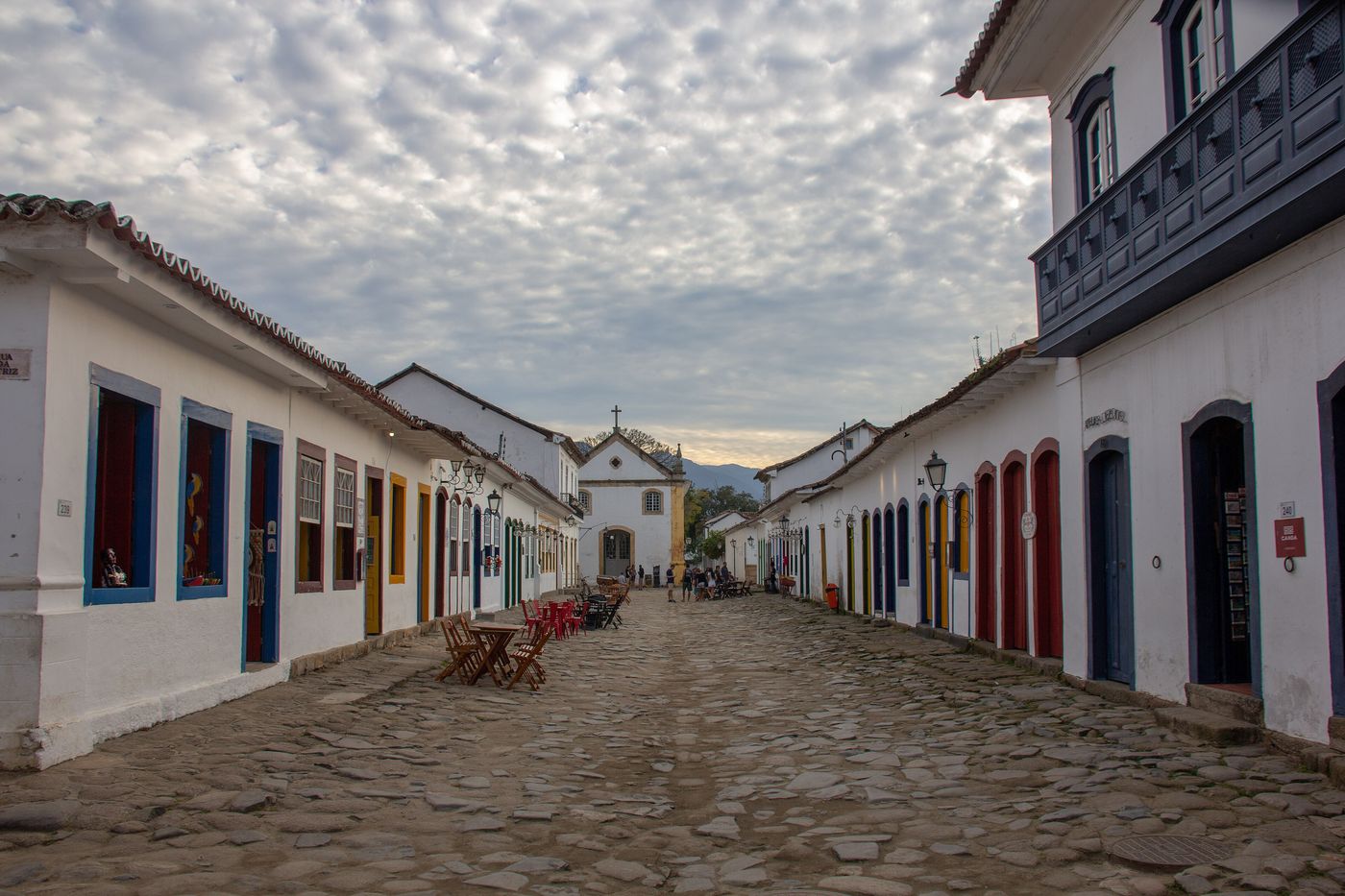
The old centre's streets are paved with cobblestones and kept free of cars, so you explore it on foot. Wear flat shoes with a good grip, as the stones are uneven, and give yourselves a slow afternoon to wander. The streets have played other towns on screen: Paraty stood in for the Bahian town of Ilhéus in Gabriela, the 1983 film by Bruno Barreto.
Four colonial churches mark the walk. Santa Rita, finished in 1722, is the oldest and now houses the Museum of Sacred Art. The Igreja do Rosário e São Benedito, from 1725, was built and used by the town's enslaved Africans, the Capela de Nossa Senhora das Dores dates from about 1800, and the parish church, the Matriz de Nossa Senhora dos Remédios, was completed in 1873.
The Casa da Cultura, in a house built in 1754, has a permanent exhibition on local history and culture; check its opening times before you go. The Forte Defensor, the town's old fort, was first built in 1703 with six cannons and rebuilt in 1822.
The tides in the streets
At the highest tides the sea comes into the lowest streets of the old centre. Around the full and new moons, seawater flows in through openings along the waterfront and covers the stones, usually to a depth of only 15 to 25 cm. The houses stand above street level, so the water stays outside, and some shopkeepers put out small footbridges for people to cross.
The water stays only until the tide drops, then drains away again. If your dates fall around a full or new moon, check the tide table and walk down to the waterfront streets at high water to see it.
Islands by boat
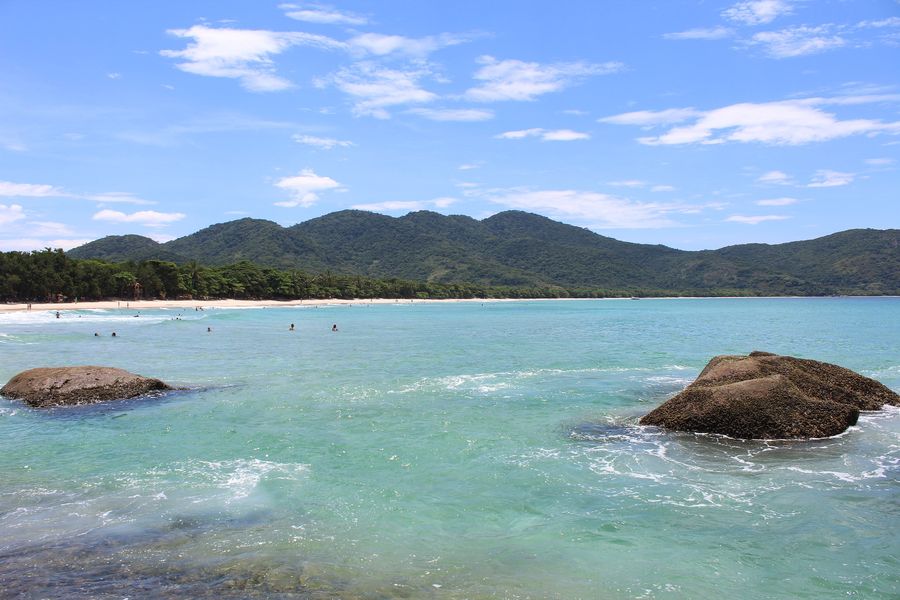
The bay off Paraty is dotted with islands and beaches, many of them reachable only by boat, and the classic way to see them is a boat trip from the town's quay. The usual outing lasts about five hours, with four stops of around 40 minutes for swimming and snorkelling, often at Praia Vermelha, Lagoa Azul, Saco da Velha and Ilha do Algodão; the captain changes the order with the weather.
The larger tour boats have a bar on board and small tenders to take you to the beaches, and some provide snorkel masks, so ask what your operator includes. For a group of ten or twelve, small boats can be chartered near the river mouth; agree the price and the stops before you leave.
Take sunscreen, a hat and some cash for drinks on board. For skippered days out of Rio, see Rio's islands by boat.
Cachaça
Paraty has made cachaça for centuries, and in 2007 it became the first place in Brazil to receive a registered geographical indication for the spirit. With the driver at the wheel, a distillery visit is an easy afternoon, and two near town welcome visitors.
Engenho D'Ouro, near the Caminho do Ouro and the Tobogã waterfall, opens every day, including holidays, for visits to see the production, followed by a tasting. It began as a family project in 1999 and says it was the first in Brazil to distil cachaça under vacuum.
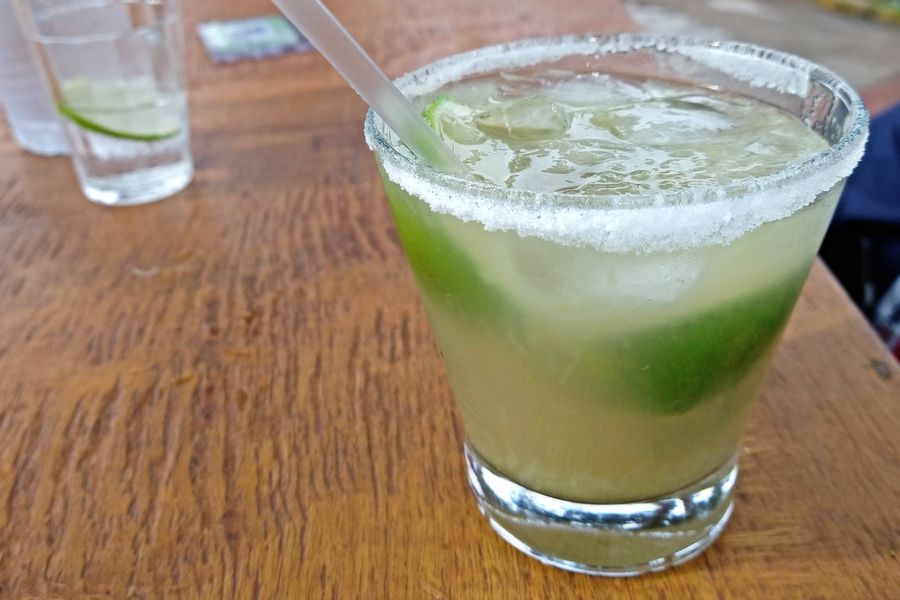
Alambique Maria Izabel sits on the bay at Sítio Santo Antônio, about 9 km from the centre towards Rio, with the last kilometre on a dirt road. Visits are by appointment only, between 10.30am and 4pm, and finish with a tasting. Check with both before you go, and read more about the drink in caipirinha and cachaça.
Waterfalls, the gold road and Trindade
The hills behind Paraty hold waterfalls and pools. The Cachoeira do Tobogã has a natural slide, the Cachoeira da Pedra Branca is a low fall with a pool, and the Poço do Inglês is a pool with no fall at all.
Parts of the Caminho do Ouro can still be walked. Treks start from the Paraty-Cunha road, and the steep stretches near Paraty were paved with irregular stones; a local guide helps. The old road is now part of the Estrada Real tourist network, which runs for more than 1,630 km in all.
Trindade, a fishing village about 25 km from Paraty by road, is the beach day. Praia do Meio is the one most used by visitors, Rancho has calm water for swimming, with bars and restaurants, Cepilho is for surfers, and there are natural pools to swim in. Part of Trindade lies inside the Serra da Bocaina National Park.
More than 80 per cent of the municipality is protected. The Serra da Bocaina National Park, created in 1971 and run by ICMBio, covers about 104,000 hectares, and its highest point, the Pico do Tira o Chapéu, reaches 2,088 metres.
Two or three nights in Paraty
On the first day, drive down in the morning, walk the historic centre in the late afternoon and have dinner in town. On the second, take the boat trip around the islands and come back in time for an evening stroll along the waterfront. The centre is car-free, so dinner and the walk afterwards are on foot.
On the third, choose between Trindade, a waterfall and a distillery, then drive home, or carry on to Ilha Grande for a few more nights. If you like old towns, Rio's historic centre makes a good companion day back in the city.
When to go
The sea off Paraty stays warm through the year, from about 22°C to 26°C, and the drier months run from June to August. January is the wettest month, with around 19 days of rain.
FLIP, the international literary festival founded in 2003 by the English publisher Liz Calder, is held once a year in the historic centre. The 2025 edition ran from 30 July to 3 August and the 2026 edition from 22 to 26 July, but the dates have moved in other years (2024 was in October), so check them for the year you travel. The main talks are held at the Auditório da Matriz, and the town also keeps its religious feasts, such as the Festa do Divino Espírito Santo. Places to stay fill up early during the festival, so book your nights well ahead. For the seasons back in the city, see when to visit Rio.
Questions
How far is Paraty from Rio de Janeiro?
Paraty is about 250 km by road from São Conrado, around four hours by car on the BR-101, the Rio-Santos highway.
Why do the streets of Paraty flood?
Around the full and new moons, the highest tides push seawater through openings along the waterfront into the lowest streets of the historic centre, usually only 15 to 25 cm deep.
When is FLIP in Paraty?
FLIP is held once a year. The 2025 edition ran from 30 July to 3 August and the 2026 edition from 22 to 26 July, but the dates have moved in other years, so check the official dates for the year you travel.
Can you drive into Paraty's historic centre?
No. Cars and trucks are not allowed in the historic centre, so you explore its cobbled streets on foot.
Is Paraty a UNESCO World Heritage site?
Yes. In 2019 UNESCO inscribed Paraty and Ilha Grande: Culture and Biodiversity as a mixed cultural and natural site, the first in Brazil.
Spend a few nights in Paraty and come back to a swim and dinner at the villa above São Conrado: book direct with Art de Vivre, and the concierge will arrange the driver for the road south.
Sources
Facts on this page were checked against these sources in October 2026. Opening hours and prices change: confirm before you go.
- Paraty (Wikipedia)
- Paraty (Wikipédia)
- Caminho do Ouro (Wikipédia)
- Paraty (Wikivoyage)
- Trindade (Paraty) (Wikipédia)
- Festa Literária Internacional de Paraty (Wikipedia)
- Flip 2026 vai ocorrer no final de julho (PublishNews)
- Flip 2025 volta para julho (DGABC)
- Paraty e Ilha Grande agora são patrimônio da humanidade (Agência Brasil)
- Registro de indicação geográfica abre caminhos para cachaça de Paraty (Agência Brasil)
- Em Paraty, o mar invade ruas de pedra nas marés mais altas (O Povo)
- Ilha Grande (Angra dos Reis) (Wikipédia)
- Passeio de barco pelas ilhas de Paraty (Civitatis)
- Quem somos | Engenho D'Ouro
- Alambique Maria Izabel
- Angra dos Reis (Wikipédia)
- Serra da Bocaina National Park (Wikipedia)
- OSRM route São Conrado to Paraty via Conceição de Jacareí (OpenStreetMap data)