Reserve direct
We run a five-suite villa with an infinity pool above São Conrado beach, and its rates and live availability are on the Art de Vivre booking page.
Book directThe real
Brazil's currency is the real, written R$ and coded BRL, which replaced the old currency on 1 July 1994 under the Plano Real. Prices are written with a comma for the cents, so R$ 12,50 means twelve reais and fifty centavos.
Notes come in R$ 2, 5, 10, 20, 50, 100 and 200, each with a Brazilian animal: a hawksbill turtle on the R$ 2, a great egret on the R$ 5, a green-winged macaw on the R$ 10, a golden lion tamarin on the R$ 20, a jaguar on the R$ 50, a dusky grouper on the R$ 100 and a maned wolf on the R$ 200, which the Central Bank announced on 29 July 2020 and released on 2 September 2020. Coins come in 5, 10, 25 and 50 centavos and R$ 1; the 1 centavo coin has not been minted since 2005.
For a week in Rio you will need very little cash. Most of what you spend goes on cards, and most of the rest on small notes for the beach.
Cards and contactless
Credit and debit cards are widely accepted in Rio's restaurants and shops, less so at informal stalls and markets. Contactless is the normal way to pay: in the first quarter of 2025 it accounted for almost 70 per cent of in-person card purchases in Brazil, according to the card industry association Abecs.
Bring a card that charges no foreign transaction fee, and a second one, ideally on a different card network, kept separately as a spare. When a card machine offers to charge you in your home currency, choose reais, so your own bank does the conversion.
A few habits make card payments easy. Look at the amount on the card machine's screen before you tap or type your PIN, cover the keypad when you enter it, and keep your card in sight when you pay. If a machine seems not to work, check your banking app before you try again.
Pix
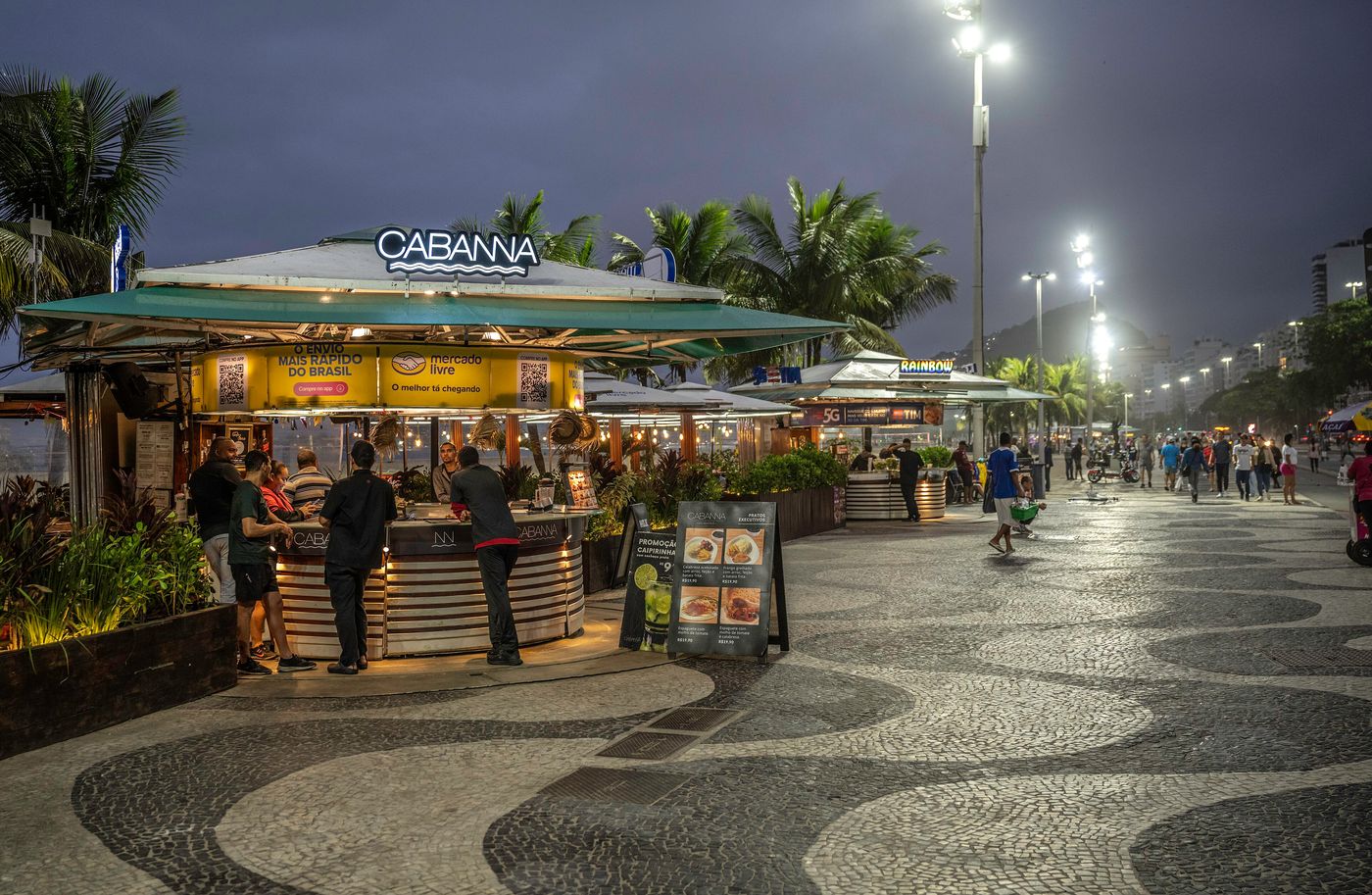
Most Brazilians pay with Pix, the instant payment system the Central Bank launched in November 2020. Transfers arrive in seconds, at any hour, are free for individuals and are made by scanning a QR code or entering a key such as a phone number or tax number. By 2023 it had overtaken card transactions in Brazil, and shops and vendors display a QR code that the customer scans with a banking app.
Pix is built for customers of financial institutions that operate in Brazil, so most visitors cannot use it. A few foreign wallets now connect to it: from December 2025, for example, Mercado Pago has been rolling out the option for Argentine visitors to pay Pix QR codes in Brazil from the peso balance of their account, with the shop receiving reais, and an August 2026 pilot connects Pix to China's UnionPay network. For visitors from Europe and North America, a card remains the practical choice.
When someone offers Pix as an option, say you will pay by card. If you do use Pix, type the amount into your own phone yourself and keep the phone in your hands.
Cash and cash machines
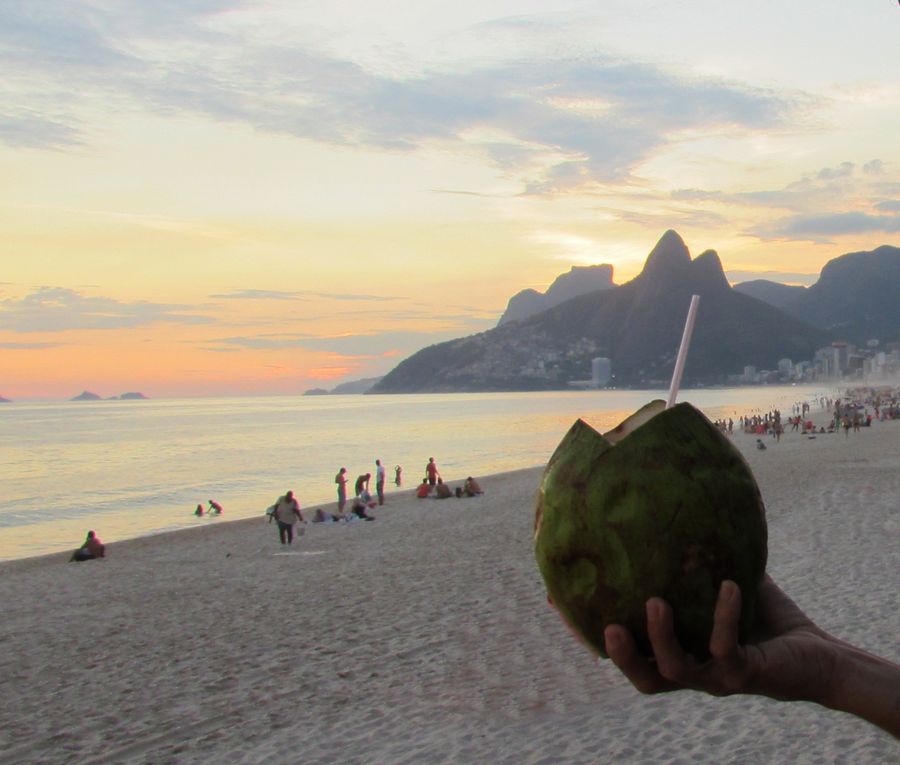
Cash is still useful for small things: beach vendors, a coconut, a mate, a market stall, and the odd tip. Carry a few small notes rather than a wad, and keep larger amounts at the villa.
Foreign bank cards usually work in Brazilian cash machines, as Canada's travel advice says of Canadian cards. The Banco24Horas network lists more than 24,000 machines across the country, and the banks have their own. Use machines inside a bank, a shopping centre or a supermarket rather than on the street, and take out what you need for a few days at a time. Ask your bank about foreign withdrawal fees and daily limits before you go. Cash machines are scarcer in the countryside, so take cash before a day trip inland, and carry enough for small purchases when you visit remote areas.
A card at a cash machine is the simplest way to get reais. If you prefer to change money, use a bank or a licensed exchange office, a casa de câmbio, rather than someone on the street. Canada's government notes that Canadian dollars are hard to exchange in Brazil.
The 10 per cent service charge
Restaurant and bar bills in Rio usually arrive with a service charge added, traditionally 10 per cent, listed as serviço or taxa de serviço. It is optional: consumer bodies such as Procon and Idec say the restaurant must tell you the percentage in advance and cannot force you to pay it, whether or not it is printed on the menu.
The 2017 Lei da Gorjeta, Lei 13.419, sets how tips and service charges are shared. The money goes through the restaurant's books and into the staff payslips, after a share the restaurant may keep to cover costs. There is no legal maximum, and in São Paulo some restaurants now charge 13 or even 15 per cent.
The service charge is the tip, so there is no need to add more. The percentage is a suggestion, and most people pay it when the service was good. If a charge appears that the menu did not mention, ask politely for it to be explained.
Some places also add a couvert artístico, a cover charge for live music. It should be announced at the entrance, and Sobrado da Cidade in the Centro, for example, charged about R$ 15 a head at weekends in 2026. Check the bill before you pay, and ask politely if anything looks wrong.
Tipping beyond restaurants
Outside restaurants, tipping in Brazil is a matter of choice, and a few easy habits are enough. Tipping a taxi driver is not a common practice, and you can tell the driver to keep the change. A tip for an airport shuttle driver is not required.
A private guide who has made the day is a different matter. Up to about 10 per cent of the cost of a memorable tour is a common thank-you. At a café, a tip for table service is optional, up to about 10 per cent. Leaving something for housekeeping is not common in Brazil, though a few reais a night is a kind gesture.
For the team who look after you at the house, and for the driver and others the concierge arranges, ask Art de Vivre when you book how guests usually thank them. Knowing at the start saves anyone working it out on the last morning.
Paying for the villa
The villa is booked and paid direct with Art de Vivre, and rates are on request. You can start by sending Charlie a WhatsApp message or by contacting Art de Vivre directly, and the private chef, the driver, airport transfers and boat days are arranged through the same concierge.
Before you pay anything, ask for the payment schedule and the cancellation terms in writing. Why book direct explains how booking with Art de Vivre works. For the questions to ask before you pay anything, see how to book a luxury villa in Rio.
A sensible week
Tell your bank you will be in Brazil, so it does not block a payment, and land with a card or two and a small amount of reais from a cash machine at the airport or in town. Use cards for meals and shopping, small notes for the beach, and the driver arranged by the concierge for nights out, so there is no taxi fare to think about late at night.
Leave passports and spare cards in the villa, and carry one card, some notes and your phone. If a card goes missing, block it in your banking app at once and use the spare. The entry requirements guide covers customs limits on cash, and beach food in Rio covers what the vendors sell and how they take payment.
Questions
Is the 10% service charge mandatory in Brazil?
No. The service charge on restaurant bills is optional, and the restaurant must tell you the percentage in advance. Most people pay it when the service was good.
Can tourists use Pix in Brazil?
Pix is built for customers of financial institutions in Brazil, so most visitors cannot use it. A few foreign wallets connect to it, such as Mercado Pago for Argentine visitors from December 2025; others should pay by card.
Do you tip taxi drivers in Rio?
It is not a common practice. You can tell the driver to keep the change.
Do foreign cards work in Brazilian ATMs?
Foreign bank cards usually work in Brazilian cash machines. Use machines inside banks, shopping centres or supermarkets.
Should I bring cash to Rio?
Only a little. Cards cover most spending, and a few small notes are useful for beach vendors, markets and small tips.
Book the villa direct with Art de Vivre, with rates on request, and let the concierge arrange the chef, the driver and the boat days in one place.
Sources
Facts on this page were checked against these sources in October 2026. Opening hours and prices change: confirm before you go.
- Brazilian real, Wikipedia
- Travel advice: Brazil, Government of Canada (updated 26 Oct 2026)
- Pagamento presencial por aproximação com cartões já representa quase 70% do total, Finsiders Brasil (May 2025)
- Pix (payment system), Wikipedia
- Como pagar e receber pagamentos com Pix estrangeiro?, Olhar Digital (Jan 2024)
- Comércio no Brasil começará a aceitar pagamento via Pix de turistas argentinos, Panrotas (Dec 2025)
- Banco Central conecta o Pix à rede chinesa UnionPay em projeto piloto, Correio 24 Horas (Aug 2026)
- Banco24Horas, official site
- Tire dúvidas sobre taxa de serviço em restaurantes, Folhapress via Acessa.com (Jun 2026)
- 11 direitos que você tem em restaurantes e bares, Idec (2019)
- Tipping in Brazil: The Brazil Tipping Guide, SmarterTravel (2018)
- Sobrado da Cidade transforma almoço no Centro em um mergulho na história do Rio, Diário do Rio (Sep 2026)
- Ambulante é preso no Arpoador após cobrar R$ 700 por dois açaís, Diário do Rio (Mar 2026)