What an occasion looks like here
A good number of the groups who take this house are marking something. A sixtieth. A tenth anniversary. Four siblings and their families in one place for the first time in a decade. The house is well suited to it, and the reason is mundane rather than glamorous: everybody is in the same building, and dinner happens where you are already sitting.
The shape that works is a whole day rather than an event. The group is at the pool from the morning. Somewhere in the afternoon the terrace gets laid for the evening while people are still swimming. Then a long dinner at one table with the coast going dark, and the pool still lit behind the conversation, and no fixed end because nobody has to drive anywhere.
That last point is the one people underestimate. An occasion in a restaurant ends when the restaurant decides. Here it ends when the group does.
The table, and the food
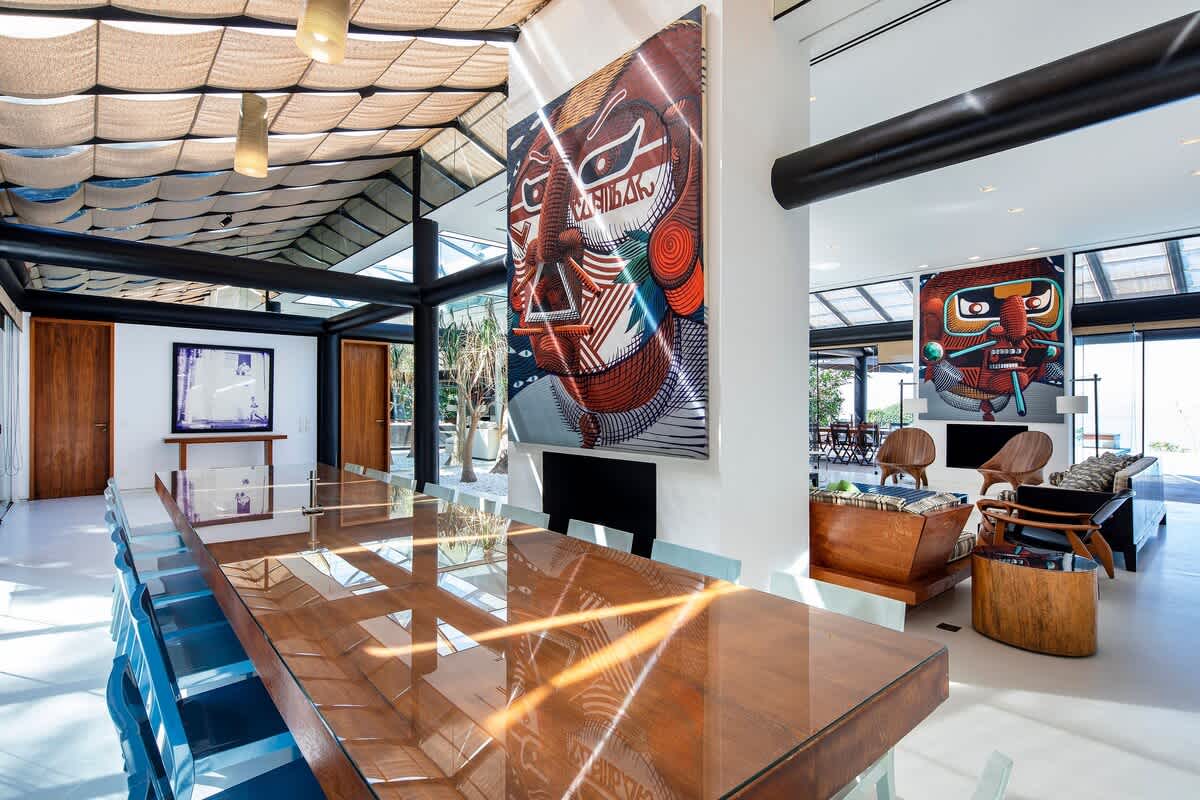
The dining table takes the whole group at once, which sounds like a detail until you have tried to hold a toast across two tables. For ten to twelve people, one table is the difference between a dinner and an event.
The cook is the part worth planning properly. Tell us what the occasion is and who it is for, and the menu gets built around that rather than around a standard list — a fish course because the person being celebrated only ever wants fish, a cake that is the right cake, the wine somebody's father drinks. Send this a fortnight ahead rather than on arrival; it is the difference between a good dinner and one that lands.
Practical notes worth sending early: the group's restrictions in detail, whether children are eating with the adults or earlier, and whether you want the meal served or laid out. And if there is a speech or a surprise, tell the cook and the house manager, because the timing of a dessert is the whole trick.
What the house does well
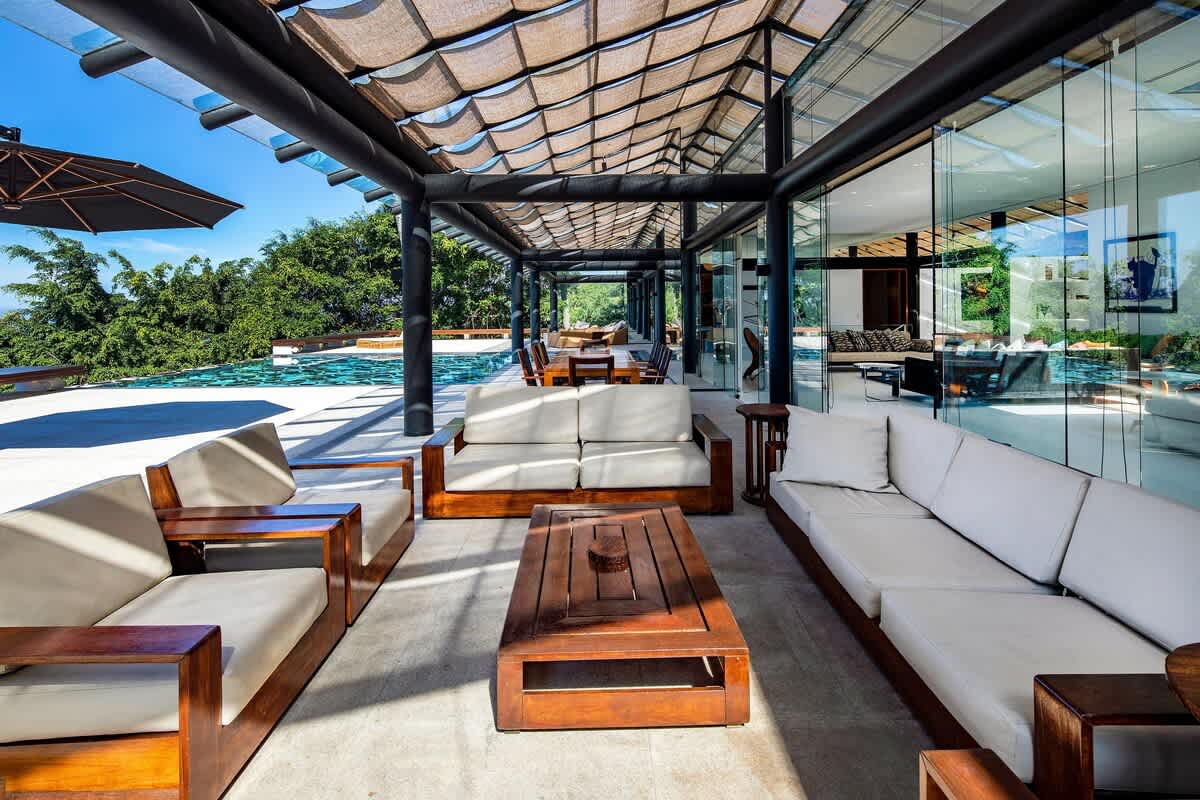
Dinners. This is the thing it is genuinely built for — the glass pavilion opens onto the terrace, so the room and the outside become one space, and a laid table with the sea behind it does most of the work without decoration.
Long lunches by the pool, which for a family group with a range of ages is often better than an evening. Everybody is already in the right place, and the children do not have to be managed.
Small ceremonies. A vow renewal, a blessing, a toast at sunset on the terrace with the group standing rather than seated. The setting is the whole production, and it needs very little added to it.
Photographs. The light from about four in the afternoon along this coast is the reason people book photographers for that hour. If you want the occasion documented, arrange it for late afternoon rather than midday and it will look like the place actually looks.
What it will not do, plainly
This is a private house in a residential estate of family homes, not a venue. That sets real limits, and it is better to know them now than to negotiate them on the day.
It is not a party house. Amplified music late at night, large numbers of additional guests arriving, and anything that would have neighbours calling the estate are outside what the house is let for. A dinner for the group that runs late is entirely normal; a hundred people and a sound system is not something we can host, and we would rather say so at enquiry than disappoint you on site.
Guest numbers are what they are. The house is comfortable for ten and takes up to twelve, and additional guests joining for a dinner need to be agreed in advance — the gate needs to know, and there is a limit. Say the real number at the enquiry stage.
Large weddings are not something this house does. An intimate gathering — the couple, immediate family, a celebrant, a dinner — is a different proposition and often works beautifully. If you are planning something bigger, we would rather point you at a venue that can do it properly than take the booking.
None of this is intended to be discouraging. It is the same set of limits that makes the house worth having: it is quiet because the estate is residential, and it stays that way because of these rules.
How to arrange it
Say at enquiry that there is an occasion, and say what it is. It changes which dates we recommend, how the staffing is arranged, and what we suggest for the evening.
Then send, a couple of weeks out: the final guest number, restrictions, the shape of the day you want, anything that needs to be a surprise, and who the day is actually for. If you want flowers, a particular cake, a photographer, music that is not a sound system, or a table set somewhere other than the usual place, all of that is arrangeable and all of it is easier with notice.
Extra staff for the evening — an additional pair of hands in the kitchen, someone on the table — is normally the right call for a dinner that matters, and is arranged at cost. Ask about it rather than assuming the household team absorbs it.
And keep the day itself loose. The occasions that go best here are the ones with one fixed point — dinner at eight — and nothing else scheduled. The house does the rest.
For the practical mechanics of booking, the booking guide covers it; for what an ordinary evening here is like, dinner at the villa.
Tell us what you are marking and who it is for, and we'll build the evening around it — the cook, the table, and the hour the light is right.