Reserve direct
We run a five-suite villa with an infinity pool above São Conrado beach, and its rates and live availability are on the Art de Vivre booking page.
Book directThe feira livre
The classic way to shop for fresh food in Brazil is the feira livre, the open-air street market. Independent sellers, the feirantes, set up stalls of fruit, vegetables, greens and other food, and the market is a place to meet the neighbours too. Trading starts at around 7 am, after the sellers have been at work since the early hours.
Each Brazilian city writes its own rules for its feiras, and in Rio the city hall gives each one a number, a street or square and a neighbourhood. Locations and days change now and then, so the simplest way to find the nearest feira on a given morning is to ask the concierge or the chef. Go early for the best choice, and bring small notes and a shopping bag.
Cobal do Leblon and Cobal do Humaitá
The two Cobals are the Zona Sul's covered market halls, built in the 1970s as food supply centres. Cobal do Leblon is on Rua Gilberto Cardoso in Leblon, and Cobal do Humaitá is on Rua Voluntários da Pátria in Humaitá, where it opened on 9 September 1971 on the site of an old tram garage. Both are protected as heritage buildings, and the Leblon hall covers about 6,400 m².
Over the years both became places to eat, drink and meet as well as to shop, and in September 2026 they still held dozens of merchants, bars and restaurants. They are run by Conab, the federal food supply company.
A renovation that began in 2025 is on hold for lack of funds, and part of the space is idle. Check what is open before you plan a morning around them, and head for whatever is trading.
Organic markets
Rio also has a circuit of organic markets, the Circuito Carioca de Feiras Orgânicas, with weekly morning markets in squares around the city. The growers' association ABIO has run several in the Zona Sul, and the stalls sell vegetables, fruit, greens, grains, honey, cheese, bread, cakes, jams and juices grown and made without agrochemicals.
The published listings are several years old, and squares and days have moved since, so ask the concierge for the current list before you go. Morning is the time: these markets have traditionally run from about 7 am to 1 pm.
Greengrocers
For everyday fruit there are greengrocer chains. Hortifruti Natural da Terra, which concentrates on fruit, vegetables and greens, had round-the-clock stores in Leblon and Ipanema in 2025, along with others in Copacabana and Barra da Tijuca. Opening times and owners of individual stores change, so check before a late-night run.
A greengrocer is also the easy place to try unfamiliar fruit one at a time before you buy a bag. Supermarkets and pharmacies near the house are covered in everyday essentials near São Conrado.
Brazilian fruit by season
Seasons are reversed south of the equator, so December to February is summer in Rio. CEAGESP, which runs the São Paulo wholesale market, publishes a table of the months when each product is at its most favourable price, a good guide to when it is plentiful. Its latest table, published in 2026 from prices in 2023 to 2025, gives the pattern below. Weather moves the months by a few weeks, so treat them as a guide.
Spring, from September to November, is the season for jabuticaba, the small dark-purple fruit that grows directly on the trunk of its tree; it ferments within a few days of picking, so it rarely travels far. Caju, the cashew apple, the fleshy fruit that carries the cashew nut, is at its best price from August to October and goes into juice and sweets. Pitanga, a small ribbed fruit also called the Brazilian or Surinam cherry, turns from tart to sweet as it darkens and is often at its best price in September.
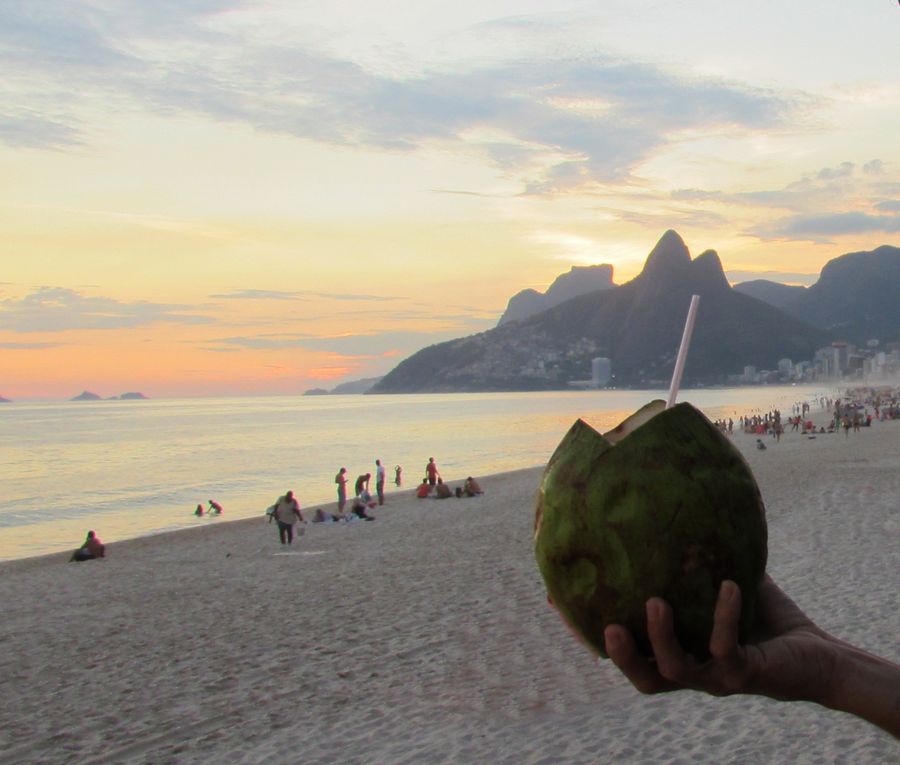
Mango runs from late spring into summer. Most varieties are at their best price between October and January: Tommy Atkins, Espada and Rosa from October to December, Palmer and Haden from November to January. Green coconuts are at their best price from July to November, and Hawaii papaya in October and November.
High summer, from December to March, brings acerola, guava and jackfruit (jaca) from January to April, lychee in January, and soursop (graviola) and sugar apple (pinha) in January and February. Autumn is the time for persimmon (caqui) and cupuaçu, roughly April to June, and for Ponkan tangerines from April to July.
Winter has its own fruit. Pineapple is at its best price from June or July, depending on the variety, carambola in June and July, and sour passion fruit, the kind used for juice, from June to August. Pera and Lima oranges and Rio tangerines (mexerica) are at their best price from May or June to August. The sweet passion fruit is cheapest in January and again in April and May.
A few less familiar names are worth looking out for too: abiu in November and December, sapoti (sapodilla) from March to June, and mangosteen in April and May. Avocado is plentiful from late summer into winter; the Breda variety is at its best price from February to June. Ask for a taste before you buy a bag.
Shopping at a market
Go early, when the choice is widest and the day is still cool. Bring small notes and your own bags, and check whether a price is per kilo or per piece.
Ask for a taste of anything new. If you want fruit for a particular day, say so: “para hoje” means for eating today, “para amanhã” for tomorrow, and a good seller will pick accordingly.
Buy what looks best rather than what is on your list. The chef can turn a bag of whatever was best that morning into lunch.
The chef and the morning markets
The villa's private chef, arranged through Art de Vivre's concierge, shops the morning markets, so the house eats what the markets had that day. Tell the chef early which fruit you want to try and what anyone cannot eat. A breakfast plate with one new fruit each morning is an easy way to work through the season.
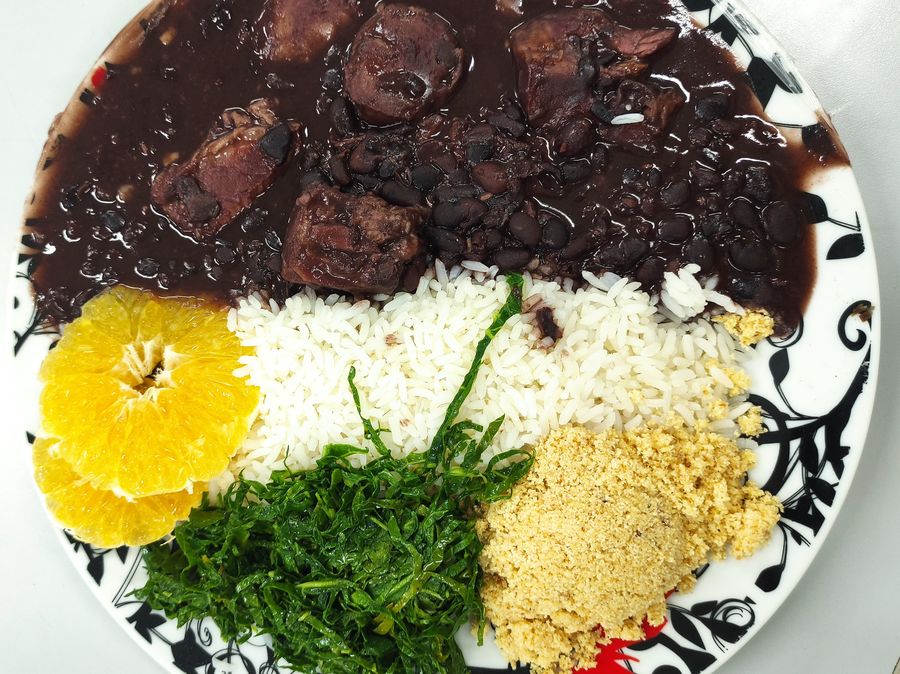
A week in late spring might bring mango and jabuticaba at breakfast, passion fruit in the caipirinhas and fish at dinner. For the evening itself, see dinner at the villa, and for a Saturday lunch, feijoada in Rio.
The Cobals and the street markets are also worth a morning on their own. Take the driver, some small notes and a bag, and be back at the house before the midday heat.
Questions
What is the Cobal in Rio?
The Cobals are covered market halls in Leblon and Humaitá, built in the 1970s as food supply centres and run by the federal company Conab. They still hold bars, restaurants and shops, though a renovation begun in 2025 is on hold and part of the space is idle, so check what is open.
What time do street markets open in Rio?
Feiras livres in Brazil generally start trading at around 7 am, and the sellers set up in the early hours. Days and squares vary by neighbourhood, so ask the concierge for the nearest one.
When is mango season in Brazil?
In the São Paulo wholesale market's latest table, based on prices from 2023 to 2025, most mango varieties are at their best price between October and January, Brazil's late spring and early summer.
What is jabuticaba?
A small dark-purple Brazilian fruit that grows directly on the trunk of its tree. It ferments within a few days of picking, and its best-price months run from September to November.
Book the villa direct with Art de Vivre, and the private chef will bring the morning markets to the table.
Sources
Facts on this page were checked against these sources in October 2026. Opening hours and prices change: confirm before you go.
- Feira livre, Wikipédia
- Resolução SEOP nº 452-N de 14/02/2023 (feiras livres e móveis), Normas Brasil
- Obras paradas nas Cobal do Leblon e Humaitá há dois meses, Diário do Rio (Nov 2025)
- BNDES e Conab estudam modernização de mercados na Zona Sul, Brasil em Folhas (Sep 2026)
- Proposta de revitalização do Sistema Fecomércio RJ e Sebrae Rio para a Cobal do Leblon (Mar 2021)
- Cobal do Leblon, OpenStreetMap
- Cobal do Humaitá, OpenStreetMap
- Cobal do Humaitá, Wikipédia
- Conheça o Circuito Carioca de Feiras Orgânicas, Catraca Livre (2013, updated 2020)
- Hortifruti Natural da Terra aposta em modelo 24h, SuperVarejo (Jun 2025)
- Tabela de sazonalidade de acordo com o preço (R$/kg), CEAGESP (2026, prices 2023 to 2025)
- Jabuticaba, Wikipedia
- Cashew, Wikipedia
- Eugenia uniflora (pitanga), Wikipedia